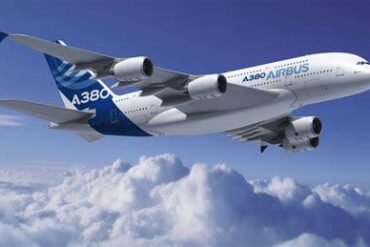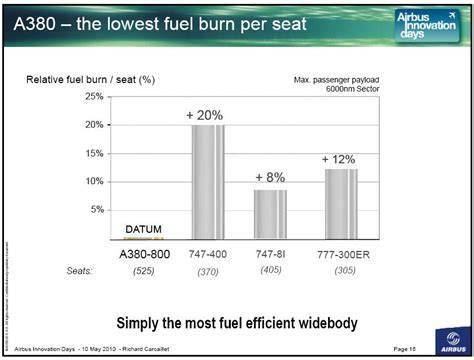
The Airbus A380-800 burns roughly 4,600 gallons (17,413 liters) of jet fuel for every hour it flies, a figure that makes airline planners wince before they ever reach the passenger cabin. That number is not a defect to be engineered away. It is the central fact of the superjumbo’s economics, the pressure that forced Airbus to build an exceptional airframe and the lever Emirates pulled so aggressively that a jet nobody else wanted became the most profitable aircraft in a 270-strong fleet. Understanding the A380 means following that fuel curve from the engine fan blade to the balance sheet, because every design decision on the double-decker can be traced back to the brute mechanics of four enormous turbofans.
At cruise, those four engines collectively consume around 26,455 pounds (12 metric tons) of kerosene each hour. Compare that to a modern Airbus A350-1000, which sips about 1,823 gallons (6,900 liters) per hour, and the mismatch is stark. A quadjet does not merely burn more fuel as a penalty for size. It burns almost twice as much per hour simply because four combustors, four sets of turbine blades, and four accessory gearboxes are all demanding feed at once. When Airbus laid out the A380 in the late 1990s, that arithmetic was acceptable, because jet fuel was cheap and four engines were the only way regulators would let a jet cross oceans with a wide safety margin inexcusable twinjet risk. By the time the last aircraft left Toulouse, every assumption behind that equation had collapsed.
Why Four Engines Cost So Much Fuel Per Hour
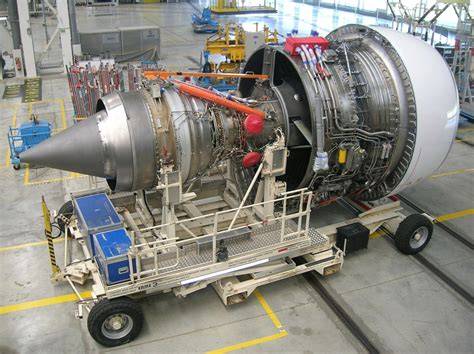
To grasp the A380 fuel burn, it helps to look at the architecture of its engines. Both powerplant options, the Engine Alliance GP7200 and the Rolls-Royce Trent 900, use fans measuring 116 inches (about 2.96 meters) in diameter, each driving air through a 8.7:1 bypass ratio. Each engine weighs around 14,800 pounds (6,700 kg) dry and produces between 70,000 and 81,000 pounds of thrust at takeoff. Four of them hanging under a 261.8-foot (79.8-meter) wing creates an aerodynamic package that must lift and push 1.3 million pounds of maximum takeoff weight while dragging six additional surfaces—four nacelles and two fuselage-mounted pylons—through the air. Every one of those structures adds parasite drag and skin friction that grows with the square of airspeed.
Two larger engines beat four smaller ones for a simple physical reason: propulsion efficiency is governed by moving a huge mass of air slowly rather than a small mass quickly. The A380’s engines were compromised by the era that designed them; their fan diameters sit near the limit that could be achieved at the time without overwhelming the nacelle and wing. Modern twins benefit from fan sizes that were impossible when the A380’s engines were conceived. The GE9X on a Boeing 777-9 spins a 134-inch (3.40-meter) composite fan at a 10:1 bypass ratio, moving far more air per unit of fuel burned and pushing core pressure ratios to 60:1. That generational gap explains why twin-engine widebodies reduce fuel consumption per seat by 25% to 30% compared with their four-engine ancestors, a shortfall the A380 could never erase through aerodynamics alone.
The Design Workarounds Airbus Built to Offset the Weight
Airbus knew the fuel vector would define the aircraft, so engineers pursued an aggressive weight-reduction strategy to claw back some of the penalty. Roughly 25% of the superjumbo was built from composites and advanced alloys, including the first carbon-composite center wing box fitted to a commercial airliner, a structure that alone saved 3,307 pounds (1.5 metric tons). The fuselage crown was wrapped in GLARE, a sandwich of alternating aluminum and glass-fiber layers that resists fatigue cracking and delivers a substantial weight saving over conventional aluminum. Borrowing from the A340, Airbus added dropped-hinge flaps to seal trailing-edge gaps so air flowed smoothly across the enormous wing during high-altitude cruise.
Those gains bought reliability, not a reversal of the fuel math. Every ton saved improved payload and allowed the aircraft to carry more paying passengers, but the hourly burn stayed fixed by the four-engine architecture. The weight problem also surfaced where the structure attached to the wing. A combination of stiff carbon ribs and high-strength aluminum skins produced microscopic assembly gaps that concentrated stress on the L-shaped brackets—known as rib feet—linking ribs to skins, and in 2012 a fleetwide cracking crisis forced Airbus to replace them with brackets made from slightly heavier 7010 aluminum instead of the newer Alcan 7449 alloy. Carcaillet, speaking to AIN Online, explained the engineering retreat plainly: the fix traded a fraction of the weight saving for the durability the fleet needed.
The Real Cost: Maintenance, Shop Visits, and the Hourly Burden
Fuel is only the most visible line in the A380’s operating budget. Maintaining four intricate turbofans compounds wear on turbine blades, fuel pumps, and accessory drives, pushing the A380-800’s maintenance bill past $6,000 per flight hour and total operating costs to $30,000 per flight hour or more on many routes. When external maintenance facilities stop supporting an engine, every additional powerplant is an additional dependency. The FAA’s October directive targeting Engine Alliance GP7200 engines, filed after an uncontained high-pressure turbine seal failure caused an in-flight shutdown and an aborted takeoff, offered a vivid illustration. The agency identified HPT interstage mid-seal clocking as a contributing factor and warned in the Federal Register that the unsafe condition, if not addressed, “could result in an engine fire and damage to the airplane,” while each replacement sub-assembly costs up to $528,150 per engine.
By October, that directive had already reshaped Emirates’ schedule. 24 superjumbos were parked and seven stored for engine overhauls while 84 continued flying, a reminder that four engines double the probability that one will ground the aircraft. The risk extends beyond routine wear. In November 2010, Qantas Flight 32 suffered a catastrophic Trent 900 failure over Indonesia when a fractured pipe wall thinner than 0.02 inches (0.5 mm) shattered a turbine disk and severed 650 wing wires. Seven years later, Air France Flight 66 lost an outboard GP7200 fan hub over Greenland at 37,000 feet (11,278 meters) after a microscopic forging flaw cracked the titanium. A twinjet carries two such vulnerabilities; a quadjet carries double the exposure, and the insurance economics reflect it.
Emirates’ Slot Strategy: Converting Fuel Burn Into Revenue
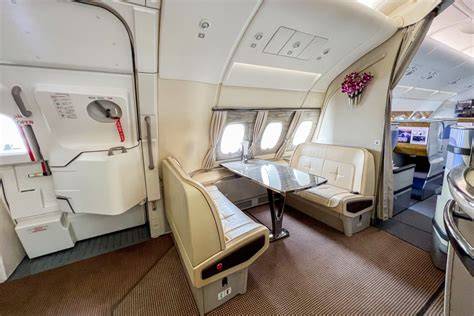
The story of the A380’s economics cannot be told without the strategy that made it work in Dubai. Emirates packs high-paying travelers into slot-rationed airports such as London Heathrow and New York-JFK, where an airline cannot simply add a second daily departure when demand climbs. In that constraint, the A380’s fuel burn transforms from a liability into a rounding error. A single 85%-full A380 carries nearly twice as many high-fare passengers as a Boeing 787-9, and the premium cabins—first-class suites, showers, an onboard bar—command fares that twinjets cannot easily match. The extra fuel is repaid not through empty-seat efficiency but through revenue density per takeoff slot.
Emirates did not stumble onto this model by accident. Its fleet of more than one hundred quadjets spread fixed tooling and spare-engine costs over a large number of daily flying hours, a scale advantage that decisive smaller operators. “The A380 was a misfit for Air France,” said Tim Clark, Emirates’ president, in November 2019, according to Airline Ratings. “They never scaled, they only have ten aircraft. Yes, we faced the same teething problems, but we dealt with them because we were scaled enough to deal with it. If you’ve got a sub fleet of 10 it’s a bloody nightmare and the costs go through the roof.” The A380 rewarded a single, deep operator and punished everyone who treated it as a prestige experiment.
A Profitable Asset Hidden Inside a Losing Program
Airbus never recovered the program’s financial investment. Wing-crack repairs alone absorbed more than $330 million across a $25 billion development effort that never broke even, and CEO Tom Enders conceded to Bloomberg in July 2012 that the company “found out the wrong way we didn’t know everything” about the interface between carbon fiber and metal. In February 2019, after Emirates cut 39 superjumbo orders, Enders concluded that “if you have a product that nobody wants anymore, or you can only sell only below production cost, you have to stop it, as painful as it is,” and the Toulouse line closed behind him.
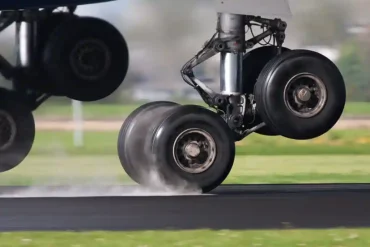
Emirates, however, never treated the airframe as a failed program. In its financial year ended in March, the Dubai carrier posted a record $6.2 billion pretax profit and bought out 29 leased A380-800s outright to keep them flying beyond 2025, with its leadership openly repeating that the superjumbo was the most profitable asset in the entire fleet. The airline backed that claim with a $5 billion investment in cabin refits and, in November, agreed to acquire six more second-hand A380s from Qatar’s Lesha Bank. The logic is teardown economics: used A380s trade cheaply because most buyers fear the fuel bill, but one fresh landing gear set or four serviceable engines costs nearly as much as an entire aircraft. Buying worn airframes for spare parts, including cannibalizing the earliest retired frames as Airbus factory support winds down, turns the superjumbo’s maintenance burden into a source of cheap inventory for the operator that already knows how to fly it.
The A380neo That Never Flew and the Twinjet Future
Tim Clark did not accept the verdict quietly. He campaigned publicly for a modernized A380neo built around next-generation engines and composite wings, calculations that would have cut hourly fuel burn from 26,455 pounds (12 metric tons) to 19,842 pounds (9 metric tons) and trimmed operating expenses by roughly 25%. “I’m telling you, we would purchase them if you cross-fertilized A350 or 787 technology into a new A380,” he said, according to MigFlug. “A minimum of one hundred is required.” Airbus, wary of repeating its losses, set a threshold near 250 aircraft commitments, and Emirates refused to buy fewer than 100 of the modified jets that would have enabled ultra-long-haul routes from Dubai to Santiago and São Paulo. The negotiation never closed.
The gap the A380 leaves behind is now filled by aircraft such as the Airbus A350-1000, the Boeing 777-300ER, and the forthcoming 777-9, machines that pair enormous fans with composite structures and twin-engine reliability accepted for extended ocean crossings. Those regulators unlocked the quadjet’s only true structural advantage when they allowed twins to fly six hours on a single engine, removing the four-engine safety premium and turning extra hardware into dead weight. The result is a 25% to 30% per-seat fuel advantage that no amount of A380 engineering can match, and an industry that treats the double-decker as a specialized tool rather than a general-purpose widebody.
What the A380 Fuel Burn Teaches About Aircraft Economics
The superjumbo’s story is that fuel burn is a design input, not a verdict. Four engines made the A380 the thirstiest airliner per hour in service and justified the wing redesigns, the weight-saving composites, and the eventual production shutdown. In the hands of a single deeply scaled operator with a slot-constrained network and a premium cabin product tourists and business travelers will pay for, those four engines became the foundation of the fleet’s most profitable aircraft. Emirates proved that a quadjet can win when every gallon of fuel is spent carrying a passenger who pays more, at an airport where another takeoff is impossible. Every operator that tried the plane without that formula discovered what the fuel curve always knew: with four engines, the economics are only good when they are engineered around, not ignored.