The aviation industry, often seen as a seamless web connecting continents, is being forcefully reshaped by rising geopolitical tensions. The recent 2026 Iran Crisis has highlighted how conflicts can ripple across global air travel, impacting airlines, passengers, and fuel markets alike. Aircraft, engineered for efficiency, are now compelled to fly longer distances due to airspace closures, significantly increasing operational costs and fuel consumption. What was once a predictable network of global routes has transformed into a patchwork of detours and cancellations, leaving airlines scrambling to adapt while managing surging expenses.
Airlines today face an unprecedented confluence of rising jet fuel prices and restricted access to strategic airspace. The 2026 Iran Crisis, coupled with ongoing tensions in Russia and other surrounding regions, has disrupted normal flight operations. Major carriers in Europe, Africa, and the Middle East are rerouting flights around restricted airspace, incurring not just financial costs but also operational challenges that were previously unimaginable. In Africa, where margins are notoriously thin, these shifts are particularly punishing, threatening the survival of several carriers. This new reality has placed fuel efficiency at the mercy of politics, demonstrating that even the most advanced aircraft cannot escape the geopolitical landscape.
The Surge in Jet Fuel Prices Amid Geopolitical Instability
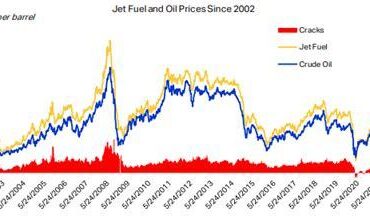
Fuel prices have long been the lifeblood of aviation economics, and the 2026 Iran Crisis has sent shockwaves through the global oil markets. Jet fuel costs have doubled in several regions, particularly affecting African airlines already operating on tight budgets. Brent Crude, the global benchmark, has climbed above $98 per barrel, reflecting not just immediate supply disruptions but fears of prolonged instability around the Strait of Hormuz. For airlines like Ethiopian Airlines, these market pressures translate into losses of over $137 million weekly, with hundreds of flights canceled each week due to fuel and airspace limitations. The rise in fuel costs directly feeds into ticket prices, creating a domino effect that touches every level of air travel economics.
Pre-crisis jet fuel prices hovered between $80 and $90 per barrel, but as the conflict escalated, prices surged to an unprecedented $150–$200 per barrel. Airlines have no choice but to pass these costs to passengers, leading to a global increase in airfares averaging nearly 25% year-on-year. In the United States alone, airfare rose 20.7% in April 2026, reflecting the profound influence of oil market volatility on passenger costs. These increases are not just numbers on a ledger—they represent tangible barriers for travelers and signal a new era in which geopolitical instability dictates both airline strategy and consumer behavior.
Airspace Closures and the Operational Nightmare
The direct impact of restricted airspace cannot be overstated. Airlines have had to navigate around blocked zones, often adding two to three hours per flight and increasing fuel consumption exponentially. Middle Eastern airspace, once a reliable corridor for international traffic, has become a labyrinth of restrictions and closures. Ethiopian Airlines, forced to cancel more than 100 weekly flights, exemplifies the operational havoc these restrictions create. European carriers, barred from Russian airspace since 2022, continue to take extended detours for flights to China, adding tens of thousands of dollars per journey in operating costs.
Flight paths that once followed the Great Circle, the most efficient routes over the curved surface of the Earth, are no longer accessible. As a result, airlines must choose between flying longer, less efficient routes or reducing service frequency. Both choices carry financial consequences. The rerouting not only increases fuel burn but also creates cascading scheduling challenges, as aircraft take longer to complete rotations, crews exceed standard duty times, and airport slots become increasingly difficult to manage. This interconnected disruption underscores how geopolitical crises have evolved from regional issues into global operational constraints.
The Pressure on Long-Haul Networks
The impact on long-haul flights has been particularly severe. Economy class fares on routes between Europe and East Asia have risen dramatically, with London–Melbourne tickets up 76% year-on-year and Hong Kong–London fares increasing by 72%. These hikes are not arbitrary but a direct consequence of the longer flight paths, rising fuel costs, and limited seat availability. Gulf carriers, historically dominant on intercontinental routes, have experienced major operational disruptions, further reducing capacity and pushing prices higher. The network strain illustrates how intercontinental aviation is finely tuned, and even minor geopolitical disruptions can ripple across the globe.
Airlines attempting to seize opportunities despite the crisis face similar constraints. European carriers expanding services to China are flying costly detours around Russia while avoiding Iranian airspace, burning more fuel to maintain schedules. This paradox—demand for flights exists, but operational efficiency is reduced—highlights how airlines are being forced to absorb higher costs simply to keep the network viable. Middle Eastern hubs, like Doha’s Hamad International Airport, illustrate the vulnerability of airline networks to airspace closures; when surrounding corridors are blocked, even major hubs cannot operate at full capacity.
African Airlines: Navigating a Fuel Crisis
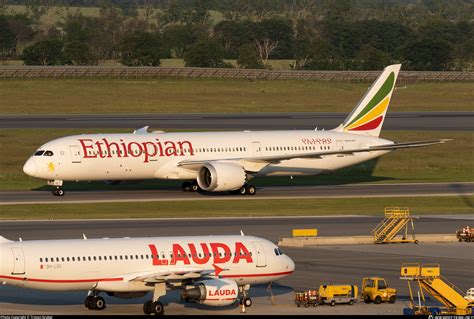
African carriers are among the most exposed to geopolitical fuel volatility. Jet fuel shortages have driven prices upward, forcing airlines to adopt new routing strategies that prioritize safety and compliance over efficiency. Kenya Airways, for instance, rerouted passengers through Nairobi instead of traditional Gulf hubs, resulting in longer distances flown and greater fuel consumption. For Ethiopian Airlines, the situation is even more acute: weekly losses exceeding $137 million and repeated flight cancellations demonstrate how vulnerability to airspace restrictions and fuel cost spikes threatens entire business models.
Tourism-dependent economies in Africa also bear the brunt of these disruptions. Cape Town-based operators report losses of hundreds of thousands of South African rand due to flight cancellations and traveler uncertainty. Each rerouted flight represents a chain reaction of economic disruption, from airlines to airports, ground services, and local hospitality sectors. In this environment, fuel is not just a cost—it is a geopolitical lever that can determine the survivability of carriers and the stability of regional tourism economies.
Middle Eastern Carriers and Hub Vulnerability
Qatar Airways provides a stark example of how geopolitical tensions can cripple even the most globally connected airlines. In Q2 2026, the airline reduced 49% of its US flights due to airspace closures, demonstrating how fragile hub operations can become when access is restricted. Hamad International Airport, typically a central hub for transcontinental traffic, experienced bottlenecks and operational disruptions, forcing carriers to adopt inefficient routing and increase fuel burn. The result is not only higher operating costs but a tangible reduction in network connectivity, highlighting the strategic importance of political stability for aviation infrastructure.
Middle Eastern carriers, accustomed to seamless overflight rights, have faced the harsh reality of operating in a politically charged environment. Temporary closures can ripple into long-term operational inefficiencies, requiring weeks or months to rebuild optimal routing. The Iran conflict exposed the fragility of these networks and demonstrated that fuel consumption is often dictated more by geopolitical conditions than by advances in aircraft technology. Airlines must now strategically navigate airspace politics to preserve both cost efficiency and passenger service levels.
China-Europe Demand: Flying Despite Inefficiency
Despite the fuel-heavy detours, demand between Europe and China continues to grow. Airlines have increased frequencies and deployed larger aircraft to meet rising traffic, accepting the operational penalties of extended routes. Data shows flights between Europe and China rising from 3,011 in May 2026 to 4,151 in August, reflecting a sharp demand surge. European carriers, restricted from Russian airspace and navigating unfavorable Middle Eastern corridors, are effectively forced to absorb higher costs to meet passenger needs.
This scenario underscores the broader reality of modern aviation: geopolitical factors, not technical efficiency, increasingly dictate airline operations. When passenger demand is strong enough, carriers are compelled to operate inefficiently, burning more fuel and extending flight times. The China-Europe corridor illustrates how airlines balance market demand with operational constraints, navigating a world where fuel costs are dictated by global conflict as much as by crude oil markets.
The Strategic Implications for Global Aviation
The current landscape signals a profound shift in how airlines plan and operate. Geopolitical instability, particularly conflicts involving Iran and Russia, has introduced a new variable into aviation economics. Airlines can no longer rely on historical flight paths or predictable fuel pricing; instead, strategic flexibility and rapid rerouting capabilities have become essential. This reality also underscores the broader vulnerability of global commerce to regional conflicts, with airlines acting as immediate indicators of geopolitical turbulence.
Operational strategies must now include contingency plans for airspace denial, fuel shortages, and rapid network adjustments. Airlines investing in advanced route planning software, fuel hedging strategies, and operational resilience are likely to survive in this volatile environment, while smaller carriers with fewer resources face existential threats. The crisis is not limited to airlines alone—it extends to global trade, tourism, and energy markets, all interconnected through the delicate infrastructure of international aviation.
Environmental and Economic Consequences of Extended Flight Paths
The increased fuel burn due to longer flights carries substantial environmental and economic consequences. Carbon emissions rise proportionally with fuel consumption, making geopolitical conflicts a hidden driver of aviation’s carbon footprint. For airlines, the direct cost of fuel is compounded by higher maintenance and crew utilization costs associated with longer flight durations. The economic burden is felt across ticket prices, freight charges, and operational budgets, highlighting how political instability can disrupt both sustainability goals and financial stability.
These effects are not isolated; they ripple across regional economies, with airlines absorbing costs, passengers facing higher fares, and governments confronting pressures to maintain affordable and accessible air travel. The interconnectedness of fuel markets, geopolitics, and aviation operations underscores the fragility of global air travel and the critical need for proactive risk management strategies.
Preparing for a New Era in Aviation
Airlines, regulators, and governments must recognize that the era of predictable, efficient routing may be over. The 2026 Iran Crisis has demonstrated that airspace politics can force airlines to burn more fuel, extend flight times, and increase costs in ways previously unimagined. As global conflicts continue to arise, carriers must invest in more flexible route planning, fuel management, and operational resilience to navigate a complex geopolitical landscape. The survival of airlines, particularly in Africa and the Middle East, hinges not just on efficiency but on the ability to adapt to an increasingly unpredictable world.
In conclusion, geopolitical tensions are no longer peripheral considerations for global aviation—they are central determinants of fuel consumption, route efficiency, and operational viability. Airlines must navigate a landscape defined by restricted airspace, soaring fuel costs, and rising passenger demand that cannot be easily deferred. From Europe to Africa to the Middle East and Asia, every sector of aviation feels the pressure, highlighting the deep interconnection between global politics, economics, and the seemingly effortless act of getting from one continent to another. In this era, the skies are no longer neutral territory; they are a map of strategic maneuvering, where every extra mile flown carries a cost in fuel, money, and opportunity.