In an unprecedented show of alignment across the global aviation sector, American Airlines, United Airlines, British Airways, Singapore Airlines, Air France–KLM, and Finnair have jointly announced the extension of flight suspensions to key destinations across the Middle East, marking a significant escalation in airline responses to the rapidly deteriorating security environment in the region.
The ripple effects of these decisions are already reshaping global travel networks, with severe consequences for passengers, businesses, and tourism-dependent economies.
The Catalyst Behind the Coordinated Flight Suspensions
Tensions in the Middle East have once again surged to dangerous levels, primarily driven by the ongoing military confrontation between Iran and Israel, now entering its second week. The conflict, which erupted following months of simmering hostility, has sent shockwaves across diplomatic, economic, and aviation sectors alike. Airlines with direct exposure to the region are now reassessing flight paths, operational safety, and logistical feasibility in response to heightened security risks.
The unified suspension of flights reflects both caution and strategic necessity. Airline executives cite escalating geopolitical instability as the driving force behind this sweeping decision, which affects not only direct services to cities like Dubai, Doha, and Tel Aviv, but also transcontinental operations relying on Middle Eastern airspace.
American Airlines Grounds Philadelphia–Doha Route Indefinitely
For American Airlines, the suspension of its Philadelphia (PHL) to Doha (DOH) service marks a significant strategic retreat from the Gulf region. This route, designated as AA120 outbound and AA121 for return flights, had only recently resumed as part of American’s partnership with Qatar Airways.
The final AA120 flight departed Philadelphia on June 17, 2025, with the last inbound AA121 from Doha arriving on June 19. American Airlines confirmed that the suspension will remain in effect until at least June 30, 2025, citing “unacceptable levels of operational risk” in the region.
Crucially, this move leaves American Airlines without any direct service to the Gulf, further underscoring the gravity of the situation. Moreover, American has yet to resume its Tel Aviv (TLV) operations, which were halted following the October 2023 Hamas attacks on Israel.
United Airlines Expands Suspensions to Dubai and Tel Aviv
United Airlines, the largest U.S. carrier with Middle Eastern exposure, has also enacted sweeping changes to its regional flight schedule. Its popular Newark (EWR) to Dubai (DXB) service, operating as UA164 outbound and UA163 return, has been suspended since June 18, with flights not expected to resume until early July 2025 at the earliest.
In addition, United’s Tel Aviv operations remain on indefinite hold, now extended through at least August 1, 2025. The airline has also refrained from resuming flights to Amman (AMM) in Jordan, which were suspended in August 2024, reflecting an ongoing reevaluation of security dynamics across the region.
The absence of United flights to these crucial Middle Eastern hubs is already disrupting both leisure and business travel, with downstream impacts on cargo operations and interline connectivity.
European and Asian Giants Follow Suit
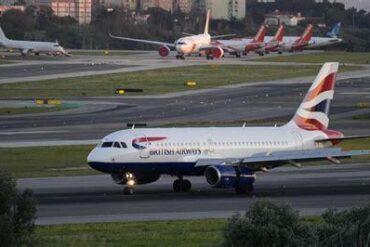
Beyond American and United, European carriers are also taking decisive action. British Airways, Air France–KLM, and Finnair have all adjusted their Middle Eastern operations, either suspending flights or rerouting to avoid high-risk airspace. Notably, British Airways has temporarily ceased flights to Tel Aviv, following similar moves by Lufthansa, Qatar Airways, and other major players.
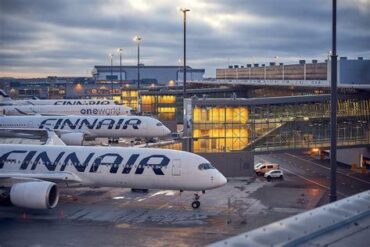
From Asia, Singapore Airlines has joined this wave of suspensions, making significant adjustments to its routing to avoid exposure to volatile airspace corridors over Iran, Iraq, and Syria. Even airlines with limited direct exposure to the Middle East, such as Finnair, are opting for longer, fuel-intensive detours to ensure passenger safety.
These developments are indicative of a broader realignment within global aviation, where risk assessments now factor heavily into route planning, regardless of an airline’s primary geographic focus.
The Broader Aviation Impact: Reroutings, Delays, and Industry Disruption
The ripple effect of widespread flight suspensions extends well beyond passengers traveling to or from the Middle East. Airlines are now recalibrating flight paths between Europe, Asia, and Africa, with many avoiding traditional corridors over Iran, Iraq, and Syria. These detours add significant flight time, increase operational costs, and complicate scheduling.
For instance, flights between major European hubs such as London Heathrow, Amsterdam Schiphol, and Paris Charles de Gaulle to destinations in Asia are facing delays and increased fuel consumption due to rerouting over safer, albeit longer, paths.
The suspension of services to global transit hubs like Dubai and Doha is equally concerning. Both cities function as critical connectors for passengers and cargo moving between continents. Dubai International Airport (DXB), among the busiest in the world, is a linchpin for long-haul connectivity, while Hamad International Airport (DOH) in Doha has grown into a significant transfer hub under Qatar Airways’ expansive network.
Their diminished accessibility reverberates through global supply chains, affecting industries ranging from technology to pharmaceuticals that rely on just-in-time delivery models.
Economic Fallout for Gulf Tourism and Business Travel
The Gulf region’s reliance on international tourism and business travel is also facing significant challenges. Dubai and Doha, celebrated for luxury hospitality, global events, and architectural marvels, are bracing for a downturn in visitor arrivals.
With millions of tourists typically passing through these cities, the current uncertainty is expected to depress hotel occupancy rates, dampen retail sales, and disrupt large-scale events, including trade shows and sporting fixtures.
Economically, this compounds existing pressures stemming from regional conflicts, energy market volatility, and broader global macroeconomic headwinds.
What Travelers Need to Know: Flexibility and Vigilance Are Key
For individuals with upcoming travel plans involving the Middle East, the situation remains fluid. Most affected airlines, including American, United, British Airways, Singapore Airlines, Air France–KLM, and Finnair, are offering full refunds, flexible rebooking options, or rerouting where possible.
However, travelers should be prepared for ongoing disruptions, particularly concerning:
- Extended travel times due to rerouting
- Potential last-minute cancellations or schedule changes
- Increased ticket prices on unaffected routes due to supply constraints
- Limited cargo space impacting shipments through Gulf hubs
Travel experts recommend closely monitoring airline advisories, maintaining flexible itineraries, and consulting with professional travel agents for up-to-date information.
Looking Ahead: A Travel Landscape in Flux
The unified decision by major global airlines to suspend Middle East flights underscores the intersection of geopolitics and commercial aviation. It reflects the harsh realities facing the industry in an era marked by heightened security threats, diplomatic uncertainty, and operational complexity.
With the Iran-Israel conflict showing no signs of rapid de-escalation, the likelihood of further suspensions, airspace closures, and route diversions remains high. Airlines, governments, and industry stakeholders continue to monitor developments, but the current trajectory suggests prolonged disruptions.
For travelers, businesses, and policymakers alike, the message is clear: the global travel landscape has fundamentally shifted, and adaptability is now essential.
As tensions simmer and strategic recalibrations unfold, the Middle East’s role as a connective artery for international aviation faces unprecedented challenges — with ramifications that will shape global mobility for months, if not years, to come.