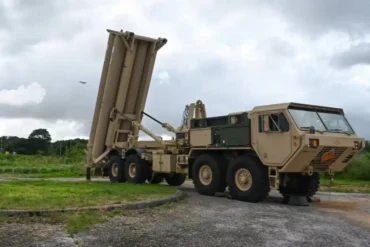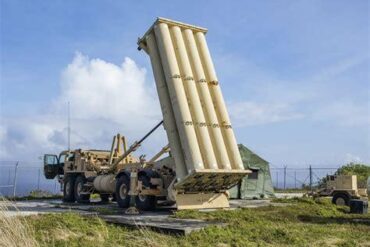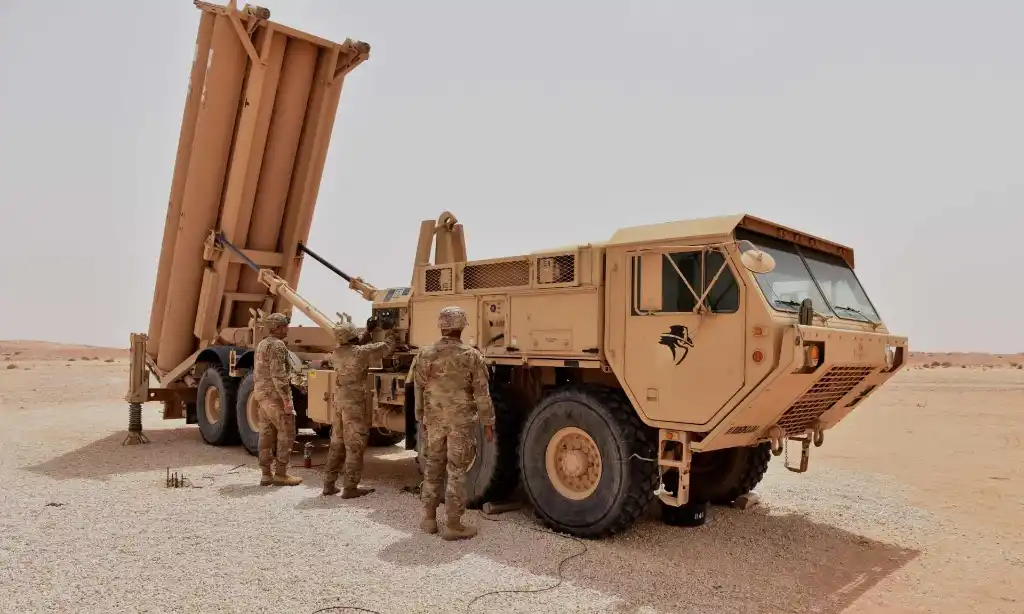
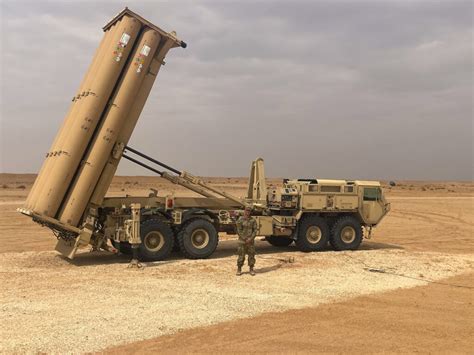
The United States has begun deploying additional Terminal High Altitude Area Defense (THAAD) missile defense systems to the Middle East, signaling a decisive escalation in regional force protection measures as diplomatic efforts with Iran falter. The move reflects growing concern in Washington and among U.S. allies that Tehran’s expanding ballistic missile capabilities could soon pose a more direct and immediate threat to U.S. forces, infrastructure, and partner nations across the Gulf region.
This latest deployment comes against the backdrop of stalled negotiations over Iran’s nuclear and missile programs. Early-stage diplomatic talks aimed at limiting Iran’s ballistic missile development collapsed without measurable progress, triggering renewed anxiety among defense planners who see Iran’s missile force as one of the most advanced and diverse in the Middle East. By reinforcing missile defense coverage now, the United States is sending a dual signal: a defensive commitment to regional stability and a deterrent warning that further escalation by Iran will be met with hardened military preparedness.
THAAD Deployment Signals Strategic Shift in U.S. Regional Posture
The redeployment of additional THAAD batteries represents a tangible shift in U.S. military posture across the Middle East. Unlike symbolic troop movements or naval port calls, missile defense deployments directly affect the strategic calculus of potential adversaries by reducing the effectiveness of offensive missile strikes.
U.S. defense officials have framed the move as a precautionary measure to protect American personnel and critical infrastructure. However, the timing—coinciding with the collapse of nuclear and missile negotiations—suggests that Washington is preparing for a broader spectrum of contingencies, including limited military confrontation, proxy conflicts, and direct state-on-state escalation.
The Biden-to-Trump policy transition in Washington has also influenced the tone of U.S. messaging. The current administration has taken a firmer stance on Iran’s missile expansion, signaling that diplomatic engagement must be matched with credible military deterrence. Deploying THAAD systems fits squarely into this doctrine, reinforcing the idea that the United States will not tolerate unchecked ballistic missile proliferation in the region.
How THAAD Works: The High-Altitude Shield Against Ballistic Missiles
THAAD is one of the most sophisticated missile defense systems in the U.S. arsenal, designed to intercept ballistic missiles during the terminal phase of their flight. Developed by Lockheed Martin and operated by the U.S. Army, the system uses hit-to-kill kinetic interceptors rather than explosive warheads. This means the interceptor physically collides with the incoming missile at extremely high speed, destroying it through sheer kinetic energy.
Technically, THAAD is capable of engaging short-range, medium-range, and selected intermediate-range ballistic missiles. Its intercept altitude can reach up to approximately 150 kilometers, with an engagement range exceeding 200 kilometers. This places it in a unique niche between lower-tier systems like Patriot PAC-3 and upper-tier naval-based defenses such as Aegis Ballistic Missile Defense.
The system’s defining feature is its ability to intercept missiles both inside and outside the atmosphere, making it particularly effective against steeply descending ballistic threats. THAAD interceptors are designed to handle targets traveling at hypersonic velocities, including missiles exceeding Mach 8, which is crucial when dealing with modern solid-fueled ballistic systems.
AN/TPY-2 Radar and Integrated Missile Defense Networks
At the heart of THAAD’s effectiveness is the AN/TPY-2 radar, a high-resolution X-band phased-array radar capable of detecting and tracking ballistic missiles at long range. This radar provides precise target discrimination, enabling interceptors to distinguish real warheads from decoys and debris.
The AN/TPY-2 radar also serves as a critical sensor node within the U.S. Command and Control, Battle Management, and Communications (C2BMC) architecture. This network integrates data from multiple sensors, including Patriot batteries, Aegis-equipped naval vessels, early-warning satellites, and allied radar systems. The result is a layered, multi-domain missile defense umbrella that provides multiple engagement opportunities at different stages of a missile’s flight.
By integrating THAAD into this network, commanders can create a resilient defensive architecture capable of countering complex attack profiles, including saturation strikes, maneuverable reentry vehicles, and mixed salvos of ballistic and cruise missiles.
Combat-Proven Credibility After 2024 Intercept in Israel
For years, THAAD deployments in the Middle East were primarily deterrent in nature. That changed in late 2024, when a U.S.-operated THAAD battery in Israel successfully intercepted a ballistic missile launched by Houthi forces in Yemen. The engagement marked the first operational intercept by a U.S.-controlled THAAD system in a live combat environment.
The interception was coordinated with Israeli air defense assets, demonstrating the system’s ability to operate seamlessly within a multinational defense framework. This real-world success validated years of testing and confirmed that THAAD is not merely a technological demonstration platform but a mature, combat-ready system.
The 2024 engagement also altered regional perceptions. Adversaries now understand that high-altitude ballistic missiles can be intercepted reliably, complicating their strategic planning and potentially reducing the coercive value of missile arsenals.
Iran’s Ballistic Missile Arsenal and Strategic Threat Profile
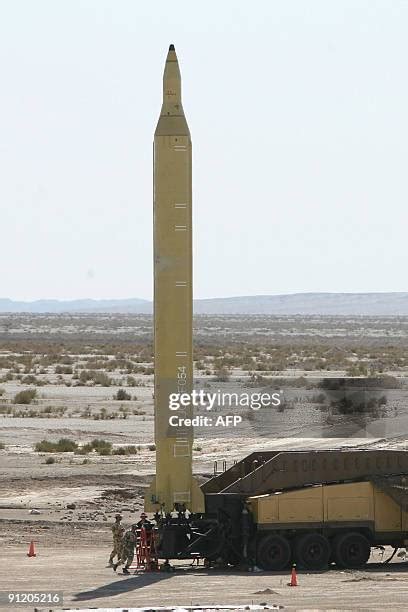
Iran possesses one of the largest and most diverse ballistic missile inventories in the Middle East. Systems such as the Shahab-3, Qiam, and Khorramshahr have ranges between 1,000 and 2,000 kilometers, placing U.S. bases in Qatar, Kuwait, Bahrain, and the United Arab Emirates within striking distance.
Many of these missiles are road-mobile and solid-fueled, enabling rapid launch and reducing vulnerability to preemptive strikes. Iran has also invested in maneuverable reentry vehicles (MaRVs), which can alter their trajectory during descent to evade missile defenses. These technologies are specifically designed to challenge lower-tier systems like Patriot.
THAAD’s ability to intercept missiles in the upper trajectory phase provides a crucial counter to these advanced threats. By engaging missiles at higher altitudes, THAAD reduces the effectiveness of MaRVs and increases the probability of successful interception before warheads can maneuver aggressively.
Protecting Key U.S. Bases and Strategic Infrastructure
One of the primary objectives of the THAAD deployment is to protect forward-deployed U.S. forces and critical infrastructure across the Gulf. Bases such as Al Dhafra Air Base in the UAE, U.S. facilities in Qatar and Kuwait, and naval assets near the Strait of Hormuz are high-value targets for Iranian missiles and proxy attacks.
Ballistic missile strikes against these installations could disrupt U.S. power projection capabilities, degrade air operations, and threaten regional energy infrastructure. By reinforcing missile defenses, the United States aims to maintain operational continuity even under missile attack.
THAAD also plays a psychological role. For personnel stationed in high-threat environments, visible missile defense assets provide reassurance and demonstrate that force protection is a top priority. For adversaries, the presence of THAAD complicates attack planning and reduces the likelihood of successful coercion through missile threats.
Layered Defense: Integrating THAAD With Patriot and Aegis
Modern missile warfare is multi-layered, and no single system can provide comprehensive protection. THAAD is designed to work in concert with other U.S. and allied systems, creating a layered defense architecture that maximizes interception opportunities.
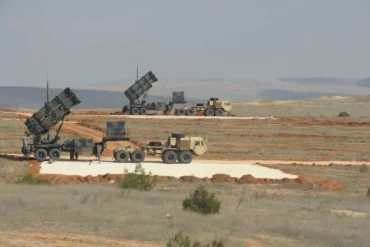
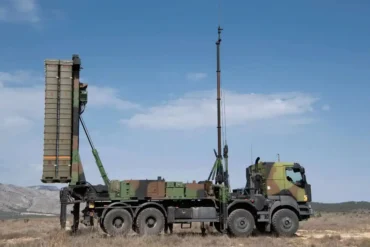
Patriot PAC-3 batteries provide lower-tier terminal defense against shorter-range ballistic missiles and cruise missiles. Aegis-equipped naval platforms offer midcourse interception capabilities and can engage threats over large maritime areas. Combined with space-based sensors and early-warning radars, these systems form a dense network of overlapping coverage.
The integration of these systems allows commanders to engage threats multiple times during their flight path. If a missile evades one layer, it can be targeted by another. This redundancy is essential in an era of hypersonic weapons, decoys, and electronic warfare.
Regional Exercises and Dispersed Combat Operations
The THAAD deployment coincides with broader U.S. force readiness initiatives across the Middle East. U.S. Air Forces Central (AFCENT) recently launched a multi-day regional exercise focused on dispersed combat operations. The exercise tests the ability of U.S. forces to operate from multiple bases, generate sorties under contested conditions, and maintain logistics in degraded environments.
According to Lieutenant General Derek France, the exercise is designed to ensure that U.S. airmen can “disperse, operate, and generate combat sorties under demanding conditions.” This reflects a growing recognition that future conflicts may involve contested airspace, disrupted supply chains, and cyber-electronic warfare.
Missile defense plays a critical role in this concept. Dispersed bases are more survivable, but they also require robust defense against missile attacks. THAAD’s mobility and high-altitude coverage make it an ideal component of a distributed force protection strategy.
Deterrence, Diplomacy, and Strategic Messaging to Iran
While U.S. officials emphasize that the THAAD deployment is defensive, its strategic implications are unmistakable. Missile defenses alter the offensive-defensive balance and can reduce the effectiveness of an adversary’s missile force as a tool of deterrence and coercion.
For Iran, the expansion of U.S. missile defenses may be perceived as an attempt to neutralize its strategic deterrent, potentially prompting countermeasures such as increasing missile numbers, improving penetration aids, or investing in alternative delivery systems like cruise missiles and drones.
However, from the U.S. perspective, the deployment is a necessary hedge against uncertainty. With negotiations stalled and regional proxy conflicts intensifying, Washington is preparing for a spectrum of scenarios, from limited strikes to broader regional escalation.
Implications for Gulf Allies and Regional Security Architecture
U.S. allies in the Gulf have long relied on American missile defense systems as a cornerstone of their security architecture. Countries such as the UAE and Saudi Arabia have already deployed THAAD and Patriot systems, often integrated with U.S. sensors and command networks.
The additional U.S. deployments enhance this collective defense framework and reassure regional partners that Washington remains committed to their security. This is particularly important at a time when geopolitical competition from China and Russia is increasing and regional states are diversifying their defense partnerships.
For Gulf Cooperation Council (GCC) states, the expanded THAAD presence strengthens deterrence against Iran and reduces the vulnerability of critical infrastructure, including energy facilities, ports, and airbases.
The Future of Missile Defense in a Hypersonic Era
The deployment of additional THAAD systems also highlights broader trends in global military technology. As hypersonic weapons, maneuverable warheads, and multi-domain attack strategies proliferate, missile defense is evolving from a niche capability to a central pillar of modern warfare.
Future upgrades to THAAD may include improved interceptors, enhanced radar capabilities, and deeper integration with space-based sensors and artificial intelligence-driven command systems. The United States is also exploring next-generation interceptors and directed-energy systems to counter emerging threats.
In this context, the current deployment is not merely a response to Iran but part of a long-term evolution in U.S. military doctrine. Missile defense is becoming an essential component of deterrence, force protection, and strategic stability.
A Calculated Defensive Move With Strategic Consequences
The U.S. decision to deploy additional THAAD missile defense systems to the Middle East reflects a calculated effort to reinforce deterrence, protect forward-deployed forces, and prepare for potential escalation with Iran. While framed as a defensive measure, the deployment carries significant strategic implications for regional security dynamics and Iran’s military planning.
By strengthening its missile defense umbrella, the United States is signaling that it will not allow ballistic missile threats to dictate regional stability or constrain its operational freedom. At the same time, the move underscores the fragility of current diplomatic efforts and the persistent risk of military confrontation in one of the world’s most volatile regions.
As tensions continue to simmer, THAAD batteries in the desert may become silent guardians—rarely seen, rarely discussed, but central to the strategic chessboard of Middle Eastern security in 2026 and beyond.