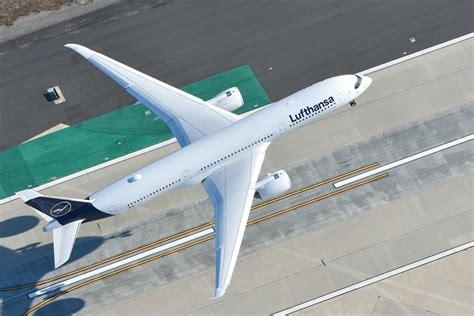
The Airbus A350 XWB represents far more than another generation of widebody aircraft. It is one of the clearest examples of how modern aerospace engineering has evolved beyond simply building larger and more powerful airplanes. Instead, efficiency, aerodynamics, and intelligent systems have become the primary battlegrounds. At the center of the A350’s remarkable performance lies an extraordinary feature inspired by nature itself: wings that subtly change shape during flight.
Unlike traditional airliners whose wing configurations remain largely fixed during cruise, the A350 continuously adapts its aerodynamic profile. Through sophisticated flight control systems and flexible composite structures, the aircraft behaves almost like a bird adjusting its wings to changing air conditions. This capability helps reduce drag, improve lift distribution, and ultimately lower fuel consumption by as much as 25% compared with older-generation aircraft such as the Airbus A340.
The result is an aircraft that flies farther, carries heavier payloads, and does so with lower operating costs than many of its competitors. These advantages have transformed the A350 into one of the most successful long-haul aircraft ever produced.
For airlines facing rising fuel prices and environmental pressures, the A350’s adaptive wing technology represents a revolution rather than an incremental improvement.

Why Airbus Had To Reinvent Its Long-Haul Strategy
During the early 2000s, Airbus found itself in a difficult position. Boeing had launched the revolutionary 787 Dreamliner, an aircraft initially viewed with skepticism by Airbus executives. Meanwhile, Airbus had invested enormous resources into the A380 superjumbo, committing more than $25 billion to the world’s largest passenger airplane.
Airbus initially attempted to respond to the Dreamliner with a heavily modified A330 featuring new engines and aerodynamic improvements. However, airlines rejected the concept. At the same time, Boeing’s 777 family had devastated sales of the Airbus A340, leaving Airbus without a competitive answer in the long-haul segment.
The company returned to the drawing board and started from scratch. The result was the A350 XWB, or Extra Wide Body.
Instead of relying on previous designs, Airbus developed an entirely new aircraft. Nearly every major component was redesigned. Composite materials replaced traditional metals, new Rolls-Royce engines were created exclusively for the aircraft, and engineers developed one of the most advanced wings ever fitted to a commercial airliner.
The gamble proved enormously successful. Since entering service in 2015, the A350 family has accumulated nearly 1,600 orders and established itself among the world’s premier widebody aircraft.
Carbon Fiber Made The Impossible Possible
One reason the A350 can perform feats impossible for earlier aircraft lies in its extensive use of carbon fiber reinforced polymer (CFRP).
Approximately 53% of the aircraft’s weight consists of advanced composites, while around 80% of its volume incorporates composite structures. Compared with traditional aluminum designs, this provides substantial weight savings without compromising structural strength.
The A350-1000, despite being similar in size to the Boeing 777-300ER, weighs roughly 20 tons less. Reduced weight translates directly into lower fuel burn, improved range, and greater payload capability.
Composite materials also possess another major advantage. They are naturally flexible.
Unlike rigid metallic wings, the A350’s carbon-fiber structure allows controlled flexing under aerodynamic loads. This flexibility plays a crucial role in the aircraft’s “bird-like” behavior during flight.

How Variable Camber Allows The Wing To Morph Mid-Flight
Conventional airliners retract their flaps completely after takeoff and maintain that configuration throughout cruise. The Airbus A350 takes a completely different approach.
Its sophisticated Variable Camber (VC) system continuously adjusts the inboard flaps by tiny amounts while cruising. These movements are measured in mere degrees and remain virtually undetectable to passengers.
However, those subtle changes produce significant aerodynamic improvements.
By altering the wing’s camber, Airbus engineers shift the center of lift and reduce the aircraft’s angle of attack. Lower angles of attack create less drag, enabling the aircraft to maintain lift with reduced energy.
The benefits are particularly noticeable during:
- Early cruise phases.
- Heavy takeoff weights.
- Ultra-long-haul missions.
- Flights carrying maximum payload.
Rather than forcing the aircraft into a fixed aerodynamic compromise, Variable Camber allows the wing to optimize itself continuously throughout different phases of flight.
The concept resembles the way birds subtly reshape their wings to maintain efficiency under changing conditions.
Differential Flap Setting Gives The A350 Another Aerodynamic Advantage
Working alongside Variable Camber is another unique Airbus innovation called Differential Flap Setting (DFS).
Traditional aircraft move their flaps symmetrically. The A350, however, can adjust inner and outer flap sections independently.
The inboard flaps receive minute asymmetric changes relative to the outer sections. Although passengers never notice these movements, the effect is measurable.
This system further refines lift distribution and reduces aerodynamic penalties that arise during changing flight conditions.
Differential Flap Setting remains exclusive to the A350 and is fully integrated into the aircraft’s fly-by-wire flight control laws. The system constantly calculates the optimal wing configuration based on altitude, speed, aircraft weight, and atmospheric conditions.
Together, Variable Camber and Differential Flap Setting create an adaptive wing architecture unlike anything found on earlier commercial airliners.
Nature Inspired The A350’s Bird-Like Wings
Airbus engineers frequently looked to nature when developing the A350.
Birds have evolved over millions of years to maximize lift while minimizing drag. Their wings flex naturally, changing shape according to speed and airflow.
The A350 follows the same principles.
Its massive wings span 212 feet 5 inches (64.75 meters) and possess extraordinary flexibility. Structural tests demonstrated wing deflections reaching nearly 17 feet.
While normal operations involve smaller amounts of flex, this elasticity enables the wing to absorb turbulence more effectively and maintain aerodynamic efficiency.
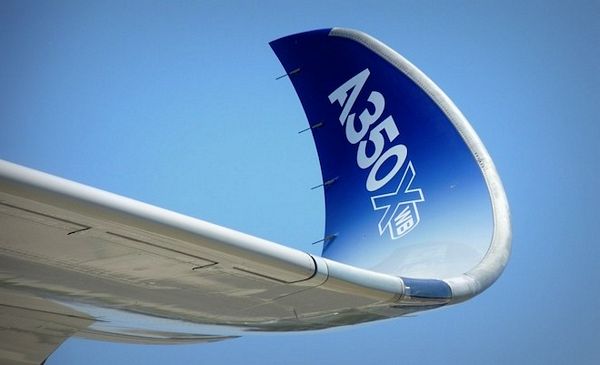
The curved sharklets at the tips further mimic natural wing forms by reducing wingtip vortices, which are major sources of induced drag.
Together, wing flexibility and sharklet design contribute significantly to the aircraft’s exceptional fuel efficiency.
Advanced Aerodynamics Extend Beyond The Wings
The A350’s aerodynamic improvements are not limited to flap systems and wing flexibility.
Airbus optimized nearly every external surface.
The aircraft features:
- Curved cockpit windows, a first for Airbus.
- Highly streamlined nose contours.
- Low-drag engine nacelles.
- A specialized hatchet-shaped belly fairing.
- Reduced interference drag between wing and fuselage.
Another unusual feature is the droop nose device located on the wing’s inner leading edge.
Unlike traditional slats, this device was specifically designed to accommodate the enormous Rolls-Royce Trent XWB engines, which sit unusually close to the wing. Their placement minimizes drag but creates unique aerodynamic requirements.
The droop nose solution allows Airbus to preserve airflow quality while maintaining engine efficiency.
Over time, Airbus has continued refining the design. Engineers adjusted wing twist and sharklet geometry and even removed three side-slip angle probes beneath the cockpit after determining they were unnecessary.
Such constant refinement illustrates Airbus’s commitment to squeezing every possible percentage of efficiency from the aircraft.
The Rolls-Royce Trent XWB Complements The Wing’s Efficiency
The A350 uses only one engine family: the Rolls-Royce Trent XWB.
Two versions power the aircraft:
- Trent XWB-84 for the A350-900.
- Trent XWB-97 for the A350-1000 and future A350F freighter.
These engines feature a giant 118-inch fan and a 9.6:1 bypass ratio, enabling tremendous efficiency.
An overall pressure ratio approaching 50:1 allows more complete combustion and improved thermodynamic performance. Engineers redesigned compressor and turbine stages to maximize energy extraction while minimizing fuel consumption.
The result is one of the most successful large turbofan engines ever built.
Unlike the Trent 1000 engines that suffered reliability problems on the Boeing 787, the Trent XWB family has earned praise from operators for durability and operational consistency.
Recent upgrades unexpectedly exceeded expectations, delivering approximately 1.8% fuel savings rather than the predicted 1%.
Ultra-Long-Haul Capability Sets The A350 Apart
Fuel efficiency alone does not explain the A350’s success.
Its true strength lies in combining range, payload, and operating economics.
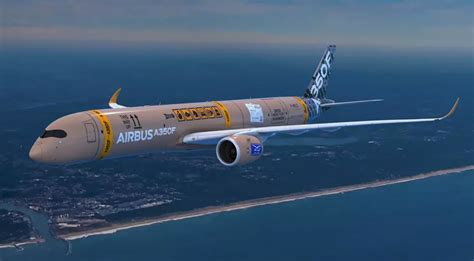
The A350-900 can replace aircraft such as the Boeing 777-200ER while weighing substantially less. Specialized versions like the A350-900ULR have pushed boundaries even further.
Singapore Airlines currently operates the world’s longest scheduled route between Singapore and New York JFK using the ultra-long-range variant.
Meanwhile, Qantas plans to connect Sydney and Melbourne directly with London and New York using future A350-1000ULR aircraft under Project Sunrise.
These missions involve flight times approaching twenty hours.
Few aircraft can carry large payloads across such distances while maintaining profitability. The A350 was designed precisely for that purpose.
Airbus has steadily increased maximum takeoff weights to unlock even greater capabilities.
The A350-900 evolved from 268 tons to 283 tons.
The A350-1000 has grown from 308 tons to 322 tons.
These improvements allow airlines to transport more passengers and cargo without sacrificing range.
Why Airlines Continue To Favor The A350
The A350 family currently includes:
| Variant | Orders |
|---|---|
| A350-900 | 1,121 |
| A350-1000 | 367 |
| A350F | 107 |
The A350-900 has exceeded the combined sales of the Airbus A340-300 and Boeing 777-200ER, two aircraft it was originally intended to replace.
Although the Boeing 787 enjoys larger overall order numbers, the A350 occupies a unique niche. It delivers greater payload capability with only a modest fuel burn penalty.
Against the Boeing 777X, the A350 often offers lower operating costs and superior flexibility on ultra-long-haul routes.
Airlines appreciate not only its economics but also its reliability and passenger comfort.
Cabins feature:
- Lower altitude pressurization.
- Higher ceilings.
- Improved humidity levels.
- Touchscreen cockpit displays.
- Brake to Vacate systems.
- Runway Overrun Protection System technology.
These features combine efficiency with operational safety and enhanced passenger experience.
A Rare Commercial Success Story
Modern aircraft programs frequently suffer from cost overruns and development problems.
The Boeing 787 eventually exceeded $32 billion in development costs.
By comparison, Airbus spent approximately $15 billion on the A350 program.
Even more remarkable, the development process proceeded smoothly relative to most modern airliners.
Today, every delivered A350 generates profits for Airbus.
The aircraft has become one of the company’s most successful products and demonstrates that innovation, when executed effectively, can reward manufacturers and airlines alike.
The A350 Proves That Evolution Often Comes From Nature
The Airbus A350 represents a fascinating blend of biology and engineering. By studying birds and applying those principles through composite materials, adaptive flaps, and intelligent flight controls, Airbus created an aircraft whose wings effectively morph throughout flight.
Those tiny movements—almost invisible to passengers—deliver enormous benefits. Combined with flexible composite structures and advanced Rolls-Royce engines, the result is an airliner capable of reducing fuel consumption by around 25% compared with previous generations, while simultaneously flying farther and carrying heavier payloads.
In an industry where efficiency determines profitability, the A350’s bird-inspired wing stands as one of the greatest aerodynamic achievements of the twenty-first century. Its ability to adapt continuously to changing flight conditions has transformed long-haul aviation and secured the aircraft’s place among the most advanced commercial airliners ever built.