The aviation industry has spent decades chasing marginal gains in efficiency, yet NASA’s latest experiment introduces a surprisingly bold shortcut—testing a revolutionary wing design not on a commercial aircraft, but beneath a modified F-15B fighter jet. This unconventional approach is not just a technical curiosity; it signals a serious push toward cutting airline fuel costs and reshaping the economics of flight.
At the heart of this innovation is a concept known as laminar flow, a smooth and uninterrupted movement of air across a wing’s surface. When airflow remains stable, drag is minimized, allowing aircraft to glide more efficiently through the atmosphere. However, modern commercial jets—especially those with swept-back wings—naturally disrupt this flow, creating turbulence that increases fuel burn.
NASA’s answer is the Crossflow Attenuated Natural Laminar Flow (CATNLF) wing design. Instead of redesigning an entire aircraft, engineers mounted a three-foot-scale vertical wing model under the F-15B. This clever workaround eliminated the need for a costly prototype aircraft while enabling real-world flight testing under authentic aerodynamic conditions.
Why Laminar Flow Is the Key to Cheaper Flights
Airlines operate on razor-thin margins, and fuel remains their single largest expense. Even a modest reduction in drag can translate into enormous financial savings. NASA’s CATNLF design aims to maintain laminar airflow across swept wings—something engineers have struggled to achieve for decades.
When airflow breaks into turbulence, drag spikes dramatically. That drag forces engines to work harder, burning more fuel. By preserving smoother airflow, the CATNLF wing reduces this resistance, potentially cutting fuel consumption by up to 10%. For an industry that measures efficiency in fractions of a percent, this leap is substantial.
From Test Runways to 34,000 Feet: The F-15B Experiment
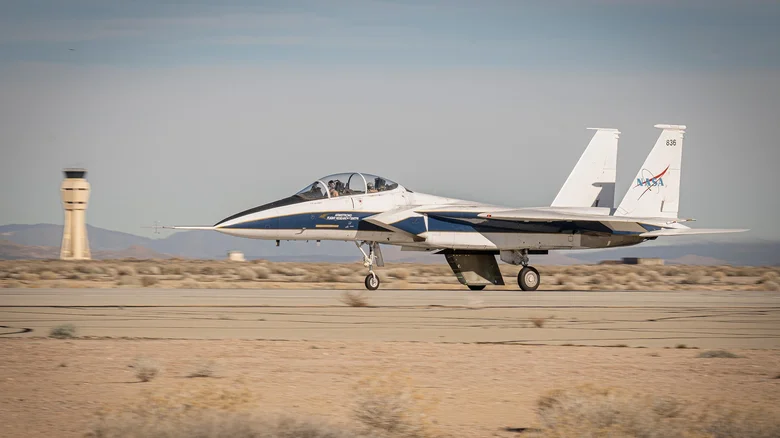
In January 2026, the modified F-15B test aircraft began ground trials at NASA’s Armstrong Flight Research Center in Edwards, California. The jet reached speeds of 144 mph during taxi tests, validating the structural integrity of the mounted wing.
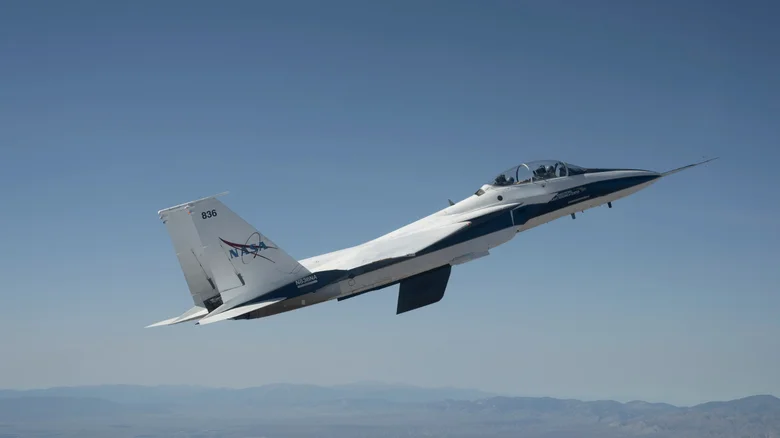
Soon after, the experiment moved skyward. A 75-minute test flight climbed to 34,000 feet, gathering critical data on how the CATNLF design performs under real atmospheric conditions. Mounting the wing vertically allowed researchers to isolate airflow behavior without interference from traditional aircraft structures.
Breaking Down the Million-Dollar Savings Potential
The financial implications are striking. A typical Boeing 777 flight from New York to London consumes roughly 14,500 gallons of fuel. A 10% reduction would save approximately 1,450 gallons per flight. At 2025 fuel prices of $2.25 per gallon, that equates to around $3,200 saved per journey—and significantly more at 2026’s elevated European fuel costs exceeding $5.50 per gallon.
Scale those savings across daily operations, and the numbers escalate rapidly:
- Up to $2.6 million saved annually per aircraft on a single long-haul route
- Over 1,300 Boeing 777 aircraft worldwide capable of benefiting
- Potential industry-wide savings reaching hundreds of millions of dollars annually
Such reductions could reshape airline strategies, enabling lower ticket prices, expanded routes, or reinvestment in fleet modernization.
A Glimpse Into the Future of Commercial Aviation
Despite its promise, the CATNLF technology remains in its early testing phase. NASA plans up to 15 experimental flights, analyzing performance across varying speeds, altitudes, and environmental conditions. The goal is not just incremental improvement but a scalable aerodynamic breakthrough.
What makes this development especially compelling is its timing. With global air travel demand projected to double within 25 years, efficiency gains are no longer optional—they are essential. Moreover, the potential application extends beyond conventional aircraft. NASA suggests that next-generation and even supersonic commercial jets could integrate this technology, redefining performance standards across the industry.
The idea that a fighter jet could quietly pave the way for cheaper airline tickets feels almost poetic. Yet behind that image lies rigorous engineering and a clear economic incentive. If NASA’s CATNLF design proves successful, the ripple effects will extend far beyond research labs—reaching passengers, airlines, and the future of flight itself.