NASA’s push toward permanent lunar habitation has always faced one brutal obstacle: energy survival during the lunar night. While rockets, habitats, and advanced spacesuits dominate public attention, none of them matter without reliable power. Now, a new generation of NASA regenerative fuel cells may be emerging as one of the most important technologies in the future of off-Earth civilization.
The agency’s latest work at its Fuel Cell Testing Laboratory in Cleveland, Ohio, is not merely another engineering experiment. It is an attempt to solve one of lunar exploration’s most punishing realities — sustaining human operations when sunlight disappears for nearly two Earth weeks at a time.
Unlike conventional batteries that gradually exhaust stored charge, regenerative fuel cells function more like a closed-loop energy ecosystem. They combine hydrogen and oxygen to generate electricity, water, and heat. Then, using external power, they reverse the process by splitting water back into its original gases, effectively resetting the system for another energy cycle.
For lunar exploration, that capability could change everything.
Why NASA’s New Fuel Cell Matters for Moon Colonies
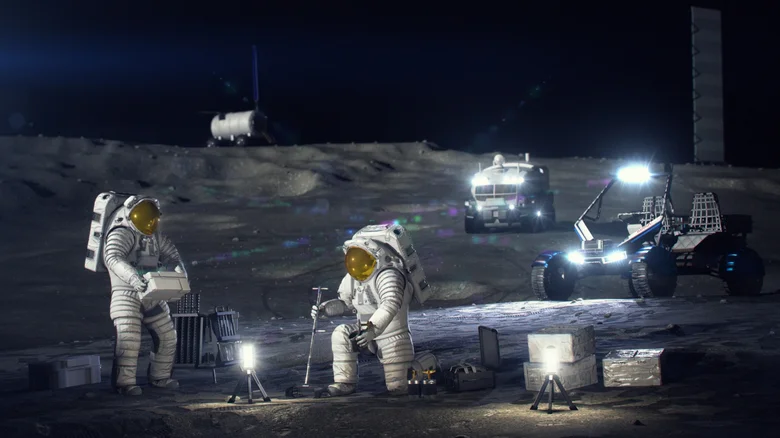
The Moon is far less welcoming than its bright nighttime appearance suggests. Its environment presents a relentless combination of engineering nightmares. Surface temperatures can swing from -292°F to 248°F, while the lunar day-night cycle creates prolonged darkness that cripples traditional solar infrastructure.
Solar panels work exceptionally well in space — until the Sun disappears.
That limitation becomes severe on the Moon’s surface, where darkness can last roughly fourteen Earth days. Habitats, rovers, communications systems, scientific instruments, and life-support equipment cannot simply shut down and wait for sunrise.
NASA’s regenerative fuel cell program directly targets this problem.
Dr. Kerrigan Cain, lead engineer at NASA’s Glenn Research Center, has described the technology as an ideal solution for multiple Artemis-era systems, including habitats, exploration vehicles, and long-duration surface infrastructure. The reasoning is simple: future lunar settlements require energy storage systems capable of surviving extended periods without continuous solar input.
Traditional lithium-ion batteries struggle under such demands.
Inside NASA’s Massive Regenerative Fuel Cell Machine
NASA’s prototype is not a compact gadget destined for a backpack-sized rover. By laboratory standards, it is enormous.
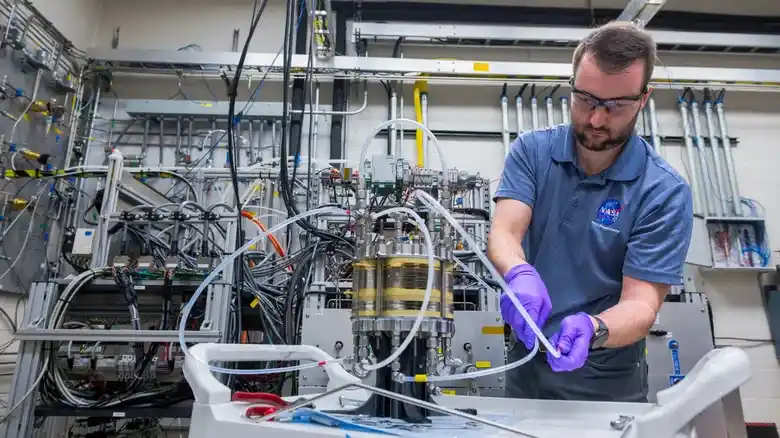
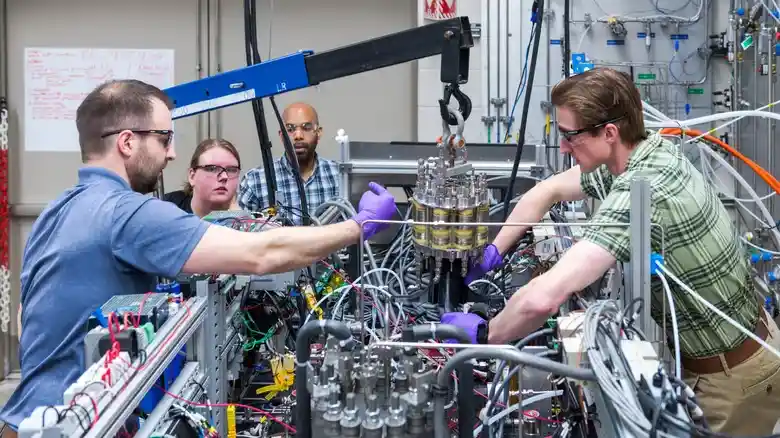
Researchers describe the device as roughly the size of a small sedan, packed with approximately 1,000 components and 270 sensors. The cylindrical architecture resembles a stack of flattened metallic soda cans bundled into a dense engineering assembly.
Handling it is a challenge by itself.
The system must be moved using a crane, then operated remotely from a dedicated control room. That complexity reflects the experimental nature of the technology, but also highlights how seriously NASA is pursuing scalable extraterrestrial energy systems.
Despite its intimidating size, the design carries one critical advantage: weight efficiency.
In spaceflight engineering, mass determines cost, launch capability, payload flexibility, and mission feasibility. Regenerative fuel cells can reportedly deliver up to 3.4 times the storage capacity of comparable battery systems at equal mass, giving them a potentially decisive edge for lunar missions where every kilogram matters.
The Hidden Engineering Challenge Behind Fuel Cell Recharging
Generating electricity is only half the battle.
The more difficult problem involves regeneration efficiency.
Once hydrogen and oxygen produce electricity and water, the system must split that water back into reusable gases. This recharge stage requires an external energy source, typically a photovoltaic array or another power provider.
That means the fuel cell is not a standalone perpetual machine.
Efficiency losses still occur during regeneration, and NASA scientists are actively working to improve gas storage, optimize recharge performance, and reduce energy drop-off across repeated operational cycles.
Since testing began in 2019, researchers have reached several major milestones. Current efforts focus heavily on safely storing the gases generated during recharge while preparing future experiments that replicate harsh lunar environmental conditions rather than controlled laboratory environments.
That transition from laboratory testing to realistic lunar analog simulations represents a critical step. Technologies that perform perfectly inside research facilities often fail when exposed to dust, temperature extremes, vacuum conditions, and operational unpredictability.
Space hardware receives no second chances.
NASA’s Artemis Program Needs a Reliable Lunar Power Revolution
The timing of NASA’s fuel cell development is no coincidence.
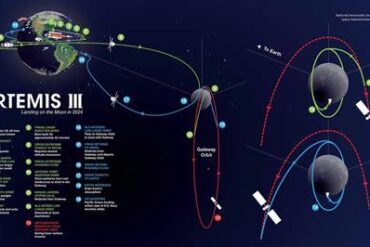
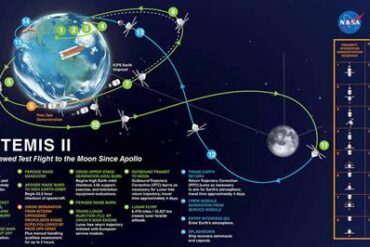
The agency’s Artemis program is steadily progressing toward restoring sustained human activity on the lunar surface. Recent crewed missions and planned commercial lander demonstrations are laying the groundwork for larger ambitions extending into the late 2020s and early 2030s.
But ambitious timelines require practical energy solutions.
NASA’s long-term vision reportedly includes dozens of launches, multiple surface habitats, extended exploration campaigns, and eventually the creation of a permanent lunar foothold. None of those objectives become operationally credible without dependable power storage.
This is where regenerative fuel cells may outperform competing technologies.
Lithium batteries, although highly mature, suffer limitations in energy density and infrastructure demands. Nuclear systems remain attractive candidates for lunar bases but carry deployment constraints, operational complexities, and mission-specific limitations.
Regenerative fuel cells occupy a potentially valuable middle ground — offering high-density storage, recharge capability, and adaptable integration with solar systems.
NASA’s Industrial Partnerships Could Accelerate Lunar Energy Technology
NASA is not developing this technology alone.
The agency has partnered with private-sector innovators specializing in hydrogen and regenerative power systems. One collaborator, Giner, Inc., is helping develop advanced water electrolyzers crucial to the regeneration process.
Another partner, Infinity Fuel Cell and Hydrogen, Inc., previously delivered a regenerative fuel cell prototype capable of at least 500 operational hours, providing a practical demonstration of extended-duration capability.
These partnerships matter because lunar colonization will almost certainly depend on combined government-commercial ecosystems rather than isolated institutional programs.
The Moon’s future infrastructure will likely emerge from integrated collaboration involving national agencies, aerospace contractors, energy specialists, robotics firms, and habitat developers.
Fuel systems sit at the center of that ecosystem.
Could Regenerative Fuel Cells Make Permanent Moon Settlements Real?
For decades, permanent lunar colonies belonged largely to speculative futurism. The missing ingredient was never imagination — it was survivable infrastructure.
Power generation remains the foundation beneath every other element of extraterrestrial habitation.
Without dependable electricity, habitats freeze, communications collapse, scientific operations halt, and human survival becomes impossible. NASA’s regenerative fuel cell initiative does not solve every challenge associated with lunar settlement, but it directly attacks one of the largest barriers to long-duration off-world living.
If current testing succeeds and operational systems mature in time for upcoming Artemis missions, regenerative fuel cells could become one of the enabling technologies behind humanity’s first enduring presence beyond Earth.
Moon colonies no longer depend solely on rockets reaching the surface.
They may depend just as much on whether NASA can teach hydrogen, oxygen, and water to keep civilization alive through the longest nights imaginable.