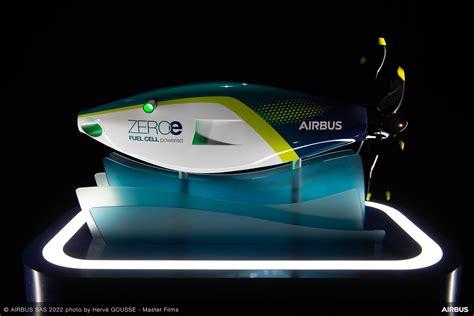
Air travel has transformed the modern world, yet it remains one of the most difficult industries to decarbonize. Commercial aviation contributes roughly 2.5% of global carbon dioxide emissions, while conventional jet engines also produce nitrogen oxides and other pollutants at cruising altitude. As airlines face increasing pressure to reduce their environmental footprint, Airbus is pursuing one of the industry’s most ambitious technological breakthroughs: a hydrogen fuel cell engine capable of producing virtually zero in-flight carbon dioxide and nitrogen oxide emissions.
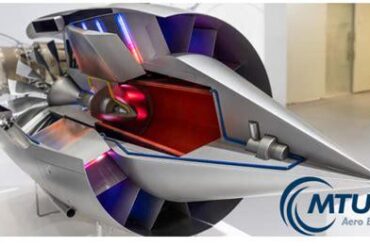
Instead of refining existing turbofan technology, Airbus is attempting to redefine aircraft propulsion altogether. The manufacturer has announced a partnership with MTU Aero Engines to jointly design, develop, test, and certify an advanced hydrogen-powered propulsion system. Engineering work is scheduled to begin in 2027, marking another significant milestone in Airbus’ long-term effort to make hydrogen-powered commercial aviation commercially viable. If successful, the project could fundamentally reshape how future passenger aircraft generate thrust.
The initiative builds upon years of research rather than representing a sudden technological shift. Airbus first introduced its ZEROe program in 2020 with the objective of creating the company’s first hydrogen-powered commercial aircraft. Since then, engineers have evaluated multiple propulsion concepts before determining that fuel cell technology offered the most promising balance of efficiency, scalability, and environmental performance. Prototype testing has already validated several core technologies, while additional ground demonstrations are expected once the next development phase officially begins.
Why Airbus Believes Hydrogen Fuel Cells Are The Future
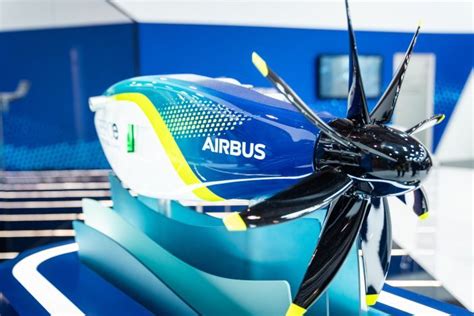
Traditional jet engines burn aviation fuel through combustion, inevitably releasing carbon dioxide regardless of efficiency improvements. Hydrogen fuel cells operate very differently. Instead of burning fuel, they generate electricity through an electrochemical reaction between hydrogen and oxygen. The primary byproduct is water, dramatically reducing emissions while simultaneously eliminating carbon dioxide produced during flight. This elegant approach offers a compelling pathway toward cleaner aviation without relying solely on incremental engine improvements.
Hydrogen has attracted growing attention across multiple transportation sectors because of its exceptional energy content by weight. While electric batteries continue advancing rapidly, today’s battery technology remains far too heavy for large commercial aircraft operating long-haul routes. Every kilogram added to an aircraft reduces payload capacity and operational efficiency, making battery-powered airliners impractical with current technology. Hydrogen therefore represents one of the few realistic alternatives capable of supporting future medium and long-range commercial operations.
Engineering Challenges Still Stand Between Vision And Reality
Despite its remarkable promise, hydrogen presents engineering challenges unlike any encountered with conventional aviation fuel. A comprehensive 2025 study examining hydrogen safety highlighted several critical concerns, including flammability, leakage risks, material compatibility, and long-term storage requirements. Unlike existing jet fuel infrastructure, hydrogen demands entirely new operational procedures, specialized equipment, and carefully engineered safety systems capable of handling its unique physical properties.
Perhaps the greatest obstacle involves storage efficiency. Although hydrogen contains substantial energy by mass, its volumetric energy density is significantly lower than conventional jet fuel. Aircraft therefore require considerably larger storage volumes, often relying on sophisticated cryogenic tanks that maintain liquid hydrogen at extremely low temperatures. Engineers must also address pressure management, insulation performance, leak detection, and ignition prevention before regulators can confidently certify hydrogen-powered passenger aircraft for widespread commercial service.
The Road Ahead For Airbus’ ZEROe Program
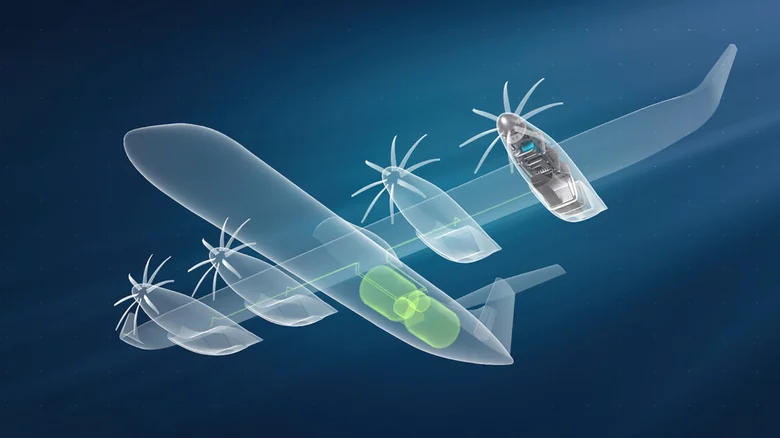
Airbus has gradually refined its strategy through continuous experimentation rather than rushing toward an unrealistic launch date. Following extensive prototype evaluations, fuel cells emerged as the preferred propulsion architecture, allowing development resources to concentrate on the most promising solution. The collaboration with MTU Aero Engines combines Airbus’ expertise in aircraft integration with MTU’s extensive experience in propulsion technologies, creating a partnership designed to accelerate development while navigating the demanding certification process.
Ground testing beginning after the 2027 development phase will provide invaluable operational data, enabling engineers to validate performance, durability, and safety under realistic conditions. Every successful milestone brings hydrogen aviation closer to commercial deployment, although significant technological and regulatory work remains before passengers routinely board hydrogen-powered airliners.
A Transformational Step Toward Cleaner Flight
The aviation industry has pursued efficiency improvements for decades, but genuine zero-emission flight requires entirely new propulsion systems rather than incremental upgrades. Airbus’ hydrogen fuel cell engine represents one of the boldest attempts yet to eliminate aircraft emissions at their source. Considerable engineering hurdles still remain, yet the company’s steady progress through the ZEROe program demonstrates that hydrogen-powered commercial aviation is steadily evolving from an ambitious concept into an increasingly credible future for global air transport.