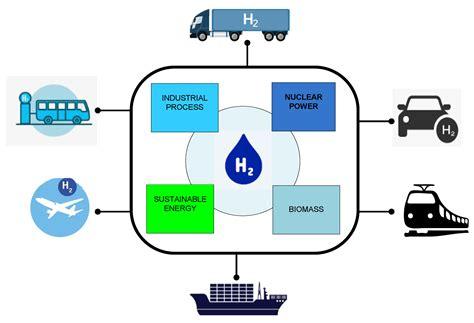
Hydrogen internal combustion engine vehicles (HICEVs) represent a compelling intersection of traditional automotive engineering and the pursuit of zero-carbon emissions. While battery electric and hydrogen fuel cell technologies dominate the clean mobility discourse, HICEVs offer a transitional pathway that leverages the well-understood internal combustion engine (ICE) platform. These vehicles combust hydrogen in a modified ICE to produce only water vapor as a byproduct, avoiding carbon dioxide emissions entirely. However, their reliance on high-temperature combustion introduces nitrogen oxide (NOₓ) emissions, which remain a technical hurdle.
The underlying appeal of HICEVs lies in their ability to retain the mechanical familiarity of ICEs while operating on hydrogen—a clean fuel. Unlike fuel cell vehicles that convert hydrogen into electricity via an electrochemical process, HICEVs ignite hydrogen directly in the engine’s combustion chamber. This seemingly small distinction carries profound implications for infrastructure reuse, vehicle performance, and cost of adoption.
Historic Milestones in Hydrogen Combustion Innovation
The concept of using hydrogen as a fuel dates back over two centuries. In 1806, François Isaac de Rivaz built the first internal combustion engine powered by a hydrogen-oxygen mixture. This was followed by Étienne Lenoir’s Hippomobile in 1863. But modern interest surged in the 1970s when Paul Dieges patented a hydrogen-conversion system for gasoline ICEs. Around the same time, Tokyo City University began hydrogen ICE development, ultimately creating hydrogen-powered buses and trucks.
Mazda explored a unique path by developing hydrogen-burning rotary (Wankel) engines, illustrating the fuel’s versatility across different engine architectures. In 2005, BMW’s Hydrogen 7, a luxury car capable of 301 km/h, showcased the potential for high-performance hydrogen combustion. This was followed by Aston Martin’s Rapide S, equipped with Alset GmbH’s dual-fuel hydrogen/petrol system, which completed the grueling 24 Hours Nürburgring, marking a historical first for hydrogen-powered endurance racing.

In the 2020s, the resurgence in HICEV development has centered on heavy-duty and small-mobility applications. The September 2022 debut of Kawasaki’s hydrogen-powered Ninja H2 engine, adapted from a Toyota Corolla injector, and the May 2023 formation of the HySE association by Honda, Yamaha, Kawasaki, and Suzuki underscore a strategic push toward carbon-neutral motorcycle and small vehicle platforms.
HICEVs in Motorsports and Speed Records
Performance validation of HICEVs is most vividly demonstrated in motorsports. In 2000, a hydrogen-converted Shelby Cobra, led by James W. Heffel, reached 108.16 mph—just shy of the world record. Fast forward to May 2021, Toyota’s Corolla Sport with a hydrogen engine completed the full 24 Hours of Super Taikyu at Fuji Speedway. The car drew on safety principles from the Toyota Mirai fuel cell vehicle, proving hydrogen combustion could be both safe and competitive.
By late 2021, Toyota, Yamaha, Mazda, Subaru, and Kawasaki joined forces to compete in the Super Taikyu Series, with Yamaha unveiling a 5.0 L V8 engine based on Lexus’s 2UR. In 2022, Toyota improved hydrogen engine range by 20%, power by 20%, and torque by 30%. These gains came alongside a broader effort to expand Japan’s hydrogen supply network.
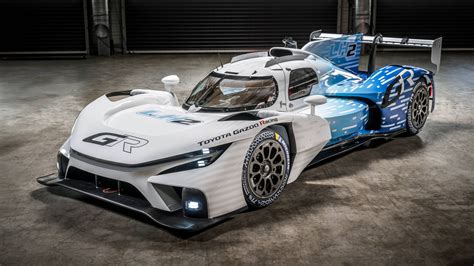
In July 2022, Isuzu, Denso, Toyota, Hino, and CJPT launched an R&D initiative focused on hydrogen ICEs for heavy-duty applications. The innovation continued with the GR Yaris H2 appearing in a WRC demo and the liquid-hydrogen Corolla Sport running at Fuji’s 24-hour Super TEC race in May 2023. Toyota’s unveiling of the GR H2 Racing Concept for Le Mans 2023 hints at a bold vision for hydrogen in elite motorsports.
Comparative Efficiency and Performance Dynamics
Hydrogen combustion in ICEs operates under the Otto cycle, where theoretical efficiencies range from 47% to 56%, depending on compression ratios. Real-world engines operate at about 60% of this limit, meaning actual efficiencies land in the 28–34% range. Oak Ridge National Laboratory has posited that an open-cycle hydrogen engine could theoretically reach 100% efficiency, though this remains aspirational.
In comparison, fuel cells possess a theoretical efficiency of 94.5%, yet their load-efficiency curve is inverted—fuel cells are more efficient at low loads, while HICEVs reach peak efficiency at high loads, making them suitable for performance-focused or heavy-duty scenarios.
Experimental setups have revealed diverse results. A 67 ml four-stroke hydrogen engine achieved 520 W at 21% efficiency. Meanwhile, a converted 107 ml four-stroke solar electric vehicle displayed average efficiencies between 3.5% and 5.9%, peaking at 7.5%, with consumption rates reaching 24 NLM/km at 25 km/h and 31 NLM/km at 43 km/h.
Pollutant Emissions: Not Quite Zero
While the combustion of hydrogen (2H₂ + O₂ → 2H₂O) yields only water vapor in an ideal setup, real-world conditions produce nitrogen oxides (NOₓ) due to the involvement of atmospheric nitrogen at high temperatures. This makes HICEVs not truly zero-emission. However, hydrogen combustion is still far cleaner than gasoline or diesel engines.
Hydrogen’s wide flammability range (3% to 70% in air) allows engines to operate in lean-burn modes, significantly reducing NOₓ emissions and improving fuel economy. Modern HICEVs employ exhaust gas recirculation (EGR) systems to suppress NOₓ further. Some trace amounts of CO, CO₂, SO₂, unburned hydrocarbons, and particulates may also arise from engine oil combustion, not the fuel itself.
Moreover, upstream emissions related to hydrogen production, which is currently 96% fossil-fuel–based, remain a concern. Without a shift to green hydrogen, the full lifecycle emissions of HICEVs cannot be completely mitigated.
Retrofitting and Engineering Modifications
One of the primary strengths of HICEVs lies in the ability to retrofit existing engines, albeit with substantial modifications. These include:
- Hardened valves and valve seats
- Reinforced connecting rods and gaskets
- Non-platinum spark plugs and high-voltage ignition coils
- Hydrogen-specific injectors and intake manifolds
- Supercharger-ready components and high-temperature lubricants
These upgrades result in a ~1.5× cost increase over traditional gasoline engines. Additionally, the stoichiometric hydrogen-to-air ratio of 34:1 displaces oxygen in the combustion chamber, reducing air volume and, consequently, power. Port-injected systems are limited to ~85% output of their gasoline counterparts, while direct injection systems can exceed 100%, achieving up to 115% output**.
Lean-burn strategies, while efficient, halve engine power and require larger displacements or forced induction to maintain acceptable performance. Flame propagation challenges in hydrogen combustion are addressed through external ignition systems, including plasma-assisted spark plugs.
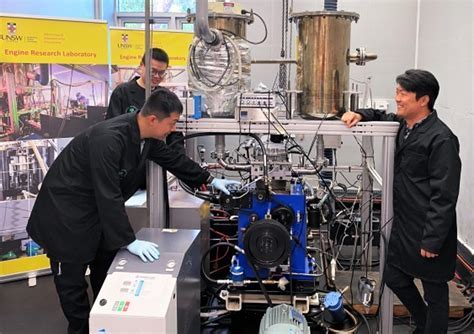
Ongoing research includes diesel-to-hydrogen conversions in Australia and cutting-edge experimentation by TNO in the Netherlands, targeting high-efficiency, low-emission solutions across the mobility spectrum.
Outlook: Bridging Today’s Engines with Tomorrow’s Emissions Goals
The role of HICEVs is not to dethrone battery electric or hydrogen fuel cell vehicles but to act as a strategic bridge technology—especially for heavy-duty, off-road, and legacy fleet sectors. They offer a lower barrier to adoption by reusing existing ICE architecture, supply chains, and maintenance protocols. In racing and performance markets, HICEVs also deliver the auditory and tactile driving experience that many enthusiasts fear losing in the EV transition.
Still, HICEVs will only fulfill their promise if paired with a clean hydrogen economy, particularly green hydrogen sourced from electrolysis powered by renewables. Without clean fuel sources, HICEVs risk being labeled as merely a low-carbon interim solution rather than a long-term fixture in sustainable transportation.
As regulatory pressures mount and industries pivot toward electrification, hydrogen combustion engines may carve out their niche—not by replacing EVs or fuel cell vehicles, but by complementing the diverse energy portfolio required for a truly carbon-neutral future.