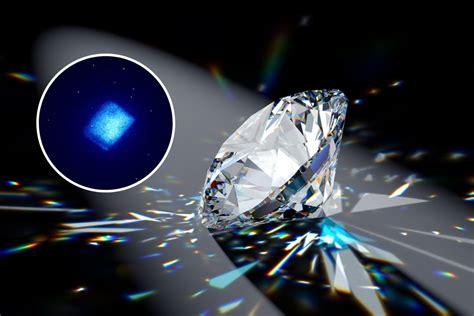
In a world increasingly dependent on clean and long-lasting energy sources, nuclear diamond batteries emerge as one of the most groundbreaking technologies under development. Originally proposed by researchers at the University of Bristol in 2016, this concept leverages nuclear waste—specifically, radioactive carbon-14—to generate electricity continuously for thousands of years. The innovation does not merely lie in using radiation as a power source, but in embedding that radiation inside a man-made diamond structure that functions as a semiconductor.
The Genesis of the Diamond Battery Concept
The diamond battery idea was introduced during the University of Bristol Cabot Institute’s annual lecture, held in November 2016. At the heart of the design is a betavoltaic cell, a type of battery that uses beta decay to generate electric current. The source of this beta radiation is carbon-14 (¹⁴C), an isotope generated as a byproduct in graphite-moderated nuclear reactors.
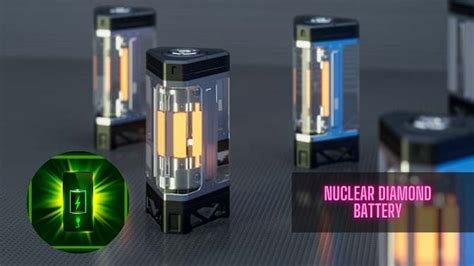
The basic concept involves encapsulating ¹⁴C inside a diamond-like carbon (DLC) structure, forming both the radiation source and a semiconductor junction. An outer layer of non-radioactive carbon-12 DLC serves as a radiation shield and part of the energy conversion mechanism. This configuration results in a power source that emits a steady, low-level electrical current over an astonishingly long time—measured in millennia.
Carbon-14 and the Science Behind It
Carbon-14 is a radioactive isotope produced in nuclear reactors when graphite neutron moderators absorb stray neutrons. Over time, the carbon-12 and carbon-13 atoms convert into carbon-14. This isotope undergoes beta decay, releasing a low-energy electron to become stable nitrogen-14 (¹⁴N):
¹⁴₆C → ¹⁴₇N + β⁻
These electrons carry energy levels around 50 keV, sufficient to dislodge electrons in surrounding atoms, generating electron-hole pairs that can be harvested as electrical current.
Unlike traditional photovoltaic cells that absorb photons, diamond batteries capture electrons, turning radioactive decay into a consistent power supply. This is particularly significant for devices where longevity and reliability outweigh high current output.
Prototype Developments and International Contributions
The first working prototypes, however, did not immediately use ¹⁴C. Instead, they incorporated nickel-63 (⁶³Ni) as a beta source, due to its easier availability and more manageable radiation profile. One early such design came from a 2018 collaboration between the Moscow Institute of Physics and Technology (MIPT) and the Technological Institute for Superhard and Novel Carbon Materials (TISNCM). Their prototype embedded a thin ⁶³Ni foil between layers of diamond converters, yielding around 1 μW of power at a density of 10 μW/cm³.
By December 2024, the University of Bristol confirmed the creation of a prototype using actual ¹⁴C, a monumental leap forward. The newly developed battery acts similarly to a photocell, but instead of light, it captures electrons emitted from radioactive decay within the diamond lattice.
Sustainable Nuclear Waste Utilization
The battery’s raw material—carbon-14—is derived from decommissioned graphite blocks used in aging nuclear power stations. These blocks contain concentrated carbon-14, particularly along their inner surfaces. By heating these blocks to their sublimation point (3,915 K), researchers can isolate ¹⁴C in gas form, making it suitable for chemical vapor deposition (CVD) into artificial diamond sheets.
These radioactive diamond sheets are then sandwiched between non-radioactive diamond layers, not only to contain the radiation but to convert the emitted beta particles into electrical current via semiconductive properties. This dual function design ensures both safety and functionality, a hallmark of sophisticated nuclear engineering.
Real-World Applications and Performance Metrics
Despite its remarkably long lifespan, the nuclear diamond battery delivers very low power outputs. A small cell might generate about 15 joules per day, equivalent to a steady micro-watt level current. This makes it unsuitable for replacing conventional batteries like AA cells, which are capable of delivering power in short bursts.
However, the technology is ideal for specialized low-power applications, such as:
- Space missions, where battery replacement is impossible
- Implantable medical devices like pacemakers
- Seafloor monitoring systems
- Remote sensors in inhospitable environments
In such cases, where reliability over decades or centuries is paramount, these batteries offer a maintenance-free power solution.
Commercialization and the Rise of Arkenlight
Recognizing the commercial potential, the University of Bristol formed a company named Arkenlight in September 2020, with the aim of turning this laboratory marvel into a viable product. Under the leadership of Morgan Boardman, Arkenlight continues to explore scalable manufacturing, radiation safety, and regulatory pathways for these devices.
In September 2024, Arkenlight announced the successful fabrication of a 14C diamond layer, bringing them one step closer to a functional commercial model.
Comparative Efficiency and Future Challenges
Nuclear diamond batteries exhibit exceptional longevity, with ¹⁴C’s half-life extending nearly 5,730 years. This dwarfs alternatives like tritium-based betavoltaics, which decay significantly faster. Yet, these batteries face several challenges:
- Power density remains low, unsuitable for high-demand electronics
- Manufacturing costs for synthetic radioactive diamonds are still high
- Regulatory hurdles surrounding nuclear materials must be addressed
Nonetheless, their exceptional reliability and potential to repurpose nuclear waste into safe, useful energy sources mark a critical step in advancing sustainable energy technologies.
A Glimpse into the Atomic Age of Power
While the nuclear diamond battery is still evolving, it symbolizes a transformative vision: harnessing one of the most dangerous byproducts of nuclear power—radioactive waste—into a stable, safe, and ultra-long-lasting power source. This innovation doesn’t merely answer questions about battery life. It redefines how we perceive energy in contexts where longevity, resilience, and autonomy matter most.
The prospect of having batteries that operate for centuries without maintenance is no longer confined to science fiction. It is slowly becoming a material reality, thanks to the ingenuity of modern materials science, nuclear physics, and engineering innovation. As we approach a future where autonomous systems, interplanetary missions, and deep-sea research become commonplace, the nuclear diamond battery stands as a quiet revolution—powerful not in output, but in endurance.