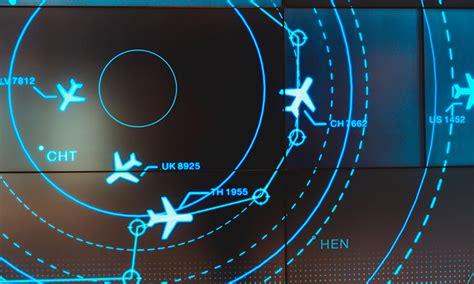
The Federal Aviation Administration’s decision to award the multi-billion-dollar Brand New Air Traffic Control System (BNATCS) contract to Peraton marks a transformative moment for the future of American aviation. We examine the scale, scope, and stakes of a modernization initiative expected to redefine the country’s airspace infrastructure and place unprecedented technological responsibility in the hands of a single national-security contractor.
The United States has long relied on an air traffic control backbone built on 1960s-era radar technology—an architecture fragmented across hundreds of facilities and stretched beyond its design limits. With the FAA forecasting air traffic demand to surge by up to 80% in the coming two decades, the urgency of deploying a sophisticated, satellite-driven, software-enhanced system has never been clearer. The BNATCS program represents an overhaul at a national scale, designed to harden the airspace against outages, accelerate traffic flows, incorporate unmanned aviation, and implement modern surveillance capabilities.
Understanding BNATCS and Why It Matters
BNATCS is envisioned as the first fully integrated, resilient, and scalable air traffic system capable of supporting both current commercial operations and future aerospace demands. The existing structure, battered by multiple high-profile outages—including notable disruptions at Newark Liberty International Airport—has demonstrated the vulnerabilities of outdated, patchwork frameworks. BNATCS aims to eliminate these fragilities by replacing conventional radar with a satellite-surveillance ecosystem capable of real-time, high-precision aircraft tracking across continental, oceanic, and remote airspace.
Central to the project is a unified Terminal Automation System linking more than 500 facilities under a single operational architecture. This consolidated approach removes the inconsistencies inherent in legacy systems, allowing seamless communication and reducing delays during high-volume traffic periods. BNATCS also integrates the Common Automation Platform (CAP)—software powered by machine-learning algorithms that forecast traffic congestion, automate reroutes, and minimize cascading delays.
Beyond efficiency, the new system is engineered for resilience. Redundant communication paths, hardened networks, and advanced cybersecurity layers aim to safeguard operations against hostile attacks and regional outages. Predictive conflict-resolution technology is designed to tighten safety margins even further, identifying risks long before they escalate.
Why Peraton Was Chosen as Prime Integrator
Peraton, headquartered in Reston, Virginia, has quickly become a heavyweight in U.S. defense, intelligence, cybersecurity, and space operations. Although the company was formally established in 2017 following the divestiture of Harris Corporation’s government services arm, it has since expanded into a $7-billion-a-year enterprise employing more than 18,000 specialists across global operations.
Its portfolio includes classified intelligence programs, space-domain awareness systems, cyberdefense networks, and facility-resiliency engineering—capabilities the FAA argues make Peraton uniquely suited to integrate a project of BNATCS’s complexity. The company’s prior work for the FAA includes high-stakes systems engineering, data-communications development, and contributions to the broader NextGen modernization roadmap. With this background, Peraton now assumes responsibility for a national infrastructure overhaul unparalleled in civil aviation history.
In accepting the $12.5-billion award, CEO Steve Schorer emphasized the magnitude of the undertaking, noting that the U.S. government had entrusted the company with transforming one of the world’s most complex and critical operational ecosystems.
Peraton’s Track Record in Government Megaprojects
To understand the capabilities behind Peraton’s selection, it is useful to examine its existing long-term government partnerships. The company has secured several multi-billion-dollar defense, intelligence, and homeland-security agreements, including:
- A $4-billion U.S. Navy CANES contract supporting cyber-ready afloat networks.
- A $2.7-billion Department of Homeland Security engagement for hybrid cloud and data-center optimization.
- More than $1.2 billion in classified space and intelligence programs supporting national-security missions.
- A $1-billion U.S. Central Command operational support initiative across Middle-Eastern theaters.
- An $850-million Department of Defense intelligence-systems modernization contract.
Although BNATCS eclipses these awards in both scale and scope, these programs illustrate Peraton’s experience coordinating diverse technologies, mission-critical workflows, and secure architectures across vast operational environments.

How Peraton Will Shape the New ATC Architecture
As prime integrator, Peraton assumes end-to-end responsibility for the design, development, integration, and delivery of the national system. This involves managing a constellation of subcontractors across software engineering, hardware deployment, facility retrofits, communications infrastructure, artificial intelligence frameworks, and cybersecurity enhancement.
The company must unify these components into a coherent platform that meets FAA specifications for safety, redundancy, resilience, and future scalability. This includes:
- Consolidating terminal and en-route automation systems under a single standardized environment.
- Implementing the Common Automation Platform across multiple facility categories.
- Ensuring compatibility with Performance-Based Navigation (PBN), enabling fuel-efficient curved approaches.
- Building mechanisms to integrate unmanned aerial systems, autonomous aircraft, and commercial space flights.
- Delivering hardened systems capable of maintaining operational continuity even in extreme disruption scenarios.
Timeline, Costs, and Implementation Challenges
The FAA has ordered an accelerated deployment schedule, targeting nationwide operational readiness by the end of 2028. The rollout begins with design and prototype phases in 2026, followed by systemwide testing across selected facilities in 2027, and culminating in full integration by 2028.
This compression of the standard procurement cycle was enabled by targeted regulatory exemptions designed to prevent bureaucratic slowdowns. Subcontractor awards are expected by mid-2026, with pilot implementations launching before the end of that year.
However, historical precedents pose a warning. Previous modernization efforts—particularly components of the NextGen initiative—encountered delays tied to software complications, interoperability challenges, and budget adjustments. BNATCS’s broad technological footprint increases the complexity: integrating satellite tracking, AI-enabled routing, cybersecurity hardening, and facility retrofits simultaneously requires orchestration across hundreds of operational nodes.
The financial picture is equally vast. The initial $12.5-billion contract represents only the starting point. Congressional projections place total lifecycle spending between $20 billion and $30 billion, inclusive of ongoing maintenance, upgrade cycles, facility resiliency improvements, and next-generation integrations.
Despite the massive cost, long-term economic modeling suggests that the efficiency gains—reduced delays, lower fuel burn, fewer cancellations, and improved traffic throughput—could generate national savings well above the system’s total investment. Efficiency rebates are also expected in sectors involving commercial airlines, private operators, and burgeoning unmanned-aviation industries.
Strategic Implications for U.S. Airspace
The modernization is not merely a technical update—it is a strategic repositioning of the United States within the global aviation ecosystem. Many international competitors have already adopted satellite-surveillance systems, with oceanic regions leveraging ADS-B tracking to optimize long-haul traffic. BNATCS positions the United States to match and exceed these capabilities, particularly through machine-learning automation and predictive congestion modeling.
The system’s modular architecture ensures that future technologies—whether space-based communication relays, autonomous flight corridors, or commercial space-launch tracking—can be integrated without large-scale reconstruction. In this sense, BNATCS is less a replacement of the old system and more a platform designed to evolve continuously across decades.
Conclusion: A Pivotal Contract Shaping the Future of Flight
Peraton’s stewardship of the BNATCS initiative places the company at the core of a once-in-a-generation modernization. The stakes extend far beyond technical upgrades: the project will determine how safely, efficiently, and resiliently the United States manages its increasingly crowded airspace. If executed to completion, BNATCS could reestablish the U.S. as the global benchmark for air-traffic technology, offering a blueprint for next-era aerospace infrastructure.
The years ahead will test the collaboration between Peraton, the FAA, and Congress—but the outcome has the potential to redefine national aviation for decades.