Airbus is often synonymous with commercial aviation, but its influence stretches far beyond the realm of passenger aircraft. As Europe’s largest aerospace manufacturer, Airbus plays a pivotal role in defense aviation, producing everything from advanced fighter jets to aerial refueling tankers and unmanned aerial vehicles (UAVs). This multifaceted approach to aerospace manufacturing demonstrates how Airbus has become an indispensable partner for NATO nations and allied forces worldwide.
Airbus and the Eurofighter Typhoon: A European Powerhouse
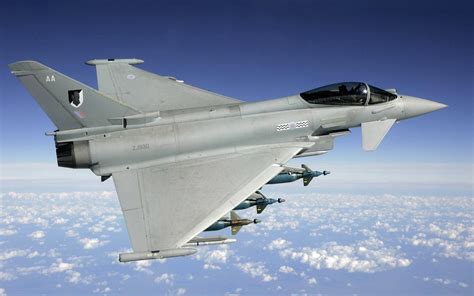
When discussing fighter jets, the Eurofighter Typhoon emerges as Airbus’ most significant contribution. Developed in collaboration with BAE Systems (United Kingdom) and Leonardo (Italy), the Typhoon represents a monumental multinational defense effort between the UK, Germany, Spain, and Italy. With 721 orders placed and operated by nations such as Austria, Saudi Arabia, Qatar, Oman, and Kuwait, the aircraft has cemented its place as one of the most versatile and battle-ready fighters of its generation. In July 2025, Turkey signed a preliminary agreement to become the 10th country to procure this jet, further expanding its global presence.
Powered by twin EJ200 turbofan engines delivering 40,000 pounds of thrust, the Eurofighter can achieve speeds of Mach 2.3 (1,550 mph) at high altitude. Its canard-delta wing design provides exceptional maneuverability, allowing for rapid switching between air-to-air combat and air-to-ground strike missions. With a maximum operational altitude of 55,000 feet, the Typhoon covers 1,800 miles on a full fuel load of 17,000 pounds, making it both fast and enduring.
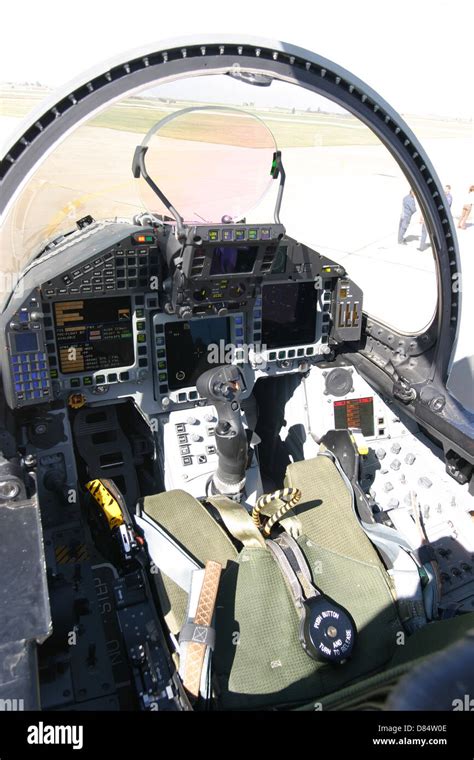
A striking feature of the Typhoon is its material composition. According to Leonardo, 80% of the jet is made of carbon fiber or glass composites, reducing its weight by 30% compared to similar aircraft while also decreasing its radar cross-section. This gives pilots a significant stealth advantage. Advanced avionics further enhance battlefield awareness with electronically scanned radar—offering 50% more coverage than conventional systems—alongside infrared tracking, jam-resistant communications, and the Defensive Aids Sub System (DASS), which provides real-time threat detection against missiles, radar locks, and laser targeting.
Beyond Fighters: Airbus’ Versatile Military Aircraft
Airbus is not solely defined by the Eurofighter. Its extensive military portfolio includes heavy-lift airlifters, refueling tankers, and a growing family of UAVs.
A400M Atlas – Tactical and Strategic Heavy Lift
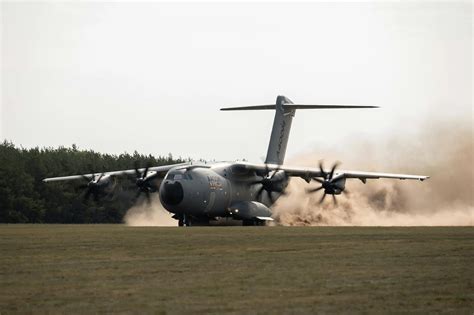
The A400M Atlas is Airbus’ flagship airlifter, capable of carrying a payload of 81,600 pounds. Its four turboprop engines enable operations from short and semi-prepared runways, making it invaluable for humanitarian missions and combat resupply. With the ability to carry armored vehicles, helicopters, and troops, the A400M offers unmatched tactical versatility.
C295 – Tactical Transport and Reconnaissance
The C295 fulfills a crucial role for tactical missions—from cargo and troop transport to armed reconnaissance. Powered by Pratt & Whitney PW127G engines, it accommodates 70 troops while maintaining a cruising speed of 300 mph. Its proven record includes deployments in Iraq, Afghanistan, and Chad, where its reliability in austere environments has been thoroughly tested.
A330 MRTT – Global Refueling Power
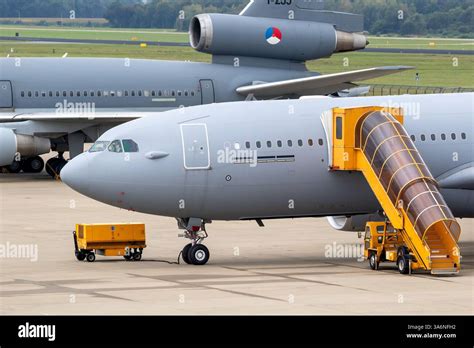
One of Airbus’ most successful military programs, the A330 Multi-Role Tanker Transport (MRTT), serves as a cornerstone for allied air forces. With a 70-ton fuel capacity and 310,000 flight hours logged, the MRTT supports F-16s, F-35s, and Eurofighters across 15 global militaries. Its dual role as a tanker and transport aircraft provides significant cost-efficiency for modern air forces.
Unmanned Systems: Airbus’ Drone Capabilities
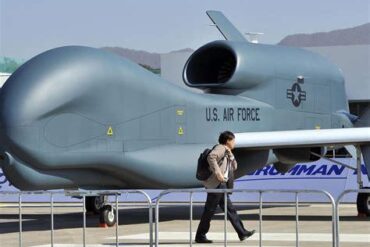
Recognizing the increasing demand for autonomous and remotely piloted systems, Airbus has expanded aggressively into UAV technology.
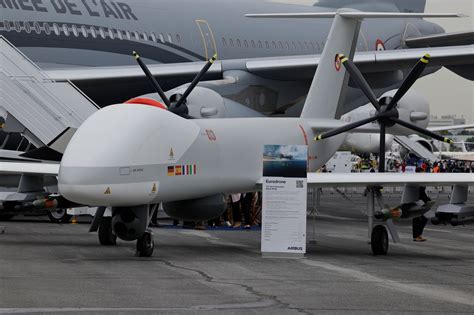
- Eurodrone – A long-endurance platform developed in partnership with France, Germany, Spain, and Italy, capable of 40-hour surveillance missions for intelligence and reconnaissance.
- Zephyr – A solar-powered high-altitude pseudo-satellite designed for persistent intelligence gathering from the stratosphere.
- Flexrotor & Aliaca – Compact UAVs optimized for tactical reconnaissance and maritime intelligence operations.
- VSR700 – A naval unmanned helicopter under development, aimed at enhancing ship-based surveillance and anti-submarine warfare capabilities.
- SIRTAP – A next-generation surveillance drone, showcased at the Paris Air Show 2025, offering all-weather reconnaissance with cutting-edge onboard sensors.
Airbus’ Strategic Role in European Defense
Airbus’ military projects reflect its broader strategic vision: to ensure European defense autonomy. Through collaborations like the Eurofighter program, Airbus facilitates technological independence while reducing reliance on U.S. or non-European defense contractors. Its over 400 industrial partners across the Eurofighter supply chain alone demonstrate the economic and security benefits of such joint ventures.
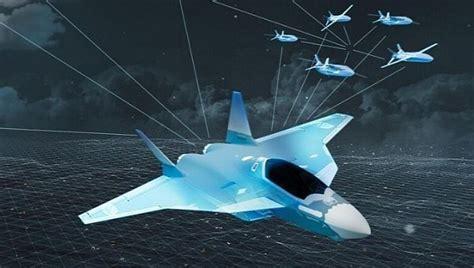
In addition, Airbus’ role in next-generation air combat systems—including its participation in the Future Combat Air System (FCAS)—cements its status as a leader in sixth-generation fighter development, where AI integration, swarming drones, and hypersonic weapon compatibility will redefine aerial warfare.
Conclusion: Airbus’ Expanding Military Footprint
While most people associate Airbus with the A320 family or the A350, the company’s defense division plays an equally critical role in modern military aviation. From the supersonic Eurofighter Typhoon to next-gen unmanned platforms, Airbus consistently pushes the boundaries of innovation. Its aircraft are not only vital to European defense but also integral to the operational readiness of allied forces worldwide.
With upcoming projects like SIRTAP and VSR700, and its deep involvement in the FCAS program, Airbus is positioning itself at the forefront of 21st-century aerial combat technologies. In doing so, it reinforces its dual identity: a commercial aviation titan and a military aerospace powerhouse.