The scale of the United States military’s drone fleet is no longer just a matter of inventory—it is a reflection of a sweeping transformation in modern warfare. The US Department of Defense (DoD) currently operates just over 16,000 unmanned aerial vehicles (UAVs), a figure that spans everything from high-altitude surveillance platforms to small, hand-launched tactical drones. Yet that number, impressive as it sounds, is rapidly becoming outdated in the face of an aggressive expansion strategy designed to redefine battlefield dominance.
This transformation is driven by a stark realization: drones are no longer auxiliary tools—they are the centerpiece of 21st-century combat power. From intelligence gathering to precision strikes and swarm tactics, UAVs now shape how wars are fought, won, and deterred. The DoD’s evolving drone doctrine reflects both urgency and ambition, particularly as global competitors surge ahead in mass production and deployment.
Current US Military Drone Inventory: More Than 16,000 UAVs and Counting
The United States maintains a diverse and technologically sophisticated drone fleet. The existing inventory of over 16,000 UAVs includes multiple categories, each designed for distinct operational roles. These range from large, long-endurance surveillance aircraft to medium-altitude strike drones and smaller tactical systems used by ground forces.
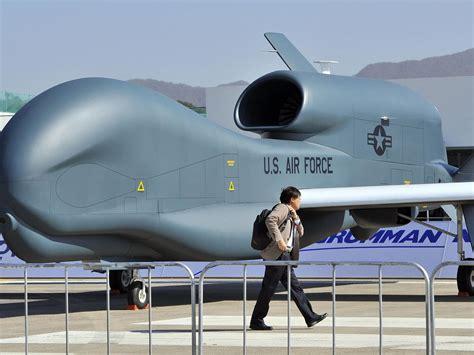
Large systems like the RQ-4 Global Hawk and MQ-4C Triton operate at extreme altitudes, providing persistent intelligence over vast geographic areas. Meanwhile, the MQ-9 Reaper serves as a versatile platform capable of both surveillance and precision strikes, forming the backbone of many counterterrorism and reconnaissance missions.
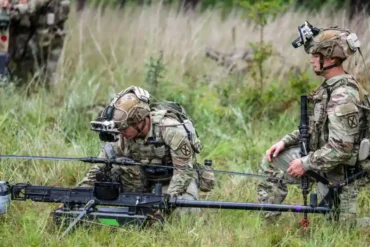
Smaller drones, often overlooked in raw numbers, play an increasingly vital role. These include man-portable reconnaissance drones used by infantry units, offering real-time situational awareness at the squad level. Despite their modest size, their impact on battlefield awareness is profound.
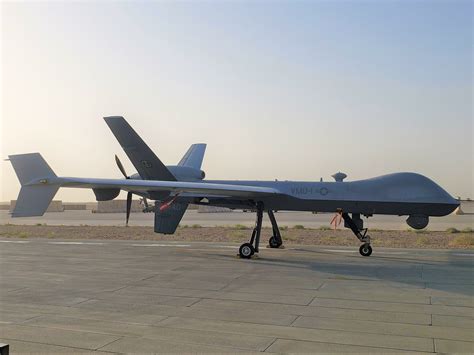
What becomes clear is that the DoD’s current fleet is not lacking in sophistication—it is lacking in scale. Compared to emerging global trends, particularly in Eastern Europe and the Middle East, the United States faces a critical gap in high-volume, expendable drone capabilities.
The 300,000 Drone Vision: A Radical Expansion by 2027
The most striking development is the Pentagon’s plan to expand its drone arsenal to 300,000 units by 2027. This initiative, often associated with the “Drone Dominance” strategy, aims to multiply the current fleet nearly nineteenfold within just a few years.
This expansion is not focused on expensive, high-end systems. Instead, it prioritizes low-cost, mass-produced drones designed to be expendable. These drones can be deployed in large numbers, overwhelming adversaries through sheer volume rather than relying solely on technological superiority.
The logic is simple but powerful: a swarm of thousands of affordable drones can outmaneuver and outlast a handful of expensive platforms. In this new paradigm, quantity becomes a force multiplier, reshaping how military planners think about cost, risk, and effectiveness.
Lessons from Ukraine and Iran: Why Drone Numbers Matter More Than Ever
The urgency behind America’s drone expansion is rooted in real-world conflict. The war in Ukraine has demonstrated, with brutal clarity, that drones are now responsible for a significant portion of battlefield casualties. Reports indicate that over 80% of modern combat losses can be attributed to drone warfare.
Ukraine itself has embraced this reality, producing millions of drones annually and deploying them in both offensive and defensive operations. Russian forces have responded with mass drone barrages, sometimes launching hundreds in a single coordinated attack.
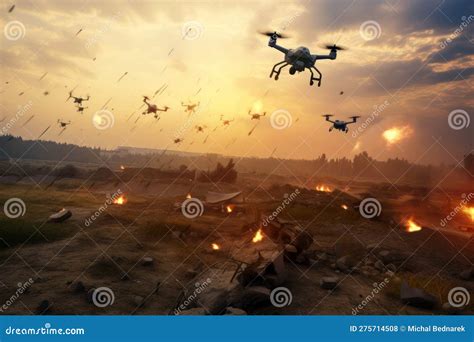
Similarly, Iran’s use of low-cost attack drones, such as those modeled in systems like the Shahed-136, has demonstrated how relatively inexpensive technology can achieve strategic impact. These drones are not designed to survive—they are designed to strike efficiently and in large numbers.
For the United States, the takeaway is unavoidable: without a comparable capability in mass drone deployment, even the most advanced military risks being outpaced by adversaries leveraging scale.
From Precision to Volume: A Doctrinal Shift in US Military Strategy
Traditionally, the US military emphasized high-value, precision platforms—aircraft and systems that are technologically superior but limited in number. This approach, while effective in past conflicts, is increasingly vulnerable in an era defined by asymmetric warfare.
The new doctrine pivots toward attritable systems—drones that are affordable enough to lose without significant strategic cost. This shift represents a fundamental change in mindset: instead of preserving every asset, the focus is on sustained operational pressure through volume.
The introduction of systems like the LUCAS (Low-Cost Uncrewed Combat Attack System) exemplifies this philosophy. Costing between $30,000 and $60,000, LUCAS delivers strike capabilities comparable to far more expensive weapons, including cruise missiles.
SkyFoundry: Building America’s Drone Production Engine
Scaling up to hundreds of thousands of drones requires more than strategy—it demands industrial transformation. Enter SkyFoundry, a groundbreaking initiative designed to turn traditional military depots into high-capacity drone manufacturing hubs.
The goal is ambitious: produce up to one million drones annually. Facilities such as the Red River Army Depot in Texas are being retooled to support this effort, with additional support from installations in Kentucky and Illinois.
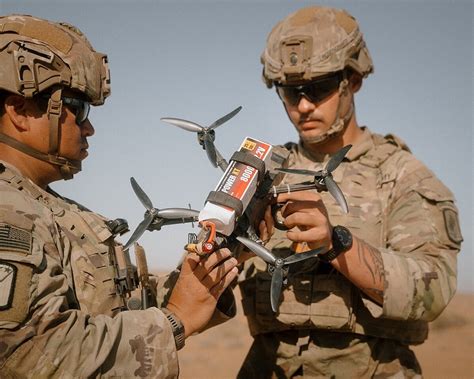
SkyFoundry represents more than just production—it embodies a shift toward supply chain resilience. By reducing reliance on foreign components and emphasizing domestic manufacturing, the program ensures that the US can sustain large-scale drone operations even during prolonged conflicts.
Collaborative Combat Aircraft: The Rise of Loyal Wingman Drones
While small drones dominate the conversation around scale, the DoD is also investing heavily in Collaborative Combat Aircraft (CCA)—advanced UAVs designed to operate alongside manned fighter jets.
These “Loyal Wingman” drones act as force multipliers, supporting pilots in missions ranging from air-to-air combat to electronic warfare. Unlike traditional drones, CCAs are jet-powered, semi-autonomous, and capable of complex mission coordination.
The US Air Force aims to deploy over 1,000 CCA units, while the Navy is pursuing its own variant tailored for carrier-based operations. With projected costs between $15 million and $30 million per unit, these drones are significantly cheaper than modern fighter jets like the F-35, yet still highly capable.
Layered Drone Warfare: From High Altitude to Swarm Attacks
The future of US drone operations lies in a layered ecosystem, where different types of UAVs work together seamlessly. High-altitude platforms like the Global Hawk provide broad surveillance, identifying targets across vast regions.
Mid-tier drones such as the MQ-9 Reaper or CCAs can engage targets directly or relay information. At the lowest level, swarms of small, expendable drones execute precision strikes or saturation attacks, overwhelming defenses.
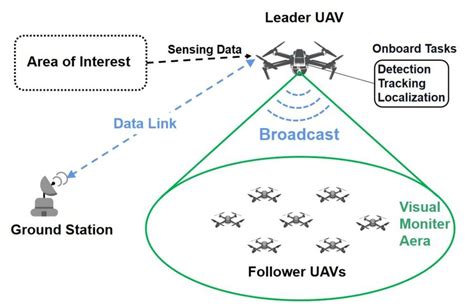
This integrated approach creates a continuous intelligence and strike loop, where information flows rapidly between systems, enabling faster decision-making and more effective engagement.
The Cost Equation: Redefining Value in Modern Warfare
One of the most compelling aspects of the DoD’s drone strategy is its focus on cost efficiency. Traditional weapons systems often come with staggering price tags, limiting how widely they can be deployed.
In contrast, the new generation of drones emphasizes affordability and scalability. Programs aim to reduce unit costs dramatically, with some drones priced as low as $5,000. This allows for mass deployment without the financial burden associated with conventional platforms.
The result is a shift in how military value is calculated. Instead of investing in a few highly advanced systems, the focus is on deploying large numbers of capable, expendable assets that can achieve similar or greater impact.
Global Leadership at Stake: The Race for Drone Supremacy
If the United States successfully executes its drone expansion plans, it will solidify its position as the global leader in unmanned warfare—both in terms of technology and sheer numbers. However, the competition is fierce.
Countries like China and Russia are rapidly advancing their own drone programs, often emphasizing mass production and rapid deployment. The US response, therefore, is not just about maintaining an edge—it is about closing a critical gap.
The next few years will determine whether the Pentagon’s ambitious targets translate into real-world capability. Success would mean a military force capable of deploying hundreds of thousands of drones across multiple domains, fundamentally reshaping the balance of power.
Conclusion: From 16,000 to 300,000—A Transformation in Motion
The question of how many drones the US Department of Defense operates has a clear answer today: just over 16,000. But that number is only the starting point of a much larger story.
With plans to expand to 300,000 drones by 2027, the United States is undertaking one of the most significant military transformations in its history. This shift is not merely about increasing inventory—it is about redefining how wars are fought in an era where speed, scale, and adaptability are paramount.
What emerges is a vision of warfare where drones dominate every level of engagement, from strategic surveillance to tactical swarm attacks. It is a future where the balance of power is determined not just by technological superiority, but by the ability to deploy it at scale, at speed, and at cost.
And in that future, the true strength of a military may no longer be measured by how powerful its weapons are—but by how many it can bring to the fight.