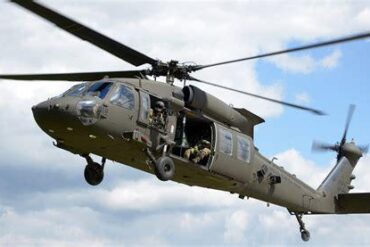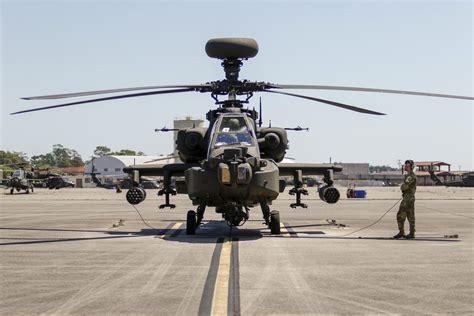
The AH-64 Apache remains the backbone of the United States Army’s attack helicopter fleet, a status it has held for over four decades. Developed by Hughes Helicopters in the 1970s, and later acquired by Boeing, the Apache has become an enduring symbol of American airpower. Known for its menacing silhouette and unmatched battlefield capabilities, the Apache has been deployed in every major U.S. conflict since the Cold War. As of 2025, the U.S. Army operates 824 Apache helicopters, a figure confirmed by the Flight Global 2025 World Air Forces directory. This fleet is composed primarily of the AH-64D Longbow Apache and the cutting-edge AH-64E Guardian, also referred to as Version 6.
The Apache’s battlefield dominance is built on a legacy of combat performance, technical innovation, and continual upgrades. The sheer volume of aircraft operated by the U.S. underscores not only its strategic value but also the logistical and financial investment made to keep this attack helicopter at the forefront of aerial combat.
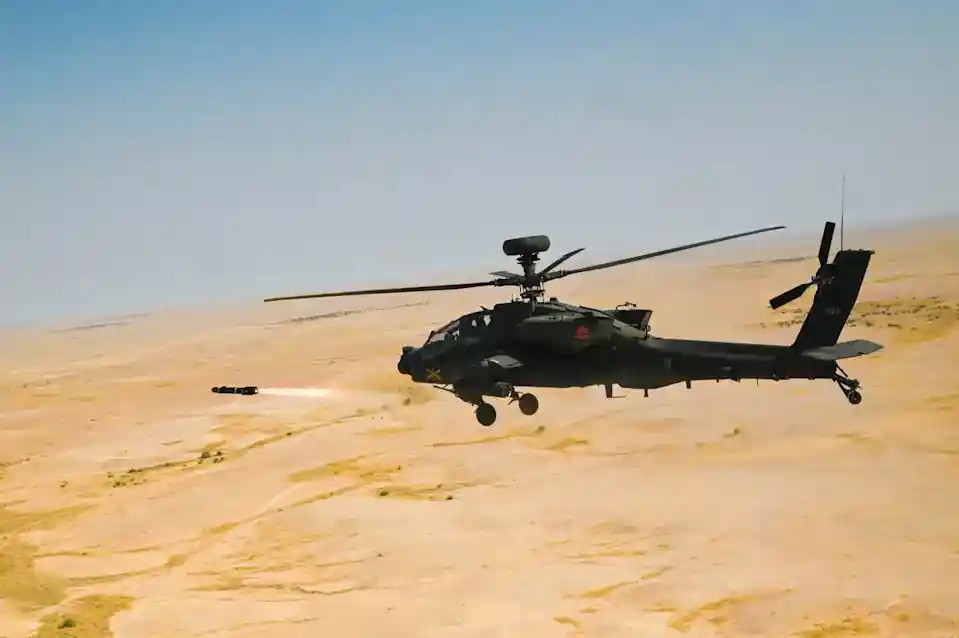
Evolution of a Battlefield Legend: From AH-64A to AH-64E
The Apache first entered service in 1984 as the AH-64A, equipped with powerful sensors and the ability to engage armored targets at long range. The AH-64D Longbow variant followed in the late 1990s, featuring a radar dome above the main rotor and enhanced avionics. It introduced the Longbow radar system, enabling the helicopter to engage multiple targets simultaneously in all weather conditions, without requiring line-of-sight.
While the D-model dramatically enhanced Apache lethality, it was the AH-64E — also called the Guardian — that fully modernized the platform. Boeing began delivering this variant in the early 2010s. The AH-64E is now the most advanced and capable Apache in service, tailored for multi-domain warfare in both conventional and asymmetric battlespaces.
Capabilities of the AH-64E Guardian
The AH-64E Version 6 is the epitome of airborne lethality. This model introduces a suite of upgrades that significantly improve battlefield communication, survivability, and kill-chain efficiency:
- Advanced Sensors and Radar: The AH-64E features upgraded Target Acquisition Designation Sight/Pilot Night Vision Sensor (TADS/PNVS) and enhanced Longbow radar. These allow the helicopter to detect, identify, and target threats faster, even in degraded visual environments.
- Weapons Loadout: A standard AH-64E carries up to 16 AGM-114 Hellfire missiles, 76 Hydra 70 rockets, and a 30 mm M230 chain gun loaded with 1,200 rounds. The latest Hellfire variants can engage drones and moving armored targets with pinpoint accuracy.
- Speed and Altitude: With a top speed exceeding 150 knots (172 mph) and a ceiling of 20,000 feet, the AH-64E can respond quickly to dynamic threats in diverse terrain.
- Communication Systems: The Apache E-model is fitted with the Joint Tactical Information Distribution System (JTIDS), enabling secure and jam-resistant digital voice and data exchanges across allied forces.
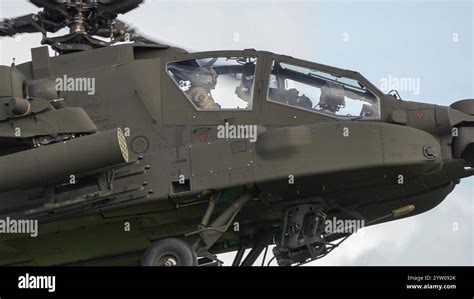
From Manned Might to Networked Power: The Rise of Apache-Drone Integration
Perhaps the most transformative leap in Apache capability is its integration with unmanned aerial vehicles (UAVs). Since 2014, the U.S. Army has pioneered the use of AH-64E helicopters in tandem with drones, offering a force-multiplying capability previously reserved for separate ISR platforms. This development effectively replaced the older OH-58 Kiowa scout helicopter.
Through Level 4 Manned-Unmanned Teaming (MUM-T), the Apache pilot can take control of a drone’s sensors and even its flight path. This capability extends battlefield awareness and enables pre-strike surveillance without putting human lives at risk. Using this system, an Apache can identify a target from miles away via drone feed, then engage it directly or pass the data to ground forces.
Enhancing Network Security: New Radios, New Threats
To match the growing complexity of electronic warfare, the U.S. Army has outfitted Apache helicopters with the Multi-mode Aviation Radio Set (MARS) by BAE Systems. This set includes Type 1 Crypto Modernization and jam-resistant technology designed for high-threat environments. With secure, fast, and resilient communications, Apache pilots are better equipped to coordinate complex missions with other aerial and ground assets.
Such improvements are not trivial upgrades—they represent a fundamental shift toward multi-domain operations, where air, cyber, and information domains intersect on the battlefield.
Apache Versatility in Counter-Drone Operations
As enemy tactics evolve, so too must American capabilities. In the past decade, drones have become both ubiquitous and weaponized. While the MQ-9 Reaper is often the face of U.S. drone warfare, Apache helicopters have been pulled into the anti-drone fight as well.
U.S. Army AH-64D Apaches have been observed in training exercises across the Middle East, especially in Saudi Arabia, using modified Hellfire missiles to shoot down hostile UAVs. These include not just state-operated drones but kamikaze drones—commercial off-the-shelf quadcopters strapped with explosives, deployed by insurgent groups for devastating one-way attacks.
The Apache’s millimeter-wave radar and fire control system allow it to detect and intercept fast-moving airborne threats. In some cases, the chain gun alone may suffice, but radar-guided Hellfires offer a long-range deterrent. This evolving counter-drone doctrine keeps the Apache relevant in modern, unpredictable warfare.
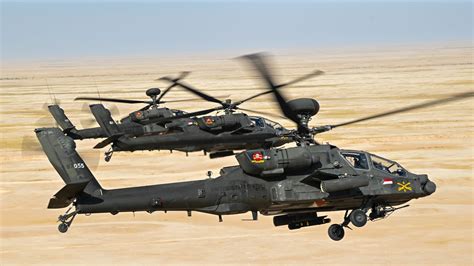
Manufacturing and Modernization: Boeing’s Role
Boeing remains the sole manufacturer and integrator of the Apache line. Its Mesa, Arizona plant is a hub of activity, maintaining legacy systems while producing the latest AH-64E v6 units. The U.S. Army is in the process of converting remaining D-models to E-models, ensuring that all Apaches eventually reach the same high technological standard.
Moreover, Boeing continues to partner with the Army Futures Command to experiment with next-generation capabilities like modular open systems architecture, improved airframe survivability, and autonomous teaming with next-gen drones. These steps ensure the Apache remains lethal well into the 2030s, even as the Army looks to future vertical lift platforms like the Bell V-280 Valor.
Why the U.S. Still Needs 824 Apaches in 2025
The decision to maintain such a massive fleet of 824 Apaches is not merely symbolic. The U.S. military continues to face simultaneous threats across multiple continents, from peer adversaries like China and Russia to asymmetric threats in Africa, the Middle East, and Latin America. The Apache fills a niche that no other aircraft can—providing close air support, anti-armor strikes, convoy protection, and aerial command-and-control in a single platform.
Furthermore, the AH-64E has proven its adaptability to both conventional force-on-force engagements and irregular warfare, making it the Army’s most versatile and deployable attack helicopter. As of now, Apaches are actively deployed in Europe (as part of NATO deterrence), the Pacific (with forward-deployed brigades), and the Middle East (where threats remain persistent).
Global Footprint: U.S. Apache Influence Abroad
Though this article focuses on U.S. Apache inventory, it’s important to highlight that America’s Apache diplomacy has helped shape allied capabilities as well. Over a dozen countries now fly the AH-64 in some form, including Israel, Japan, the UK, India, and Saudi Arabia. Many of these nations receive logistical, training, and technological support from the U.S., allowing for interoperability in joint operations.
As a result, the Apache has become a cornerstone not just of American defense, but of Western coalition military power worldwide. The knowledge gained from overseas operations further informs U.S. Apache modernization programs.
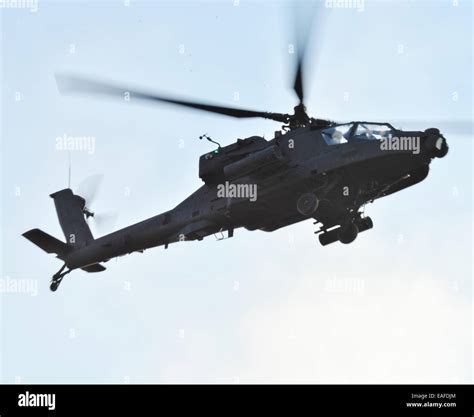
Conclusion: America’s Apache Dominance Remains Unmatched
In 2025, the Apache AH-64 continues to define battlefield dominance. With 824 active helicopters, ongoing upgrades to the E-model standard, integrated drone warfare capability, and enhanced digital communications, the U.S. Army’s Apache fleet is not just surviving—it’s evolving.
Boeing’s commitment to continual innovation ensures the Apache remains lethal, relevant, and versatile in the most demanding combat theaters on Earth. As warfare becomes more networked, high-tech, and unpredictable, the Apache’s adaptability—both in hardware and doctrine—will be critical to maintaining America’s aerial edge.
Whether hovering low through mountain passes or guiding drone strikes from afar, the Apache helicopter remains the spearhead of U.S. Army aviation—and shows no signs of slowing down.