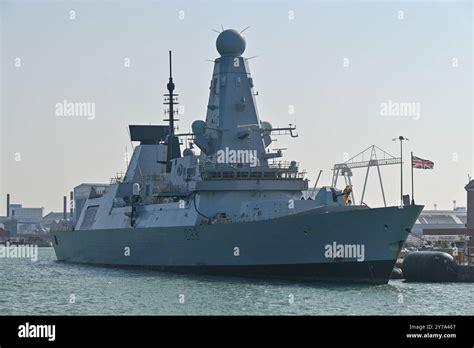
The Type 45 Destroyer, officially known as the Daring-class, represents the backbone of the United Kingdom’s advanced naval surface fleet. These formidable warships have redefined the Royal Navy’s air defence capabilities, projecting British maritime power and offering unparalleled protection to allied forces. Their cutting-edge technology, sheer firepower, and versatility have made them one of the most sophisticated destroyer classes in the world.
The inception of the Type 45 program stemmed from the need to replace the aging Type 42 Sheffield-class destroyers, which had served the Royal Navy since the 1970s. The requirement was clear: Britain needed a warship capable of defending naval task groups from increasingly sophisticated airborne threats, including fighter jets, drones, and sea-skimming anti-ship missiles. Thus, the Daring-class was born.
As of 2025, the British Royal Navy operates a total of six Type 45 Destroyers, marking the completion of this specialized fleet. The six vessels in active service are:
- HMS Daring (D32)
- HMS Dauntless (D33)
- HMS Diamond (D34)
- HMS Dragon (D35)
- HMS Defender (D36)
- HMS Duncan (D37)
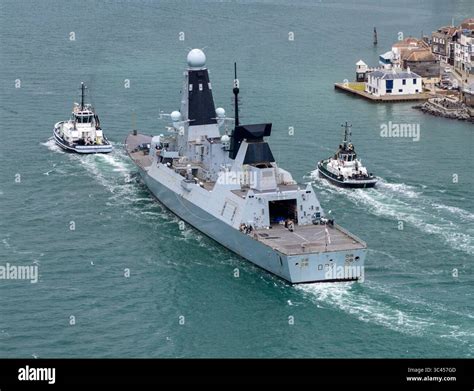
These six ships were commissioned between 2009 and 2013, with HMS Daring entering active service in July 2009. Though initially, the British government planned to produce twelve of these destroyers, budget constraints and strategic reassessments reduced the order to eight, and finally to six vessels. Despite the smaller fleet size, the Royal Navy has emphasized that the exceptional capabilities of each Type 45 more than compensate for the limited number.
The Cost of Power: Financial Commitment Behind the Type 45 Fleet
Each Type 45 Destroyer comes with an eye-watering price tag of approximately $1 billion USD, reflecting the complexity of their design and advanced weaponry. Beyond construction costs, operating these warships is equally significant, with daily running expenses averaging $171,864 USD. Despite these financial demands, the Royal Navy has deemed them indispensable to Britain’s national defence strategy, particularly in safeguarding vital shipping lanes, escorting aircraft carriers, and participating in multinational maritime operations.
Sea Viper: The Heart of the Type 45’s Combat System
The Type 45’s primary weapon system is the Sea Viper Principal Anti-Air Missile System (PAAMS), designed to counter a wide spectrum of airborne threats with precision and speed. Sea Viper integrates advanced radar, missile guidance, and vertical launch technologies to create a shield around the ship and its accompanying fleet.
Each destroyer can fire eight missiles in under ten seconds, while simultaneously guiding up to sixteen missiles towards their targets. These missiles are capable of engaging threats at distances exceeding 70 miles, offering substantial defensive coverage during high-risk operations.
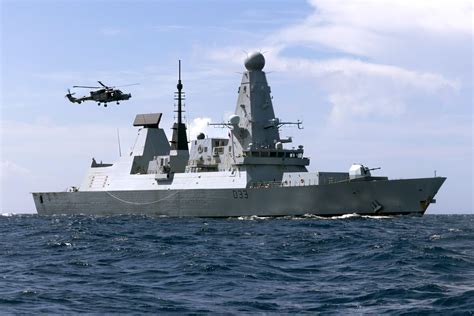
Complementing Sea Viper is the Sampson Multi-Function Radar, a powerful sensor system mounted atop the ship’s distinctive tall mast. The Sampson radar can detect and track both air and surface targets within a 250-mile radius, providing early warning and rapid targeting data to onboard weapons systems.
Additional Armament and Defensive Systems
While anti-air warfare is their primary role, the Type 45 Destroyers are equipped with a suite of weapons to defend against a broad array of maritime threats. These include:
- Two Phalanx 20mm Close-In Weapon Systems (CIWS) for last-ditch missile defence
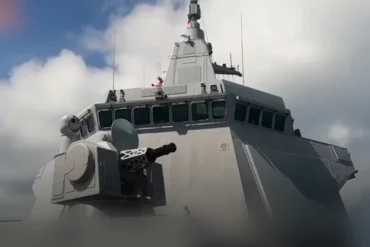
- BAE Systems 4.5-inch Mark 8 Mod 1 Naval Gun, suitable for shore bombardment and surface engagements
- Two 30mm DSM Mark 2 Automated Small Caliber Guns
- Two 7.62mm Miniguns
- Up to six FN MAG general-purpose machine guns
This layered defensive network enables the Daring-class to operate in hostile environments, supporting amphibious assaults, carrier strike groups, and independent patrols.
Size, Speed, and Operational Range
Physically, the Type 45 Destroyers are imposing vessels. Each ship displaces approximately 8,232 tonnes of seawater, stretches 466 feet (142 meters) in length, and boasts a top speed of 34.5 mph (30 knots). Their operational range extends to roughly 8,055 miles, allowing them to conduct extended deployments without immediate need for resupply.
The ships also feature a flight deck and hangar capable of supporting AgustaWestland AW159 Wildcat or Merlin HM2 helicopters, enhancing their anti-submarine warfare and search-and-rescue capabilities.
Type 45s on the Frontline: Real-World Operations and High-Stakes Missions
Since entering service, the Type 45 fleet has been deployed extensively across the globe. They have participated in operations ranging from counter-piracy patrols off the Horn of Africa to providing air defence for Royal Navy aircraft carriers. In June 2025, the HMS Duncan notably took part in shadowing a Russian naval vessel transiting the English Channel and North Sea, highlighting the ship’s enduring strategic relevance in European waters.
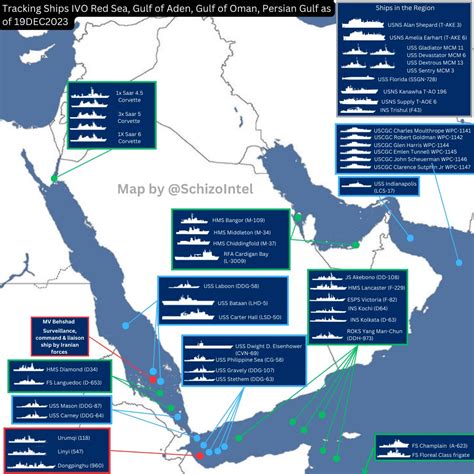
Beyond European theatres, Type 45 Destroyers have operated in the Persian Gulf, demonstrating their capacity to protect critical trade routes and deter aggression. Their combination of surveillance, missile defence, and rapid response makes them essential assets for maintaining freedom of navigation in contested regions.
Reliability Challenges and Power System Upgrades
Despite their advanced design, the Type 45 fleet has faced criticism over reliability issues, particularly concerning their WR-21 gas turbine engines, which experienced power failures in warm climates. These problems led to costly retrofit programs aimed at improving engine performance and power resilience.
The Royal Navy’s Power Improvement Project (PIP), initiated in recent years, involves significant modifications to enhance electrical generation and propulsion reliability. These upgrades are critical, ensuring the ships can operate effectively in demanding environments, from the freezing North Atlantic to the sweltering waters of the Middle East.
The Future of the Type 45 Fleet and Beyond
Looking ahead, the six Type 45 Destroyers are expected to remain in service until at least 2038, forming a core element of Britain’s maritime defence for the next decade. Their role will become increasingly vital as global security threats evolve, particularly with the proliferation of hypersonic missiles and unmanned aerial systems.
Plans for successor programs are underway, with discussions surrounding the Type 83 Destroyer, envisioned as the next generation of air defence warships. However, until these future vessels materialize, the Daring-class remains the most capable surface combatants in the Royal Navy’s arsenal.
In summary, the Type 45 Destroyers embody a blend of technological innovation, operational versatility, and raw combat power. While their development and maintenance have been costly, their contribution to the United Kingdom’s global maritime influence is undeniable. As tensions persist in strategically vital waters, these formidable warships will continue to serve on the front lines, safeguarding Britain’s interests across the world’s oceans.