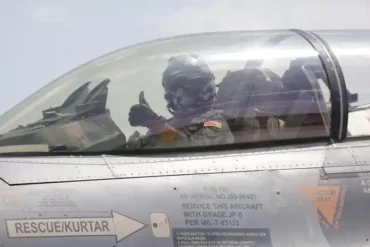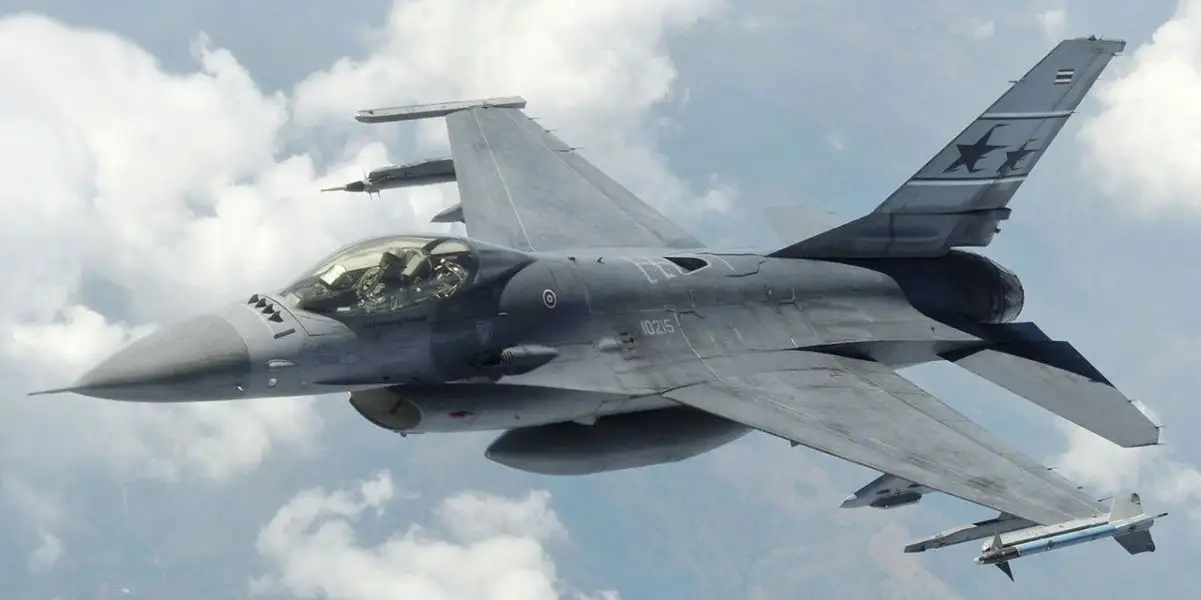
The Royal Thai Air Force (RTAF) has steadily built a formidable aerial defense capability around one of the world’s most versatile multirole fighters—the F-16 Fighting Falcon. These aircraft, originally designed by General Dynamics and later produced by Lockheed Martin, serve as the backbone of Thailand’s air combat and defense strategy. With regional tensions flaring and modernization efforts ramping up, the F-16 remains central to Thailand’s national security doctrine.
Thailand’s F-16 Inventory: The Real Numbers
Thailand currently maintains a fleet of approximately 54 F-16 fighter jets. This figure includes multiple variants acquired across several procurement waves since the late 1980s. The majority of the fleet is made up of F-16A/B Block 15 and F-16A/B ADF (Air Defense Fighters), although select aircraft have been upgraded significantly under various modernization programs. These fighters operate across multiple RTAF squadrons, notably the 102 and 103 Squadrons based at Korat Royal Thai Air Force Base.
The first batch of F-16s arrived in 1988 under the Peace Naresuan program, and subsequent deliveries continued into the 1990s and early 2000s. Today, although some airframes are aging, Thailand has invested heavily in refurbishing these platforms to extend their operational relevance well into the 2030s.
Why the F-16 Still Matters in Thailand’s Defense Strategy
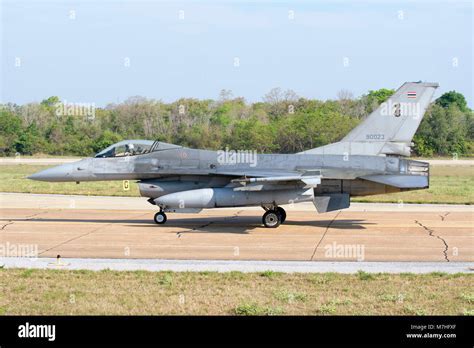
The F-16 remains irreplaceable in the Royal Thai Air Force due to its proven combat capability, cost-effectiveness, and adaptability. While discussions about acquiring fifth-generation fighters like the F-35A continue, budget limitations and political factors have kept the F-16 as the principal fighter jet for the foreseeable future.
Unlike neighboring countries that have diversified their fleets with Russian or Chinese aircraft, Thailand has primarily leaned on Western-made air platforms, valuing the interoperability and logistics advantages that come with American-made systems. This focus has allowed the RTAF to build deep expertise in operating and maintaining F-16s, especially in air-to-air and multirole configurations.
Special Modifications for Thailand’s F-16 Fleet
Thai F-16s are not standard-issue airframes. Most have undergone mid-life upgrades (MLUs), transforming these decades-old fighters into platforms with near-4th generation-plus capabilities. These upgrades include:
- Advanced radar systems, such as the AN/APG-66(V)2 for better target tracking
- New mission computers and avionics, enhancing situational awareness
- Helmet-mounted cueing systems, allowing pilots to lock targets visually
- Extended-range fuel tanks, adding critical combat endurance
- Improved communications suites, enabling secure, encrypted data links with command elements and other aircraft
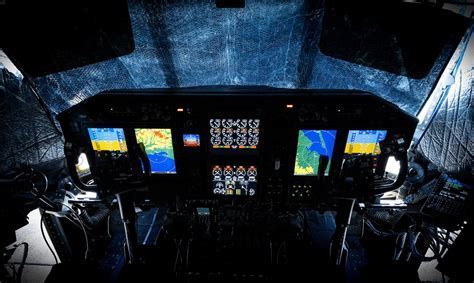
These upgrades were not uniform; aircraft across different squadrons received different configurations based on mission priorities and available funding. As of 2025, more than 30 aircraft have undergone full or partial modernization.
Combat Missions and Deployment: A Real-World Role
The strategic importance of Thailand’s F-16s was recently demonstrated amid heightened tensions at the Thailand-Cambodia border. In response to reported Cambodian incursions, the RTAF deployed six F-16s to secure Thai airspace and deliver precise air-to-ground strikes against hostile positions. Thai officials claimed the jets neutralized multiple targets, showcasing their capability to deliver decisive blows in real-time conflict scenarios.
This operation highlighted the F-16’s role as more than just a deterrent. These jets are actively used for combat air patrols, rapid response operations, and offensive strikes, all while maintaining readiness for joint exercises and multilateral operations with U.S. and ASEAN allies.
Armament and Loadout Flexibility
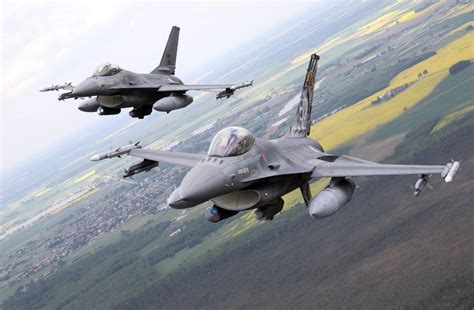
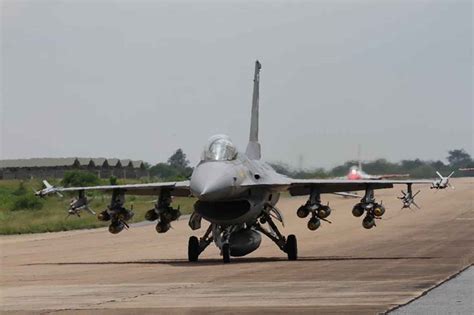
The Royal Thai Air Force has configured its F-16s to carry a diverse weapons package, allowing them to operate in a wide variety of mission profiles:
- Air-to-air missiles: AIM-9 Sidewinder, AIM-120 AMRAAM, Python-3/4
- Air-to-ground munitions: AGM-65 Maverick, GBU-12 Paveway II laser-guided bombs, Mk 82/84 general-purpose bombs
- Electronic warfare pods: AN/ALQ-131 ECM pods for jamming and survivability
Each F-16 possesses 11 hardpoints, giving Thai pilots the ability to mix weapons and fuel tanks based on mission requirements. Whether intercepting hostile aircraft or striking ground targets, Thailand’s F-16s provide a reliable, proven combat platform adaptable to dynamic mission needs.
Cost-Efficiency and Strategic Value
Thailand’s decision to stick with the F-16 wasn’t just about capability—it was also about economics and long-term sustainability. When initially procured, each F-16A/B unit cost the Thai government between $30 million to $60 million, depending on configuration and package deals. More recent acquisitions and upgrade packages, particularly those akin to the F-16V Block 70/72 standard, push the cost above $60 million per aircraft.
Still, the F-16 delivers value that newer fighters often cannot, especially when measured in cost per flight hour, maintenance infrastructure, and pilot familiarity. For a country like Thailand, balancing capability with fiscal discipline is paramount, and the F-16 continues to deliver on both counts.
Fleet Longevity and Future Plans
Thanks to airframe strengthening and updated avionics, many of Thailand’s F-16s are now expected to remain operational until at least 2030–2035. With most aircraft now flying with structural upgrades that allow up to 8,000 flight hours, the RTAF has bought crucial time to plan its next-generation fighter transition.
Thailand has expressed interest in acquiring F-35A stealth fighters, but U.S. hesitancy over regional export controls and Thailand’s current defense budget constraints have put those plans on hold. Instead, the RTAF may opt for more F-16V Block 70/72s or even a mix with Sweden’s Saab JAS 39C/D Gripens, already operational at Surat Thani Air Base.
Regional Comparison and Strategic Implications
Thailand’s F-16 fleet is one of the most mature and combat-ready in Southeast Asia. Compared to its neighbors:
- Vietnam still relies heavily on Russian Su-27/30s
- Cambodia lacks modern fighter capability
- Malaysia uses a mixed fleet of MiG-29s, Su-30MKMs, and F/A-18Ds
- Indonesia has a growing F-16 fleet and is also modernizing
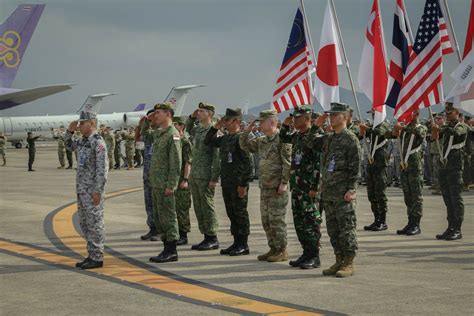
Thailand’s long-term familiarity with F-16 systems, pilot training regimens, and logistical infrastructure gives it a substantial advantage in force readiness and mission turnaround time. Moreover, its close defense ties with the United States enhance operational interoperability during joint exercises like Cobra Gold.
Conclusion: Thailand’s F-16s Are More Than Legacy Fighters
The story of Thailand’s F-16 fleet is not one of obsolescence, but of strategic adaptation. With roughly 54 airframes, many of which have been modernized to near-current standards, Thailand has forged a capable, flexible, and sustainable fighter force that can meet both current and emerging threats. From border skirmishes to allied exercises, the F-16 continues to serve as a pillar of Thai air power.
In the coming years, whether or not Thailand transitions to fifth-generation fighters, its investment in keeping the F-16 fleet modern and mission-capable will ensure the RTAF maintains its edge in Southeast Asia’s rapidly evolving defense environment.