The Israeli Air Force (IAF) has long been recognized as one of the most technologically advanced and battle-tested air forces in the world. Over the years, Israel has focused its military aviation on maintaining superiority in the volatile Middle Eastern region, prioritizing cutting-edge technology and specialized equipment. With its strategic location and ongoing geopolitical challenges, Israel has invested heavily in airpower, particularly fighter jets. But how many fighter jets does Israel have, and what are the primary aircraft that make up the backbone of the Israeli Air Force?
This article delves into the detailed composition of the Israeli Air Force’s fighter jet fleet, focusing on key aircraft models such as the F-35I “Adir”, F-15 series, and F-16 series, among others. Additionally, we will explore future plans for the expansion of Israel’s aerial capabilities and discuss the strategic significance of these assets.
The Backbone of Israel’s Air Force: Fighter Jet Overview
As of 2025, the Israeli Air Force’s fighter jet fleet is largely composed of advanced F-35 stealth fighters, F-15 fighter jets, and F-16 multi-role aircraft. These fighter jets serve various roles, from air superiority and strike missions to air defense and electronic warfare. The total number of fighter jets in Israel’s fleet is estimated to be between 300 and 400 aircraft, making it one of the most formidable air forces in the world.
Israel has long maintained a strategic partnership with the United States, a relationship that has significantly influenced the composition and capabilities of its air fleet. Most of Israel’s fighter jets are based on American-made models, although they have been heavily customized to meet Israel’s specific defense needs.
F-35I “Adir” Stealth Fighter Jets
One of the crown jewels of the Israeli Air Force’s fleet is the F-35I “Adir”. The F-35I is a customized version of the Lockheed Martin F-35 stealth fighter, designed specifically to meet Israel’s operational requirements. This aircraft represents the cutting edge of stealth technology and is capable of executing a variety of missions, from intelligence gathering to precision strikes.

Current Deployment: At Least 39 Aircraft
As of October 2024, Israel has deployed at least 39 F-35I “Adir” aircraft. These jets are stationed at the Negev Air Base (Nevatim Air Base), with three operational squadrons: 116 Squadron, 117 Squadron, and 140 Squadron. The F-35I aircraft are equipped with advanced avionics, sensors, and electronic warfare capabilities, making them essential to Israel’s air dominance strategy.
Future Plans: Expansion of the F-35 Fleet
In November 2024, Israel signed an agreement with the United States to expand its fleet by purchasing additional F-35 jets. This deal is set to increase the IAF’s F-35I squadron capacity with a third squadron planned for deployment. Israel’s ongoing commitment to the F-35 program highlights the strategic importance of stealth technology in countering adversaries with advanced air defense systems, such as Iran.
F-15 Series: The Multi-Role Heavyweight
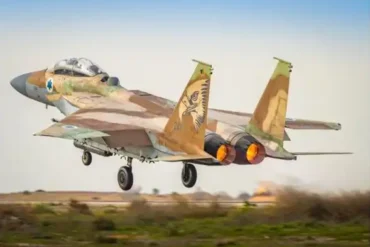
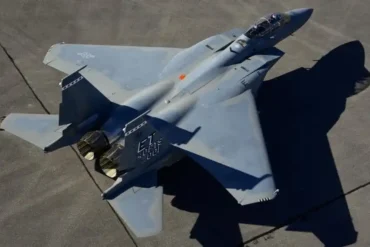
Another cornerstone of the Israeli Air Force’s fighter jet fleet is the F-15 series, which has been in service with Israel for several decades. The IAF operates a number of variants of the F-15, including the F-15I “Ra’am” and the newer F-15IA.
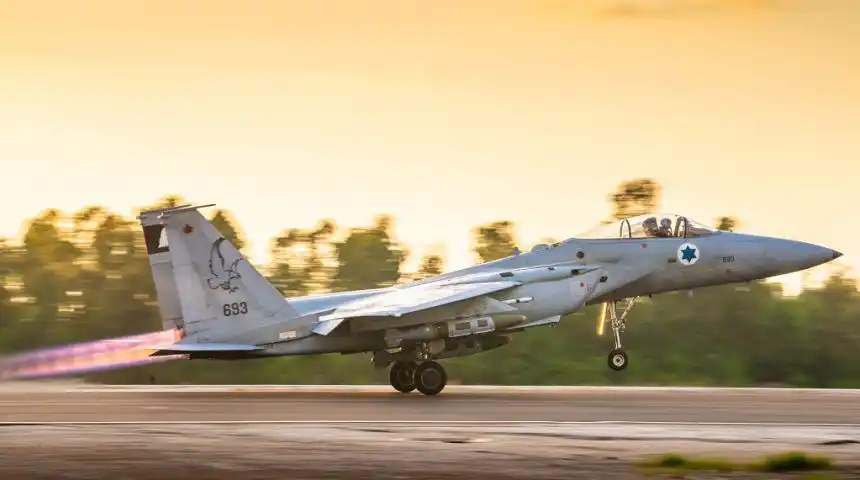
F-15I “Ra’am”: A Long-Range Strike Fighter
The F-15I “Ra’am” is a specialized variant of the F-15E Strike Eagle developed for Israel. This model is designed primarily for long-range precision strikes and ground attack missions. The F-15I is equipped with advanced targeting systems, fuel tanks for extended range, and other modifications tailored to Israel’s operational needs.
The exact number of F-15I aircraft currently in service is not publicly disclosed, but it is widely believed that Israel operates multiple squadrons of F-15s, further enhancing its ability to project power across the region.
F-15IA: Customized for Israel’s Needs
The F-15IA is the latest iteration of the F-15 series that Israel has procured. This variant of the F-15 is a highly customized version designed to meet Israel’s specific requirements for electronic warfare, survivability, and combat effectiveness. In November 2024, Israel signed a significant deal with the United States for the procurement of 25 F-15IA aircraft, with an option to purchase an additional 25 jets.
The F-15IA is seen as a strategic asset, offering superior payload capacity, speed, and range, making it an ideal choice for both air superiority and precision strike missions.
F-16 Series: The Workhorse of the Israeli Air Force
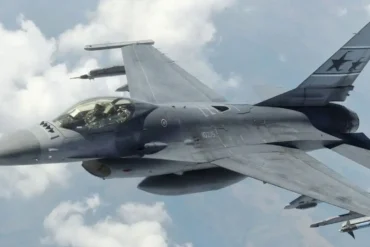
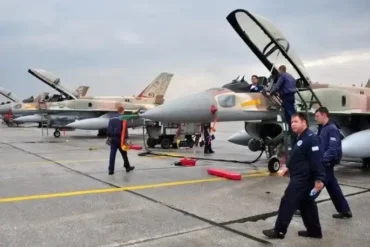
Perhaps the most iconic and widely recognized aircraft in the Israeli Air Force is the F-16 Fighting Falcon. Israel has operated several versions of the F-16, with the F-16I “Sufa” being the most prominent and specialized variant. The F-16 series remains the backbone of Israel’s fighter fleet and is a critical component in carrying out both defensive and offensive operations.
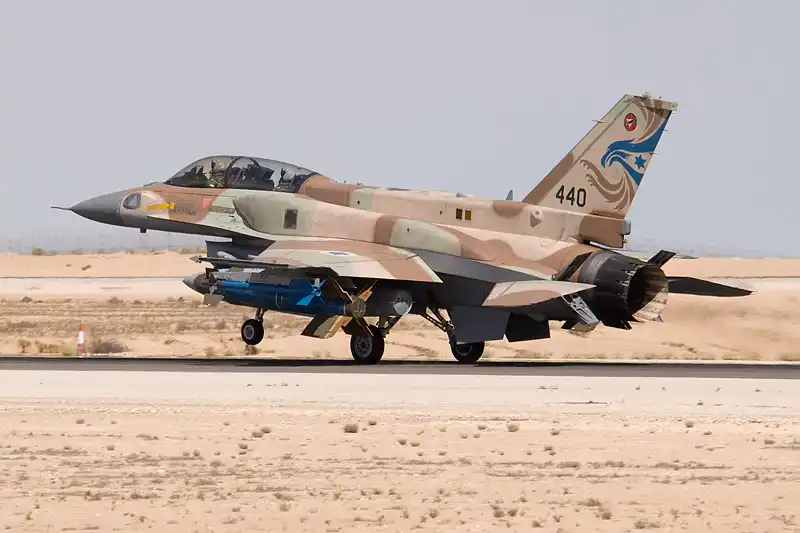
F-16I “Sufa”: The Multi-Role Fighter
The F-16I “Sufa” is a highly customized version of the F-16, optimized for the Israeli Air Force’s specific operational needs. The Sufa (meaning “storm” in Hebrew) is equipped with advanced avionics, improved weapon systems, and enhanced radar capabilities. It is a multi-role fighter, capable of performing both air-to-air and air-to-ground missions with great efficiency.
Israel currently operates four squadrons of F-16I “Sufa” fighters, with each squadron consisting of around 18 to 24 aircraft. The F-16 series continues to play a critical role in Israel’s air defense strategy, providing unparalleled versatility and firepower.
Legacy Models: F-16A/B
In addition to the F-16I “Sufa”, Israel still operates several older models of the F-16, including the F-16A/B. These legacy jets have been upgraded over the years to keep them operational, but they are increasingly being phased out in favor of newer aircraft, such as the F-35 and F-16I variants.
Other Aircraft: Transport, Refueling, and Special Missions
While Israel’s fighter jet fleet is the cornerstone of its airpower, the Israeli Air Force also operates a variety of other aircraft to support combat operations, logistics, and specialized missions.
Transport Aircraft: C-130J Super Hercules
The C-130J Super Hercules is a critical transport aircraft for the Israeli Air Force, providing strategic and tactical airlift capabilities. This aircraft is used to transport troops, equipment, and supplies, as well as to support combat missions and humanitarian operations.
Aerial Refueling: Boeing 707
The Boeing 707 is used by Israel for aerial refueling missions, extending the operational range of fighter jets like the F-16 and F-15. The ability to refuel in mid-air is a key capability that enables Israeli aircraft to conduct long-range strikes and extended surveillance missions.
Electronic Warfare and Surveillance
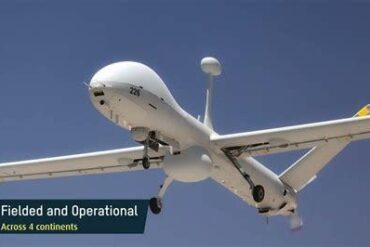
Israel also operates a variety of electronic warfare and surveillance aircraft to support its fighter jets. These specialized platforms are equipped with advanced sensors, radars, and jamming systems, allowing Israel to gain a technological edge over adversaries in the region.
The Strategic Importance of Israel’s Fighter Jet Fleet
Israel’s investment in fighter jets is not just about maintaining military superiority—it is also about ensuring regional stability and deterrence. Given the geopolitical challenges in the Middle East, Israel’s ability to project power through its advanced fighter jets is crucial for national security.
Deterrence Against Regional Threats
Israel faces a range of threats from regional adversaries, particularly from Iran, Hezbollah, and Syria. The advanced capabilities of the F-35, F-15, and F-16 fighter jets allow Israel to maintain air dominance and ensure that any aggression is met with overwhelming force. The stealth and precision strike capabilities of these aircraft make it difficult for adversaries to counter Israel’s technological advantage.
Countering Iran’s Air Defenses
One of the key strategic considerations for Israel’s air fleet is its ability to counter advanced air defense systems deployed by regional adversaries, particularly Iran. The F-35I “Adir” is equipped with advanced stealth technology and electronic warfare capabilities, allowing Israel to penetrate even the most sophisticated air defense networks.
Conclusion: The Future of Israel’s Fighter Jet Fleet
As Israel continues to face complex security challenges, its investment in advanced fighter jets such as the F-35I, F-15IA, and F-16I ensures that it remains at the forefront of military aviation technology. With ongoing plans to expand and modernize its fleet, Israel is poised to maintain its status as a regional airpower for the foreseeable future. The Israeli Air Force’s commitment to technological innovation and strategic superiority ensures that it remains a formidable force in the Middle East.