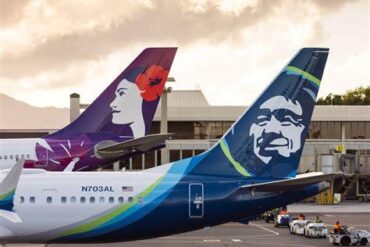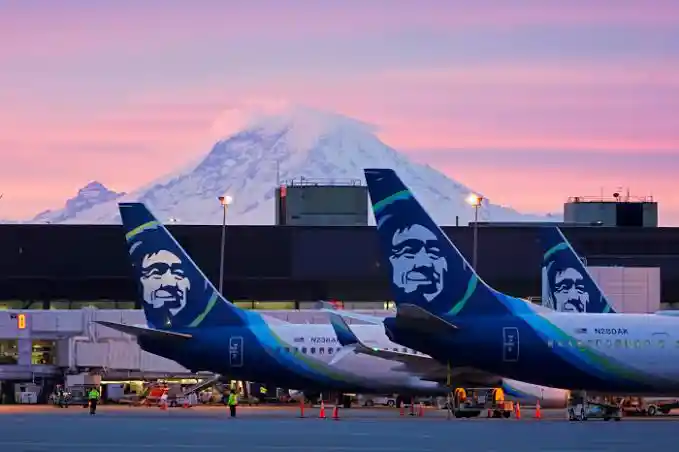
Alaska Airlines spent three decades building a reputation as the most disciplined point-to-point operator in American aviation, weaving together secondary West Coast cities with frequencies that larger carriers ignored. That model worked brilliantly when the airline flew nothing but Boeing 737s on domestic routes. The 2024 acquisition of Hawaiian Airlines broke that template overnight, handing Alaska Air Group a fleet of Airbus A330s and Boeing 787s, a Pacific network reaching Japan, South Korea, and Australia, and a strategic problem the carrier had never faced before: what to do with long-haul aircraft that need a reliable stream of connecting passengers to fill premium cabins profitably. The answer emerging from Seattle is a decisive shift toward hub-based operations, a structural pivot that reshapes how the group routes aircraft, sells seats, and competes with Delta Air Lines on its home turf.
The merger itself was the most consequential consolidation in recent US aviation history, creating the fifth-largest carrier in the country and an undisputed power on the West Coast. Alaska Air Group instantly gained a monopoly on Hawaiian inter-island flying, access to Honolulu’s growing Asian and Oceania gateways, and more than 60 daily flights between Hawaii and the US mainland that could be fed from Seattle, Portland, San Francisco, and San Diego. For Hawaiian, the deal delivered financial stability after years of consistent losses, while Southwest Airlines’ encroachment on intra-island routes made scale a matter of survival. The combined group now dominates travel to and from both Alaska and the Hawaiian Islands, a geographic pairing no competitor can replicate.
What makes the strategic pivot unusual is its reversal of industry fashion. For the past fifteen years, US carriers have trimmed hub complexity in favor of point-to-point flying, chasing higher aircraft utilization and lower connection costs. Alaska is moving the other way, deliberately concentrating long-haul capacity at Seattle-Tacoma International Airport (SEA) so that its dense short-haul network can funnel passengers onto widebodies bound for Asia and Europe. Executives have hinted at operating as many as 12 nonstop long-haul routes from Seattle by the end of the decade, a scale of ambition that would place Alaska alongside Delta as the airport’s defining international operator.
How Seattle-Tacoma Became the Cornerstone of Alaska’s Long-Haul Ambitions
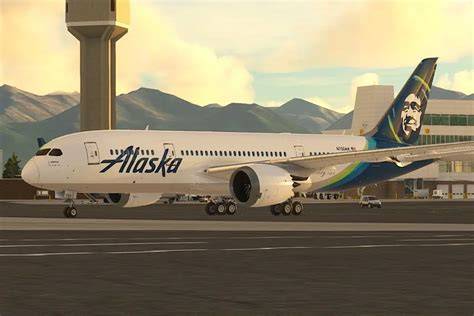
Seattle’s geography gives Alaska an advantage that money alone cannot buy. The airport sits closer to Tokyo, Seoul, and Taipei than any other major US hub, shaving hours off transpacific itineraries and allowing aircraft to complete round trips within efficient crew and maintenance windows. Delta recognized this years ago, building a transpacific gateway with nonstop service to Amsterdam, Barcelona, London Heathrow, Paris Charles de Gaulle, Rome Fiumicino, Shanghai Pudong, Taipei Taoyuan, and Tokyo Haneda. Alaska’s widebody fleet now allows it to contest that position directly rather than ceding long-haul flying to partners and foreign carriers.
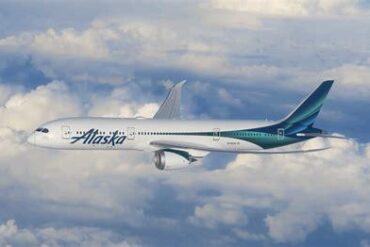
The route map under development reflects careful gap analysis rather than speculative expansion. Hawaiian’s A330s and Alaska’s 787s open plausible nonstop service to Manila, Ho Chi Minh City, Bangkok, and Delhi, markets with substantial diaspora populations and business traffic on the West Coast that currently require one-stop connections. Each new route strengthens the hub logic, because every additional destination makes the Seattle connection more useful to passengers departing from Spokane, Boise, Redmond, or Fairbanks. Alaska and Hawaiian will continue flying under separate brands for the foreseeable future, but the group is quietly reassigning aircraft to routes where widebody economics make sense, replacing narrowbody frequencies with larger cabins on corridors where demand has outgrown 737 capacity.
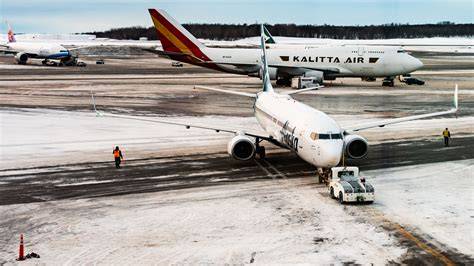
Anchorage occupies a distinct place in this strategy. The deployment of Hawaiian A330s between Seattle and Anchorage during peak summer months added capacity on a route that fills predictably every June through August, when cruise passengers and fishing expeditions collide with resident travel demand. Alaska reinforced the market through its Great Land Investment Plan, committing more than $60 million to projects across the state over three years. The expanded Anchorage lounge near Concourse C, Gate C-1, now seats up to 140 passengers and looks out over a tarmac busy with cargo freighters and seasonal widebodies, a physical statement that Alaska intends to defend its namesake state against any encroachment.
The Passenger-Side Investments That Make Hub Flying Work
Hub economics depend on more than aircraft and gates; they depend on whether travelers willingly route through the connecting point. Alaska’s answer is a lounge program that has become one of the most aggressive in the domestic industry. At Honolulu Daniel K. Inouye International Airport, the group is designing a new Premier Club five times larger than the existing facility, scheduled to open at the end of 2027 as part of a three-year plan to merge Hawaiian and Alaska hospitality under one roof. Early concepts describe beams of light and intentional areas of surprise, an aesthetic bet that the premium traveler connecting between a neighbor-island hop and a mainland red-eye will judge the experience against Asian and Middle Eastern carriers.
The broader network follows the same pattern. A sixth Premier Club, a second facility at Maui Kahului Airport, and a brand-new international lounge in Seattle by 2027 round out an investment plan that also touches Portland, San Francisco, Los Angeles, and New York JFK. These are not vanity projects. In a hub system, a passenger’s first and last impression of the brand often occurs inside a lounge during a two-hour connection, and Alaska is effectively buying loyalty at the point where its network is most vulnerable to Delta’s competing Sky Club footprint.
Route Capacity and Connectivity Gains Across the West Coast
The merger’s immediate dividend has been capacity, deployed where the group’s combined networks overlap most profitably. Between Seattle and Honolulu, seats are up more than 20%, with three of six daily flights operated by widebody aircraft, a meaningful upgrade over the all-narrowbody service that preceded the deal. Portland now offers three daily nonstops to Hawaii, a 25% seat increase, while San Diego and Maui gained a second daily flight. San Francisco added new nonstops to Kona and Lihue, giving the group four daily flights to Hawaii’s principal airports, and Hawaiian’s A330s bring a daily widebody service between Honolulu and Sacramento.
Connectivity from the Midwest tells the more interesting story. Alaska added three red-eye flights from Hawaii to the West Coast with timed connections into San Diego, Portland, Seattle, and San Francisco, allowing a traveler from Minneapolis or Denver to reach Maui on a single ticket with a single transfer. That is textbook hub construction: the red-eye bank exists not because Hawaii-to-West-Coast demand alone justifies it, but because the connections behind it multiply the value of every seat. Each added frequency also feeds the long-haul departures at Seattle, improving the load factors that make 787 service to Asia viable.
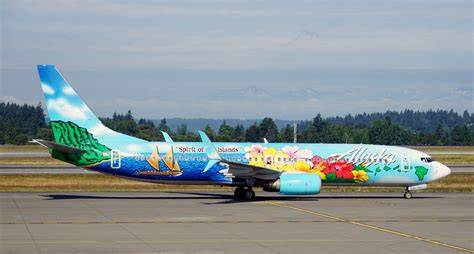
Alaska and Delta’s Head-to-Head Contest at Seattle-Tacoma
The competitive stakes at Seattle are difficult to overstate. Alaska already carries more passengers at SEA than Delta, but Delta has invested heavily since 2014 in terminals, lounges, and transpacific routes, positioning the airport as its premier Pacific Northwest gateway. Alaska’s response, with more than a dozen widebody routes expected to be announced over the next several years, threatens to strand that investment in a market where a challenger suddenly offers comparable long-haul reach backed by superior domestic feed.
Delta has begun answering with additional direct services to Europe, but the structural math favors Alaska. A passenger flying from Boise to Tokyo on Delta must connect at Seattle and trust that the feed exists; Alaska controls the feed outright, owning the short-haul network that generates it. The same logic supports Alaska’s push for increased frequencies on dense corridors such as Los Angeles and San Francisco, alongside more flights to core business markets including New York, Boston, and Austin. Hub concentration does not mean abandoning point-to-point flying; it means layering long-haul ambition on top of the frequency advantage Alaska already holds in the smaller cities other carriers underserve.
The risk lies in execution. Widebody flying punishes carriers that fill premium cabins inconsistently, and Alaska has no history of selling business-class seats on 12-hour routes against established foreign competitors with superior onboard products. The international lounge in Seattle, the Honolulu Premier Club, and the investment in Anchorage suggest management understands that the passenger experience is not decoration but a load-factor lever. If the group can pair its domestic network density with a credible premium product, Seattle becomes the rare American hub built around transpacific geography rather than legacy merger inertia.
What emerges is a carrier transformed by a single acquisition, converting a point-to-point specialist into a hub operator with global reach, a fleet of 787s and A330s, and a West Coast fortress no rival can easily breach. The end of the decade will reveal whether 12 long-haul routes from Seattle prove a realistic target or a useful ambition; the direction of travel, however, is already unambiguous.