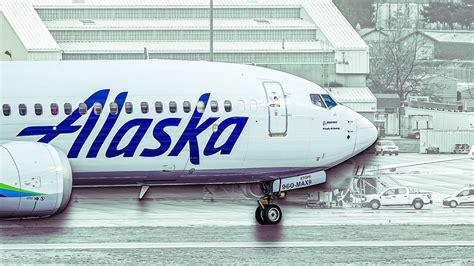
Alaska Airlines is no longer content being a highly respected regional carrier with a loyal West Coast following. The airline is executing a deliberate, high-stakes transformation into a hub-driven global competitor, anchored by a fortified Seattle-Tacoma International Airport and reinforced by its acquisition of Hawaiian Airlines. What once defined Alaska’s network—nimble, point-to-point flying along the Pacific Coast—is now evolving into something far more strategic: a coordinated, hub-based operation built to sustain long-haul growth, increase connectivity, and challenge entrenched rivals.
This shift is not cosmetic. It is structural. It reflects a profound recalibration of how Alaska Airlines sees its future in a consolidating, widebody-driven, globally competitive aviation market.
The Hawaiian Airlines Acquisition: A Catalyst for Network Reinvention
In 2024, Alaska Airlines finalized its acquisition of Hawaiian Airlines, instantly reshaping the competitive landscape of U.S. aviation. The deal elevated Alaska Air Group into the fifth-largest airline in the United States, while introducing something Alaska had never operated before at scale: widebody aircraft capable of sustained long-haul international flying.
Hawaiian’s Airbus A330s and Boeing 787s did more than add seats. They added reach. They gave Alaska Airlines the mechanical and operational tools required to pivot from a predominantly narrowbody, domestic-focused airline into one capable of serving Asia and Europe directly.

The strategic implications were immediate. Hawaiian brought an established Asia-Pacific network, dominance in intra-Hawaii flying, and financial stabilization following years of losses. Alaska gained access to lucrative transpacific markets while fortifying its competitive stance against Southwest Airlines in Hawaii and Delta Air Lines in the Pacific Northwest.
Rather than dissolving the Hawaiian brand, Alaska opted for dual branding—at least for now—while aligning fleet deployment and route strategy. That alignment has increasingly pointed toward a centralized operational philosophy: build scale at hubs, concentrate traffic, and feed widebody routes with domestic connectivity.
Why Hub-Based Operations Now Make Strategic Sense
For years, Alaska Airlines thrived on a point-to-point strategy. That model works exceptionally well for high-frequency regional travel. But long-haul international flying demands density. Widebody aircraft need volume—steady streams of connecting passengers from multiple cities—to justify their economics.
A hub structure solves that problem elegantly.
By consolidating flights into key airports—most notably Seattle—Alaska can funnel passengers from secondary markets into long-haul departures. Travelers from Boise, Spokane, San Diego, or Austin can now connect efficiently onto flights to Seoul, Tokyo, and eventually Rome.
Seattle becomes more than a departure city. It becomes a transfer ecosystem.
This shift also allows Alaska to increase frequency in core domestic markets such as Los Angeles, San Francisco, New York, Boston, and Austin. Frequency drives loyalty. Loyalty drives revenue stability. The airline is not abandoning its West Coast roots; it is leveraging them.
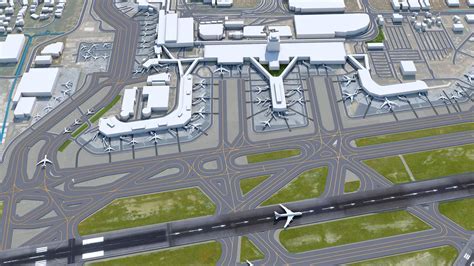
Seattle-Tacoma International Airport: The New Global Spine
Seattle’s geography makes it uniquely powerful. Positioned in the Pacific Northwest, it is one of the closest major U.S. cities to Asia. That translates into shorter flight times, fuel efficiency advantages, and competitive scheduling.
Delta Air Lines recognized this over a decade ago, aggressively building Seattle into a transpacific gateway with routes to Amsterdam, London, Paris, Shanghai, Seoul, Tokyo, and beyond. Alaska Airlines is now meeting that challenge head-on.
With Hawaiian’s widebody fleet, Alaska has begun launching long-haul routes from Seattle, including Seoul and Tokyo, with Rome slated for the near future. Industry observers suggest additional possibilities such as Paris, London, Manila, Bangkok, Ho Chi Minh City, and even Delhi.
The implications are clear: Alaska intends for Seattle to function as a full-scale international hub, not merely a large domestic base.
Currently, Seattle hosts a remarkable range of international carriers, from Emirates and Qatar Airways to Lufthansa, Singapore Airlines, and ANA. Most long-haul routes from SEA have historically been dominated by foreign carriers and Delta. Alaska’s entrance changes the balance of power.
Instead of feeding passengers to competitors, Alaska can now retain premium international traffic within its own network.
Anchorage and the “Great Land Investment Plan”
Alaska Airlines’ hub strategy is not limited to Seattle. Anchorage remains symbolically and operationally vital. The airline has deployed Hawaiian’s Airbus A330 widebodies between Seattle and Anchorage during peak summer demand, injecting substantial capacity into a traditionally high-traffic seasonal corridor.

This is not merely about adding seats. It signals commitment. Alaska Airlines has committed more than $60 million across the state over the next three years under its “Great Land Investment Plan.” The Anchorage lounge has doubled in size, now seating up to 140 passengers with panoramic views near Concourse C.
In a hub-based model, infrastructure matters. Lounges, gate capacity, passenger flow—all must scale with traffic. Anchorage serves as both a flagship regional stronghold and a reinforcement point for Alaska’s identity. Even as the airline globalizes, it reinforces its home territory.
Honolulu and the Reimagined Premium Experience
The Hawaii dimension of Alaska’s strategy extends beyond aircraft. It extends into brand and passenger experience integration.
At Honolulu’s Daniel K. Inouye International Airport, Alaska and Hawaiian are planning a dramatic lounge redevelopment set to open by 2027. The new space will be five times larger than the existing facility, incorporating architectural elements designed to reflect light and create a calming, distinctive environment.
This investment is strategic. A hub thrives on premium traffic—business travelers, international connectors, loyalty members. A cohesive lounge network across Seattle, Anchorage, Honolulu, Portland, San Francisco, Los Angeles, and New York JFK supports that ecosystem.
Widebody expansion without premium infrastructure would be shortsighted. Alaska is ensuring the passenger experience scales alongside capacity.
Capacity Expansion and Network Density
The numbers reveal the seriousness of Alaska’s pivot.
Between Seattle and Honolulu, seat capacity has increased by more than 20%, with half of the daily frequencies now operated by widebody aircraft. Portland’s Hawaii service has expanded by 25% in seat count. San Diego now sees double-daily Maui service. San Francisco enjoys expanded nonstop connectivity to Kona and Lihue.
The Hawaiian A330 has even entered secondary mainland markets such as Sacramento on Honolulu service.
These capacity adjustments serve two purposes. First, they maximize revenue on high-demand leisure corridors. Second, they strengthen feed into Seattle’s long-haul departures. Additional redeye flights from Hawaii to West Coast cities improve onward connectivity into Alaska’s broader domestic network.
Hub operations are about timing as much as geography. Synchronized arrivals and departures reduce connection times and increase aircraft utilization.
Alaska Airlines vs. Delta Air Lines in Seattle
Seattle is becoming one of the most compelling competitive battlegrounds in U.S. aviation.
Delta has invested heavily in Seattle since 2014, positioning it as a cornerstone transpacific gateway. Yet Alaska Airlines already commands a significantly larger domestic presence at SEA. As Alaska layers widebody international routes onto its dominant domestic base, it erodes Delta’s strategic leverage.
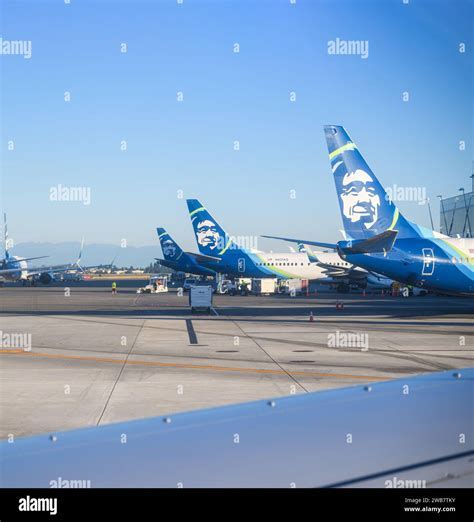
Delta has responded with additional European services, including expanded Rome and Barcelona routes. This tit-for-tat escalation underscores Seattle’s growing importance.
The advantage Alaska holds is structural. Its network is deeply woven into the Pacific Northwest. It feeds smaller regional cities into Seattle at high frequency. When those passengers choose long-haul destinations, Alaska can now keep them within its own ecosystem rather than handing them to Delta or foreign carriers.
In hub economics, control of feed is power.
Why Point-to-Point Alone Is No Longer Enough
The aviation industry has evolved. Long-haul profitability depends on connectivity, loyalty integration, and aircraft utilization rates that point-to-point operations cannot consistently guarantee.
A purely decentralized network limits growth potential. It fragments passenger flows. It reduces the ability to deploy widebodies efficiently.
Alaska Airlines’ shift toward hub-based operations is not an abandonment of its heritage. It is an adaptation to scale. The airline is preserving high-frequency regional flying while overlaying a structured hub model capable of supporting intercontinental routes.
This hybrid approach allows Alaska to remain nimble domestically while expanding internationally with discipline.
A Deliberate, Calculated Transformation
Alaska Airlines’ movement toward hub-based operations reflects a long-term vision rather than a reactive maneuver. The Hawaiian acquisition provided fleet capability. Seattle provides geography. Anchorage and Honolulu provide brand strength and cultural continuity. Lounge investments provide premium credibility. Capacity growth provides revenue density.
When these components align, the result is a carrier transitioning from regional specialist to global competitor.
The airline’s stated ambition of operating up to a dozen nonstop long-haul routes from Seattle by the end of the decade is not speculative bravado. It is a logical extension of the infrastructure now in place.
Alaska Airlines is building a Pacific gateway with connective depth, premium refinement, and widebody capability. Hub-based operations are the architecture that makes that vision financially sustainable.
In a market defined by consolidation, competitive escalation, and shifting travel patterns, Alaska Airlines is choosing structure over scattershot expansion. It is choosing density over diffusion. And in doing so, it is redefining its role in American aviation—not merely as a West Coast favorite, but as an emerging global hub operator positioned squarely between Asia, Europe, and the North American mainland.