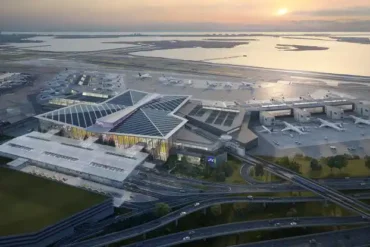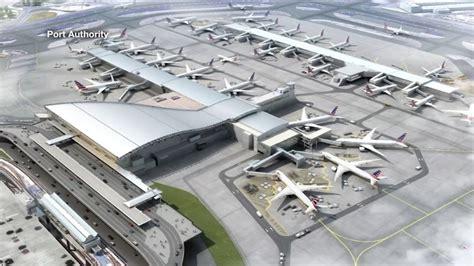
New York’s John F. Kennedy International Airport has spent years trying to reinvent itself. Once criticized for aging terminals, inefficient layouts, and a passenger experience that lagged behind global rivals, JFK is now in the middle of a sweeping transformation worth nearly $19 billion. At the center of that effort sits Terminal 8, the home of American Airlines and several of its oneworld alliance partners.
After completing a major $125 million commercial redevelopment project in April 2026, Terminal 8 now looks dramatically different from the version travelers knew just a few years ago. The renovated space features luxury retail stores, chef-driven restaurants, redesigned passenger halls, expanded concessions, and a polished architectural identity designed to compete with the world’s most modern airports.
Yet one of the terminal’s most controversial changes has little to do with restaurants or luxury boutiques.
American Airlines removed moving walkways.
For many travelers, especially those connecting through one of America’s busiest airports, the decision seems backward. Moving walkways traditionally help passengers navigate long concourses faster, reduce fatigue, and improve terminal efficiency. Removing them appears counterintuitive in an era when airports claim to prioritize convenience and customer experience.
But the decision was not accidental. It reflects a much larger shift happening across the global aviation industry — one where airports increasingly function less like transportation hubs and more like highly engineered retail ecosystems.
The $125 Million Reinvention Of JFK Terminal 8
Terminal 8’s latest transformation represents far more than a cosmetic refresh. The project was designed to fundamentally redefine how passengers interact with the airport environment.
Construction began in late 2022 and was completed on April 21, 2026. The redevelopment was led by American Airlines in partnership with the Port Authority of New York and New Jersey, Unibail Rodamco Westfield, Phoenix Infrastructure Group, and Holt Construction.
The renovation followed an earlier $400 million infrastructure expansion completed in 2022 that added:
- Five new widebody-capable gates
- Four new aircraft parking positions
- Expanded operational infrastructure
- Enhanced international handling capabilities
The newer phase focused almost entirely on the passenger-facing commercial experience.
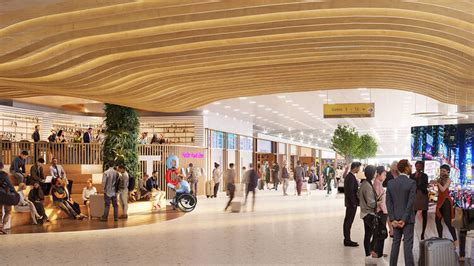
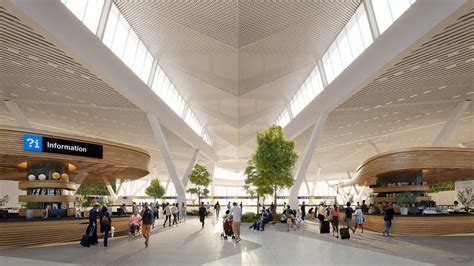
Instead of simply modernizing outdated corridors, Terminal 8 was redesigned around a retail-centric concept known as “The Great Hall.” Inside the terminal, travelers now encounter a polished environment resembling an upscale Manhattan shopping center more than a traditional airport concourse.
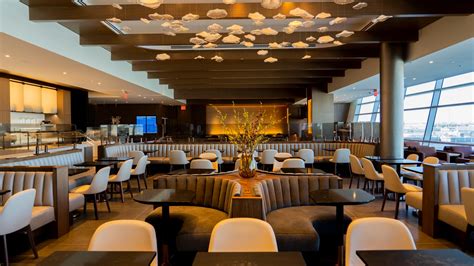
The centerpiece is a large dining district called “The Boroughs,” featuring New York-inspired culinary brands and globally recognized restaurant operators.
Among the additions are:
- Eataly
- Momofuku
- Black Tap
- Harlem Chocolate Factory
- Alidoro
- Blinded Tiger speakeasy-inspired bar
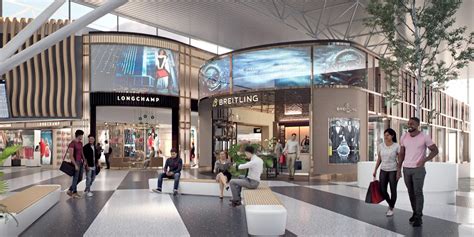
Luxury retail brands such as Longchamp, Breitling, and Lacoste now occupy premium terminal real estate, targeting high-spending international travelers and premium cabin passengers.
The redesign was carefully crafted to encourage exploration, lingering, and discretionary spending.
And that is precisely where the removal of moving walkways becomes important.
Why American Airlines Removed The Moving Walkways
Moving walkways exist for one primary reason: efficiency.
They reduce travel time between gates, ease congestion, and improve accessibility for passengers carrying luggage or navigating long corridors. In large terminals, they are especially valuable for elderly travelers, families, and tight connections.
Removing them appears to reduce convenience.
But modern airport economics increasingly reward something very different: passenger dwell time.
Dwell time refers to the amount of time travelers spend inside commercial areas before reaching their gate. The longer passengers remain exposed to shops, restaurants, bars, and duty-free outlets, the more likely they are to spend money.
By removing moving walkways, American Airlines and Terminal 8’s commercial operators effectively slow pedestrian movement through the concourse.
Passengers now walk at a natural pace through retail-heavy areas rather than gliding quickly past storefronts.
That subtle change has enormous financial implications.
Terminal 8 processes roughly 14 million passengers annually. Even modest increases in spending per traveler can generate tens of millions of dollars in additional revenue each year.
The redesigned terminal now contains 56% more concession and duty-free space than before the renovation. The commercial logic behind the redesign becomes obvious when viewed through that lens.
The terminal no longer treats shopping as a secondary convenience.
Shopping is now part of the airport experience itself.
Airports Are No Longer Just Transportation Infrastructure
For decades, airports were designed primarily around operational efficiency. Passengers moved from curbside to gate as quickly as possible. Retail offerings existed, but they were secondary to aviation functions.
That model has changed dramatically.
Today’s major international airports increasingly operate like hybrid commercial ecosystems where aviation supports retail — not the other way around.
Airports discovered that non-aeronautical revenue streams often produce higher profit margins than core airline operations. Retail leasing, dining partnerships, advertising contracts, parking revenue, and lounge agreements now generate enormous income.
In some cases, airlines themselves struggle to make significant profits purely from flying passengers.
American Airlines has faced profitability challenges in recent years, while competitors like Delta Air Lines and United Airlines have leaned heavily on loyalty programs and ancillary revenue streams to produce stronger financial results.
For terminal operators, retail spending offers a more stable and scalable source of income than relying exclusively on airline fees.
That reality has reshaped airport architecture worldwide.
Modern terminals are increasingly designed around behavioral psychology, pedestrian flow analysis, and commercial exposure patterns. Every corridor, seating area, escalator placement, and retail cluster is strategically positioned to maximize engagement.
The removal of moving walkways fits perfectly within that philosophy.
The Psychology Behind Slower Passenger Movement
Airport designers understand that speed reduces spending.
Passengers rushing directly to gates spend less time browsing shops, ordering meals, or exploring lounges. Fast movement minimizes opportunities for impulse purchases.
Slower movement changes behavior.
Without moving walkways, passengers become more aware of surrounding storefronts, food displays, digital advertising screens, and seating areas. Travelers who might otherwise bypass retail zones become immersed within them.
This strategy is not unique to JFK.
Many airports intentionally create winding pathways through duty-free sections immediately after security checkpoints. Travelers often describe these layouts as maze-like because the routes are deliberately engineered to maximize retail visibility.
London Gatwick and Copenhagen Airport are frequently cited examples of terminals where passengers must navigate extensive commercial zones before reaching departure gates.
London Stansted Airport even offers paid shortcuts that allow travelers to bypass duty-free shopping areas entirely.
The business incentive is clear.
Every additional minute spent inside retail zones increases revenue potential.
Airports now employ data analytics teams that study:
- Passenger walking speed
- Average browsing duration
- Retail conversion rates
- Queue psychology
- Gate arrival patterns
- Peak spending windows
Terminal layouts increasingly reflect those findings.
Other Airports Have Also Removed Moving Walkways
JFK is part of a much larger industry trend.
Several major airports have already removed moving walkways from existing terminals or omitted them from newly built facilities.
Chicago O’Hare’s Terminal 1 eliminated many moving walkways in areas heavily integrated with commercial space. Las Vegas Harry Reid International Airport removed walkways from sections of Terminal 1 in 2022, publicly citing maintenance costs.
While maintenance expenses are real, eliminating walkways also conveniently increases exposure to retail concessions.
Other airports reducing walkway usage include:
- Dallas/Fort Worth International Airport
- Orlando International Airport
- San Francisco International Airport
- Cincinnati/Northern Kentucky International Airport
The economics are difficult for airport operators to ignore.
Moving walkways require:
- Continuous maintenance
- Significant energy consumption
- Frequent repairs
- Operational downtime
- Dedicated floor space
Retail stores, by contrast, generate lease income, revenue-sharing payments, and increased passenger spending.
From a financial perspective, replacing walkways with commercial space often produces far greater returns.
JFK Terminal 8’s Airline Network Makes Retail Extremely Valuable
Terminal 8 is not just an American Airlines hub.
The terminal also serves a wide mix of international carriers and premium long-haul traffic, making it especially attractive for luxury retail operators.
Airlines operating through Terminal 8 include:
- British Airways
- Qantas
- Japan Airlines
- Finnair
- Iberia
- Qatar Airways
- Cathay Pacific
- Royal Jordanian
- Alaska Airlines
- Hawaiian Airlines
International travelers tend to spend more on airport shopping and dining, particularly in premium terminals with upscale branding.
Long-haul passengers also spend more time inside terminals due to earlier check-in requirements, international security procedures, and extended connection windows.
That combination creates an ideal commercial environment.
American Airlines understands that premium passengers are not simply customers purchasing flights. They are also potential retail consumers, lounge subscribers, dining patrons, and loyalty program participants.
The redesigned Terminal 8 aims to monetize every stage of that journey.
Singapore Changi’s Jewel Changed Airport Design Philosophy
One of the clearest examples of airport retail evolution is Jewel Changi Airport in Singapore.
Rather than treating retail as supplementary, Changi turned commercial space into a global destination itself.
Jewel features:
- More than 300 retail and dining outlets
- A massive indoor waterfall
- Hotels
- Entertainment attractions
- Early baggage check-in
- Public gathering spaces
- Multi-level lifestyle areas
The complex attracts both passengers and non-travelers, generating enormous foot traffic and retail revenue.
Airports worldwide have studied Changi’s success carefully.
The modern airport is increasingly viewed as a lifestyle destination rather than merely a transit facility.
JFK’s new Terminal 8 reflects this same philosophy on a smaller scale. The goal is not simply transporting passengers efficiently. The goal is creating an immersive environment where travelers willingly spend time — and money.
Passenger Reactions Remain Divided
Not everyone welcomes the disappearance of moving walkways.
Frequent travelers often value speed, efficiency, and simplicity over retail experiences. Elderly passengers, travelers with disabilities, and families carrying heavy luggage may view longer walking distances as a decline in usability.
For tight domestic connections, the absence of moving walkways can create additional stress, especially during delays or gate changes.
Critics argue that airports increasingly prioritize commercial profits over traveler comfort.
Supporters counter that upgraded terminals provide significantly better amenities, cleaner environments, improved dining quality, and more engaging spaces than older airport designs ever offered.
There is also an important operational reality: many moving walkways experience frequent outages. Broken walkways often become unusable obstacles that disrupt passenger flow rather than improving it.
Airports therefore face a balancing act between convenience and profitability.
At JFK Terminal 8, commercial priorities clearly won.
JFK’s Future Terminals Will Follow The Same Model
Terminal 8 is only one piece of JFK Airport’s broader transformation.
The airport’s upcoming terminals are being developed with similarly aggressive commercial strategies.
The new Terminal One, opening its first phase in June 2026, will eventually become the largest freestanding terminal in the United States. The project will include:
- 23 gates
- 22 widebody-capable positions
- 2.6 million square feet of space
- More than 300,000 square feet dedicated to retail and dining
Meanwhile, the new Terminal Six will replace Terminal Seven and connect directly with JetBlue’s Terminal 5 operation.
Terminal Six will host 14 airlines, including:
- Lufthansa
- Air Canada
- SWISS
- ANA
- Cathay Pacific
- JetBlue
- Icelandair
- Brussels Airlines
Like Terminal 8, both future terminals place enormous emphasis on premium dining, luxury retail, and commercial integration.
The direction is unmistakable.
JFK is rebuilding itself not merely as an airport, but as a global consumer environment designed to compete with elite international hubs.
The Real Meaning Behind Terminal 8’s Walkway Removal
The disappearance of moving walkways at JFK Terminal 8 may seem like a small architectural detail, but it reflects one of the aviation industry’s biggest strategic shifts.
Airports are no longer designed solely around transporting people efficiently from curb to gate.
They are increasingly designed to maximize engagement, influence spending behavior, and create revenue far beyond airline tickets.
American Airlines’ $125 million Terminal 8 makeover demonstrates how deeply commercial priorities now shape airport design decisions. Every corridor, storefront, seating area, and pedestrian route serves a financial purpose.
Removing moving walkways slows passengers down.
Slower passengers spend more money.
And in the modern airport business, that equation matters enormously.