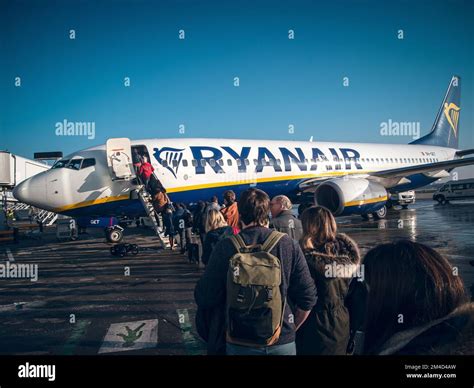
Ryanair has quietly reshaped its European network over the past 15 months, pulling out of 19 airports across 12 countries. While the airline’s average daily operations have decreased by just 0.99%, these reductions signal a strategic refocus, highlighting Ryanair’s ongoing drive to maintain its low-cost operational model amid rising fees and regulatory pressures. From Spain to Portugal, Denmark to Germany, the decision reflects a calculated move to cut high-cost routes while investing in markets promising growth and efficiency. The removal of these airports is more than a statistic; it represents a significant shift in European air travel dynamics, particularly in regional connectivity.
The list of affected airports spans Northern and Southern Europe, and while some closures might appear abrupt, they stem largely from external financial pressures, rather than a lack of passenger demand. Spanish airports are disproportionately affected, with Asturias, Jerez, Tenerife North, Valladolid, and Vigo all losing Ryanair connectivity. This reflects escalating airport fees imposed by Aena, Spain’s airport operator, alongside fines related to passenger baggage handling. Similar patterns of rising costs and governmental levies have prompted Ryanair to rethink its presence at other European airports, illustrating a consistent approach across its network. Beyond Spain, the airline has withdrawn services from airports in Denmark, Portugal, Germany, France, Finland, Greece, the Netherlands, and Israel. These cuts underscore the airline’s strict adherence to its low-cost ethos: only markets where costs threaten profitability are abandoned.
Analyzing the 19 airports removed from Ryanair’s network, it becomes clear that each decision was highly calculated. In Denmark, Aalborg and Billund were removed from the flight schedule, while in Germany, Dortmund and Leipzig no longer see Ryanair flights. Portugal lost services to Ponta Delgada and Terceira, signaling a scaling back from some of its Azorean operations. France saw the airline pull back from Clermont-Ferrand Auvergne and Strasbourg, while Orebro and Lappeenranta were cut from Sweden and Finland respectively. Even Tel Aviv in Israel, a previously reliable destination for Ryanair, was axed due to slot allocation challenges at the airport’s low-cost terminal. These closures highlight the airline’s focus on cost containment, optimizing operational efficiency, and maintaining competitive ticket pricing.
The Spanish network reduction warrants a closer look. Despite strong passenger demand, Ryanair’s exits from Asturias, Jerez, Tenerife North, Valladolid, and Vigo were primarily due to Aena’s fee hikes. In October 2025, the airline announced the cut of 1.2 million seats across regional Spain for Summer 2026, following a similar reduction of 800,000 seats in Summer 2025. Ryanair emphasized that these cuts are not reflective of declining demand but are instead a response to unsustainable operating costs. By withdrawing from airports with rising fees, the airline safeguards its ultra-low-cost business model, ensuring passengers continue to benefit from competitively priced flights. This strategy, while unpopular locally, aligns with Ryanair’s history of aggressively managing operational expenses to maintain profitability.
Meanwhile, the airline is not simply shrinking its network. Ryanair has announced 12 new routes from its Polish bases in Warsaw Chopin (WAW) and Warsaw Modlin (WMI), scheduled for winter 2026. The WAW base will launch seven new routes to Bari, Bologna, Catania, Liverpool, Naples, Turin, and Venice, expanding its network to 16 routes and expecting traffic growth of over 50%. Warsaw Modlin will see the addition of two Boeing 737 aircraft, bringing its total to eight, while five new destinations—Bratislava, Bristol, Manchester, Shannon, and Zagreb—are added. This expansion is projected to create over 2,500 local jobs and double passenger traffic to 3.2 million annually, showcasing Ryanair’s strategic pivot to markets where operational costs are manageable and growth potential is substantial.
The rationale behind these moves reflects Ryanair’s consistent cost-centric approach. By withdrawing from high-fee airports and expanding in regions offering lower operational costs, the airline maximizes efficiency and profitability while maintaining ticket affordability. Poland, with its growing aviation market, represents an ideal target for Ryanair’s expansion, allowing the airline to leverage existing infrastructure while benefiting from a market poised for significant growth. This careful balance of network reduction and targeted expansion underlines Ryanair’s ability to adapt quickly to changing economic landscapes while staying true to its low-cost identity.
Beyond cost considerations, the reductions also signal broader industry trends. European regional airports, particularly those with smaller traffic volumes, are increasingly vulnerable to airline exits when fees rise or operational inefficiencies emerge. Ryanair’s withdrawal underscores the challenge of sustaining low-cost operations in regions where government levies, airport charges, or limited slot availability inflate expenses. The case of Tel Aviv, where Ryanair could not secure slots at the low-cost terminal, exemplifies how airport policies and slot management can directly influence airline strategy. In essence, these cuts reflect a combination of financial pragmatism and strategic positioning rather than passenger demand failure.
The 19 airports lost from Ryanair’s network also provide insight into the geographical concentration of airline operations. Spain, Denmark, Portugal, Germany, and France account for most reductions, indicating that Ryanair is selectively retreating from saturated or cost-prohibitive markets. In contrast, expansion in Poland demonstrates a preference for markets with supportive infrastructure and growth potential. This geographic realignment allows Ryanair to focus resources effectively, ensuring aircraft utilization, crew scheduling, and maintenance operations remain optimized. Such precision in operational planning has been a hallmark of Ryanair’s success, allowing it to maintain industry-leading profitability despite the volatility of European aviation.
The airline’s recent strategy also emphasizes network rationalization. Reducing flights from 3,431 daily operations to 3,397 might seem minor, but this 0.99% contraction reflects a deliberate trimming of underperforming or costly routes. Meanwhile, growth markets, particularly those where new routes can generate high passenger volumes at low operational cost, are prioritized. This dual approach of selective reduction and targeted expansion ensures Ryanair remains agile, profitable, and resilient against rising fees, taxes, and regulatory constraints that have affected many European carriers. Such strategic foresight allows Ryanair to navigate complex market conditions without compromising its core value proposition.
Additionally, these network changes demonstrate Ryanair’s commitment to sustainability in operational strategy. By concentrating flights on profitable and strategically viable routes, the airline can optimize fuel consumption, reduce unnecessary aircraft movements, and improve overall efficiency. The Polish expansions, with doubled passenger numbers and increased aircraft utilization, exemplify a market-driven approach that enhances both financial performance and operational sustainability. Ryanair’s capacity management underscores the balance between cost efficiency and market opportunity, a dynamic increasingly essential in the competitive low-cost airline sector.
The exit from high-fee airports also highlights Ryanair’s leveraging of negotiation power. In Spain, public statements and negotiations with Aena have underscored Ryanair’s willingness to challenge monopolistic practices, advocating for fairer charges and increased regional airport autonomy. By publicly signaling potential reductions, Ryanair applies pressure while demonstrating to travelers and local authorities the direct impact of elevated fees on service availability. This strategic communication underscores the airline’s ability to influence industry practices while safeguarding its low-fare model.
As Ryanair moves into 2027, the focus is clearly on sustainable expansion. The addition of 12 routes from Poland, paired with the strategic withdrawal from 19 higher-cost airports, ensures the airline remains competitive and profitable while maintaining market flexibility. Each decision reflects a calculated trade-off, balancing the cost of service against potential revenue and growth. Passengers can expect continued access to affordable flights in markets where Ryanair can operate efficiently, while regional airports must navigate the realities of cost-sensitive airline behavior. The airline’s strategy demonstrates a deep understanding of European aviation economics, positioning Ryanair for continued dominance in the low-cost segment.
In conclusion, Ryanair’s withdrawal from 19 airports and simultaneous expansion in Poland illustrates the airline’s strategic agility and financial discipline. The move underscores the impact of rising airport fees, governmental taxes, and slot allocation challenges on airline network decisions. By selectively trimming high-cost routes and investing in growth-friendly markets, Ryanair continues to reinforce its low-cost leadership while optimizing operational efficiency. The Spanish reductions serve as a cautionary tale for other European airports, whereas the Polish expansion highlights the potential benefits of supportive infrastructure and strategic planning. For travelers, these changes may mean fewer choices in some regions, but for Ryanair, they ensure the carrier remains profitable, competitive, and poised for continued network evolution.