Emirates has implemented one of its most dramatic short-notice schedule reductions in recent years, cutting approximately 16% of its planned June operations from Dubai International Airport. The move removes more than 1,100 scheduled departures from the carrier’s timetable in only a matter of days, signaling a significant recalibration of summer demand forecasts and operational planning across the airline’s global network.
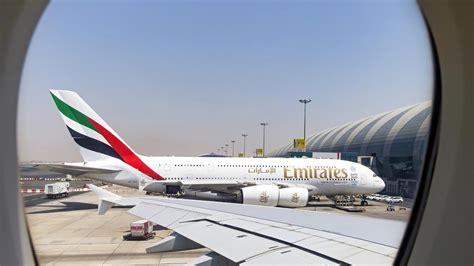
The Dubai-based carrier had initially planned 7,116 outbound departures from DXB during June. Updated schedule filings now show just 6,007 departures remaining, reducing the airline’s daily average from 237 flights to roughly 200. While the numerical drop may appear moderate at first glance, the impact becomes far more substantial when considering Emirates operates an all-widebody fleet composed of Airbus A350-900s, Airbus A380s, Boeing 777-200LRs, and Boeing 777-300ERs.
The reduction translates into nearly 480,000 departing seats removed from sale in a single scheduling adjustment. On average, Emirates has effectively eliminated around 16,000 seats per day throughout June, reshaping capacity across multiple continents and affecting dozens of major international markets.
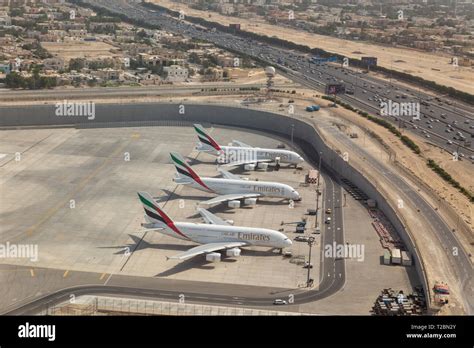
Emirates Faces Sharp Capacity Decline Across Global Network
The scale of the schedule revision highlights growing caution among Gulf carriers despite the traditionally busy northern summer season. Compared with June 2025, Emirates is now operating approximately 14% fewer flights year-over-year, reflecting softer expansion than previously expected.
The adjustment also places Emirates in an interesting position relative to its regional competitors. Qatar Airways currently shows an even steeper annual decline of 19%, while Abu Dhabi-based Etihad Airways has expanded operations by roughly 8% over the same period. The divergence suggests differing strategic priorities among the Middle East’s largest long-haul operators.
Industry analysts are closely watching whether Emirates’ June pullback becomes a temporary correction or the beginning of broader summer restructuring. July schedules may reveal whether the airline intends to restore frequencies later in the peak travel season or continue operating with reduced capacity.
London Routes Among the Most Surprising Cuts
Some of Emirates’ most recognizable and commercially important routes are now seeing meaningful reductions, including services to London Heathrow Airport. Heathrow remains Emirates’ single largest destination by frequency, yet even this flagship market has not escaped the cuts.
The airline has reduced Heathrow operations from six daily flights to five daily services in June. Specifically, Emirates removed flight EK31 from Dubai to London Heathrow and the return service EK32. Although Heathrow continues to receive extensive coverage from Emirates, the cut demonstrates how widespread the network adjustment has become.
The carrier’s secondary London airports are also affected. Plans for a fourth daily flight to London Gatwick have been delayed until at least July, leaving three daily services in operation throughout June. London Stansted’s anticipated second daily service has likewise been postponed, maintaining only one daily rotation for now.
Kuwait Suffers the Largest Operational Reduction
Among all still-active routes, Kuwait has experienced the steepest percentage reduction. Emirates has slashed more than 76% of planned June flights on the short Gulf sector, reducing operations from four or five daily flights down to only one.
Context, however, is important. Emirates currently has no active flights operating to Kuwait because services remain suspended. The revised June schedule therefore represents a scaled-back relaunch rather than a traditional reduction from existing operations.
Several other Middle Eastern destinations have also suffered significant cuts. Amman faces a 50% reduction, Bahrain declines by 36%, and Muscat loses approximately 21% of previously planned frequencies.
Europe and Asia-Pacific Experience Heavy Frequency Losses
The network adjustments extend deep into Europe and Asia-Pacific, where multiple destinations have lost between one-third and one-half of planned services.
In Europe, some of the most heavily affected cities include:
- Amsterdam: down 48%
- Birmingham: down 50%
- Düsseldorf: down 50%
- Vienna: down 50%
- St. Petersburg: down 53%
- Barcelona: down 33%
- Milan: down 33%
Asia-Pacific routes have also undergone aggressive reductions. Beijing Capital, Brisbane, Ho Chi Minh City, and Malé each lost half of their planned June frequencies. Singapore services dropped by 25%, while Sydney, Melbourne, Hong Kong, and Taipei each declined by approximately 20%.
The cuts are particularly notable because many of these markets had previously been viewed as strong post-pandemic recovery routes for Emirates. Australia and Southeast Asia, in particular, have been key pillars of the airline’s long-haul transit strategy through Dubai.
African and South American Routes Also Impacted
Africa has not been spared from the capacity reductions. Johannesburg lost 25% of planned flights, Mauritius fell by 33%, Nairobi declined by 33%, and Luanda suffered a sharp 41% reduction.
In South America, both Buenos Aires and Rio de Janeiro saw approximately 30% of planned frequencies removed from June schedules. Because Emirates operates some linked services in the region, reductions on one route can directly influence connected operations elsewhere in the network.
The widespread nature of the cuts indicates the airline is not targeting one isolated market weakness. Instead, the reductions appear designed to rebalance the network on a broad scale while preserving profitability and load factors during an uncertain operating period.
Emirates Suspends Two Routes Entirely
Two Emirates routes have now disappeared completely from the June timetable.
The first is Dubai–Algiers, which has remained suspended since late February following regional instability linked to the conflict involving Iran, Israel, and the United States. Although Emirates briefly appeared to operate limited services in March, regular operations never fully resumed.
The route had been scheduled to return on June 2 using four-class Boeing 777-300ER aircraft configured with first class cabins and 354 seats. Emirates now plans to restart Algiers operations on July 1, though that timeline could shift again depending on geopolitical developments.
The second suspended service involves the airline’s fifth-freedom routing between Malé and Colombo. Emirates had planned to resume the linked operation using three-class Boeing 777-300ER aircraft alongside standalone flights to both cities. The latest schedule update postpones the route’s return until at least July.
Emirates Prepares for an Uncertain Summer Season
The airline’s sweeping June adjustments underline how quickly international aviation schedules can change, even at the world’s largest long-haul carriers. Emirates remains one of the globe’s most influential airlines, but the latest reductions demonstrate a growing emphasis on flexibility and demand-driven planning.
With nearly one-third of Emirates’ passenger network now facing cuts greater than 17%, travelers could continue seeing additional schedule revisions in the coming weeks. The airline’s July filings will likely provide the clearest indication yet of whether this is a temporary operational correction or the beginning of a more cautious summer strategy from Dubai’s flagship carrier.