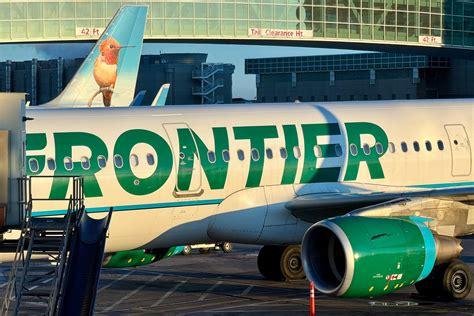
Frontier Airlines is undertaking one of its most significant network restructurings in recent years, announcing plans to exit six cities entirely while suspending or eliminating more than 20 additional routes across its network. The sweeping changes underscore a dramatic shift in strategy for the Denver-based ultra-low-cost carrier as it prioritizes profitability, denser schedules, and stronger performance in major metropolitan markets.
The latest schedule adjustments reveal an airline rapidly reshaping itself amid mounting competitive pressures throughout the U.S. aviation industry. While Frontier has simultaneously launched dozens of new routes in recent months, these latest cuts demonstrate that growth and retrenchment are occurring in parallel. Rather than pursuing an expansive route map filled with low-frequency flights, the carrier is increasingly concentrating resources on larger, higher-demand markets capable of generating stronger returns.
The move comes at a pivotal moment for the ultra-low-cost carrier sector. Rising operating costs, intensifying competition from legacy airlines, and shifting passenger preferences have forced carriers to reconsider longstanding business models. Frontier’s latest network reduction reflects a broader effort to adapt before market conditions deteriorate further.

Frontier Airlines to Withdraw From Six Cities Entirely
The most striking aspect of Frontier’s latest network overhaul is its complete withdrawal from six destinations: Corpus Christi, Knoxville, Spokane, Sarasota, St. Maarten, and San José, Costa Rica.
Each market shares a common characteristic. Frontier typically operated only a single route from these cities, with frequencies ranging from once to three times weekly. Such limited schedules often struggle to achieve sustainable profitability, particularly when competing against established carriers with extensive networks and daily service.
The affected cities and final scheduled flights include:
- Corpus Christi International Airport (CRP) – Denver service ends August 17.
- McGhee Tyson Airport (TYS) in Knoxville – Denver service ends August 17.
- Princess Juliana International Airport (SXM) in St. Maarten – Orlando service ends August 15.
- Juan Santamaría International Airport (SJO) in Costa Rica – Orlando service ends August 17.
- Sarasota-Bradenton International Airport (SRQ) – Cleveland service ends July 2.
- Spokane International Airport (GEG) – Denver service ends July 3.
Among these exits, Corpus Christi arguably illustrates the challenges facing Frontier’s former network strategy. The Denver-Corpus Christi route was introduced as part of the airline’s broader expansion into underserved markets. However, maintaining airport staff, ground handling contracts, and operational support for only two weekly flights creates substantial fixed costs that become increasingly difficult to justify when demand weakens.
Knoxville and Spokane present similar stories. Both cities possess healthy local demand and support multiple airlines, yet Frontier’s sparse schedules may have limited customer appeal. Business travelers, in particular, often prefer airlines offering daily service and greater flexibility.
International Leisure Markets Also Fall Victim to Cuts
Frontier’s withdrawal from St. Maarten and Costa Rica is especially noteworthy because both destinations represent popular leisure markets traditionally favored by low-cost carriers.
Seasonal leisure routes can deliver impressive performance during peak vacation periods, but maintaining year-round service frequently proves challenging. Demand fluctuations, weather disruptions, and increasing competition can quickly erode profitability.
The Orlando-St. Maarten route operated only once weekly, leaving little margin for schedule disruptions or soft demand. Likewise, the Orlando-San José service flew just three times per week, limiting connectivity and reducing flexibility for travelers.
Aircraft utilization has become increasingly important for airlines seeking improved financial performance. Redeploying aircraft from thin international leisure routes into busier domestic markets often generates higher daily revenue and more efficient operations.
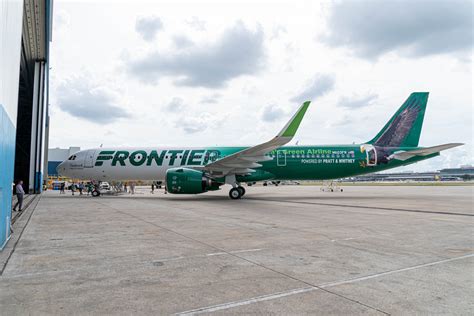
More Than Twenty Additional Routes Face Elimination or Suspension
Beyond the six city exits, Frontier is also removing or suspending a substantial number of routes throughout its domestic and international network.
Several notable domestic cancellations include:
- Atlanta-Memphis
- Atlanta-Milwaukee
- Atlanta-Oklahoma City
- Charlotte-Las Vegas
- Charlotte-San Juan
- Denver-Cancun
- Houston-Cancun
- Miami-Las Vegas
- Orlando-San Francisco
- Orlando-Salt Lake City
- Philadelphia-Los Angeles
- Tampa-Las Vegas
Temporary suspensions will affect routes such as Orlando-Phoenix, Philadelphia-Houston, Philadelphia-Santiago de los Caballeros, and Orlando-San José, Costa Rica.
The breadth of these reductions reveals that Frontier is not merely trimming underperforming routes. Instead, the airline is fundamentally redesigning its network architecture.
Competition From Major Airlines Intensifies Pressure
A closer examination of the canceled routes reveals another important trend: many faced intense competition from powerful legacy carriers.
Several discontinued services directly challenged dominant hub airlines:
- Atlanta routes competed primarily against Delta Air Lines.
- Charlotte services faced American Airlines.
- Dallas/Fort Worth routes competed with American’s fortress hub.
- Denver markets challenged United Airlines and Southwest Airlines.
- Houston-Cancun directly opposed United Airlines.
- Philadelphia services encountered competition from both American and United.
Competing against major network airlines has become increasingly difficult for ultra-low-cost carriers. Legacy airlines have refined their basic economy products, narrowing the price gap that once represented the ULCC industry’s greatest competitive advantage.
Passengers today often weigh additional factors beyond ticket price, including loyalty programs, schedule frequency, operational reliability, premium seating options, and connectivity opportunities. Large network carriers typically outperform low-frequency operators in each of these categories.
When Frontier operates only two or three weekly flights on a route while competitors offer multiple daily departures, customer flexibility becomes severely constrained. Even price-sensitive travelers may choose competitors if schedules better suit their needs.
Leisure Markets Are No Longer Guaranteed Winners
Another notable pattern emerging from Frontier’s latest cuts is the heavy concentration of leisure destinations.
Routes involving Cancun, Punta Cana, San Juan, Santo Domingo, St. Maarten, Sarasota, Las Vegas, and Orlando feature prominently among the reductions.
Historically, leisure markets represented fertile territory for ultra-low-cost carriers. Vacation travelers generally demonstrate greater price sensitivity and are often willing to sacrifice convenience for lower fares.
However, the competitive landscape has changed significantly.
Low-cost competitors such as Allegiant Air and Breeze Airways continue expanding aggressively. Meanwhile, JetBlue Airways has intensified efforts to strengthen its leisure-focused network. Traditional carriers have also expanded vacation offerings while leveraging loyalty programs to retain customers.
As a result, leisure demand has become increasingly fragmented. Simply offering the lowest fare no longer guarantees sustainable success.
Frontier’s New Strategy Centers on Network Densification
While headlines focus on route cuts, the larger story involves network densification.
Frontier is not shrinking in the traditional sense. Instead, the airline is concentrating operations within larger metropolitan areas while increasing flight frequencies on core routes.
Data illustrates the magnitude of this transformation.
The carrier’s top ten metropolitan areas accounted for approximately 35% of total flights in mid-2025. That figure is projected to rise substantially as Frontier concentrates capacity in the nation’s largest population centers.
Simultaneously, the proportion of routes operating at less than daily frequency has fallen dramatically. Frontier is steadily replacing twice-weekly and three-times-weekly services with routes featuring daily or even multiple daily departures.
This shift offers several advantages. Higher frequencies improve aircraft utilization, enhance passenger convenience, increase operational resilience, and strengthen competitive positioning against larger airlines.
Remarkably, Frontier plans to operate significantly more flights overall despite maintaining a smaller route network. The airline is effectively flying more aircraft hours within a tighter, more concentrated system.
Atlanta now exemplifies this strategy. The carrier has increasingly expanded at Hartsfield-Jackson Atlanta International Airport, even as it reduces service in smaller, peripheral markets.
Frontier Is Betting Its Future on Efficiency
The latest network reductions illustrate a fundamental reality facing today’s airline industry: size alone no longer guarantees success.
Frontier’s leadership appears increasingly convinced that profitability depends on operating a smaller, denser, and more repeatable network rather than maintaining a sprawling route map filled with infrequent flights.
For passengers in affected cities, the cuts represent disappointing news and reduced travel options. Yet for Frontier, these difficult decisions may prove essential to long-term survival.
The airline is effectively making a high-stakes wager that concentrating resources in America’s largest metropolitan markets will deliver sustainable profitability and preserve the viability of the ultra-low-cost model in an increasingly competitive aviation landscape.