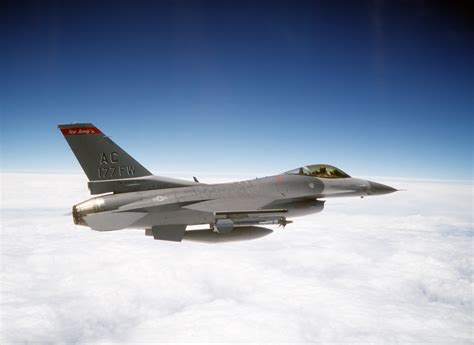
The F-16 Fighting Falcon remains one of the most successful and recognizable fighter aircraft ever built. Since its first flight in 1976 and introduction into service with the United States Air Force in 1979, the lightweight multirole fighter has become a symbol of speed, agility, and combat versatility. Although newer fighters have entered service, the F-16 continues to operate across dozens of air forces worldwide thanks to decades of upgrades and modernization programs.
Designed during the Cold War as an affordable, highly maneuverable fighter, the F-16 was never intended to be the absolute fastest aircraft in the sky. Instead, engineers focused on creating a jet that combined excellent acceleration, exceptional handling, and low operating costs. Its single-engine design, fly-by-wire controls, and lightweight airframe allowed it to dominate close-range air combat while also performing strike and reconnaissance missions.
Despite its original emphasis on agility rather than maximum velocity, the F-16’s top speed of Mach 2.0, approximately 1,500 mph (2,414 km/h), remains an impressive achievement. Few modern fighters can exceed that figure, especially as newer generations have increasingly prioritized stealth, sensors, and electronic warfare over raw speed.
However, several legendary fighter aircraft have pushed beyond the F-16’s speed barrier. These jets were built with powerful twin-engine configurations, specialized interceptor roles, or aerodynamic designs optimized for extreme performance. From American air superiority fighters to Soviet-era interceptors, these five aircraft demonstrate that the F-16, while incredibly capable, is not the fastest fighter ever created.
F-15E Strike Eagle: America’s Faster Twin-Engine Fighter
The F-15E Strike Eagle represents a different philosophy from the F-16. While the Falcon was created as a lightweight and affordable fighter, the F-15 family was designed around one central goal: achieving complete air superiority through overwhelming performance.
The original F-15A Eagle first flew in 1972 and entered service in 1976, several years before the F-16 became operational. The aircraft’s larger airframe allowed engineers to install two powerful engines, giving it enormous thrust and allowing it to carry significantly more fuel and weapons.
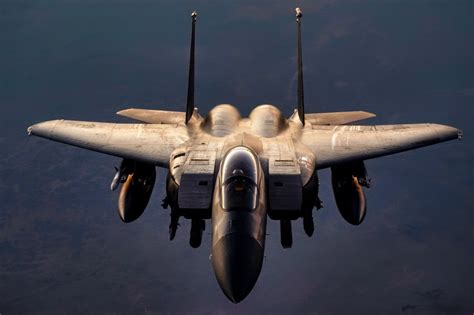
Powered by two Pratt & Whitney F100 engines, the F-15E Strike Eagle can reach speeds exceeding Mach 2.5, or roughly 1,875 mph (3,018 km/h). This gives it a substantial speed advantage over the F-16 and allows it to rapidly penetrate hostile airspace, conduct strikes, and return before enemy defenses can react.
Speed is only one part of the Strike Eagle’s advantage. The aircraft was designed as a long-range multirole fighter capable of carrying heavy weapon loads while maintaining strong air-to-air capabilities. With external fuel tanks, the F-15E can achieve a combat range of approximately 2,400 miles, making it suitable for deep-strike missions.
Unlike the lightweight F-16, which relies heavily on maneuverability, the F-15E uses power and endurance as its primary strengths. Modern upgrades have also improved its ability to detect and engage drones, cruise missiles, and advanced threats, allowing the aging airframe to remain relevant in modern warfare.
F-14 Tomcat: The Carrier Fighter That Reached Mach 2.34
Few aircraft have achieved the cultural status of the F-14 Tomcat. Best known for its appearance in the movie Top Gun, the carrier-based fighter was far more than a Hollywood icon. It was one of the most advanced naval fighters of its era and a machine built around speed, range, and long-distance interception.
The F-14 entered service with the United States Navy in 1974 and remained operational until 2006. Its distinctive variable-sweep wings allowed it to optimize performance at both low-speed carrier operations and high-speed interception missions.
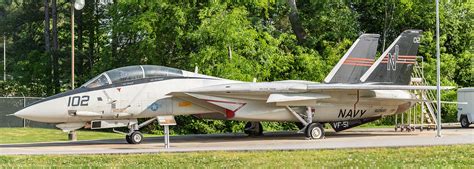
The Tomcat could achieve a maximum speed of Mach 2.34, approximately 1,734 mph (2,790 km/h). This made it faster than the F-16 while also providing a unique capability: the ability to launch long-range AIM-54 Phoenix missiles against enemy aircraft hundreds of miles away.
The F-14’s primary mission was fleet defense. It was designed to protect aircraft carriers from Soviet bombers carrying long-range anti-ship missiles. Its powerful radar system and two-engine configuration gave naval forces an early warning capability that few aircraft could match.
Although U.S. Navy F-14s recorded relatively few air-to-air victories compared with some fighters, the aircraft proved highly effective in other roles. Iranian F-14s, operated during the Iran-Iraq War, reportedly achieved significant success in air combat, demonstrating the aircraft’s exceptional performance potential.
MiG-31 Foxhound: The Supersonic Interceptor Built for Extreme Speed
The MiG-31 Foxhound is one of the fastest operational fighter aircraft ever produced. Unlike the F-16, which was designed as a flexible multirole fighter, the MiG-31 was created specifically to intercept high-speed threats such as bombers, cruise missiles, and reconnaissance aircraft.
Developed by the Soviet Union as a replacement for the MiG-25 Foxbat, the MiG-31 entered service in 1981. It incorporated major improvements in radar technology, weapons capability, and flight performance compared with its predecessor.
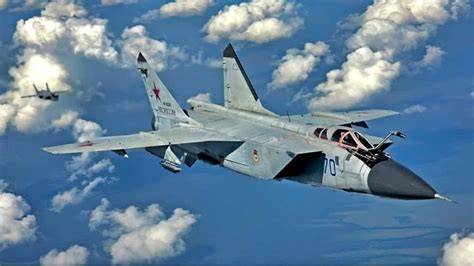
Two Soloviev D-30F6 afterburning turbofan engines provide the MiG-31 with an extraordinary maximum speed of approximately Mach 2.83, or nearly 2,100 mph (3,380 km/h). This places it far beyond the F-16’s Mach 2.0 limit.
The aircraft’s speed was matched by advanced electronics. The MiG-31 became one of the first fighters equipped with a powerful phased-array radar system, allowing it to track multiple targets simultaneously. Early versions could monitor up to ten targets, while upgraded variants such as the MiG-31BM improved tracking capability and weapons integration.
Unlike agile fighters designed for close-range dogfighting, the MiG-31 is essentially a flying missile platform. Its mission is to rapidly reach high altitudes, detect enemy aircraft, and launch long-range weapons before returning to base.
Dassault Mirage 2000: France’s Lightweight Mach 2 Fighter
The Dassault Mirage 2000 shares several design philosophies with the F-16. Both aircraft were created as lightweight, cost-effective fighters capable of competing against Soviet-era threats. However, the French design achieved a slightly higher maximum speed.
Entering service with the French Air Force in 1984, the Mirage 2000 became one of France’s most successful modern fighters. Its delta-wing configuration gave it excellent high-altitude performance and strong supersonic capability.
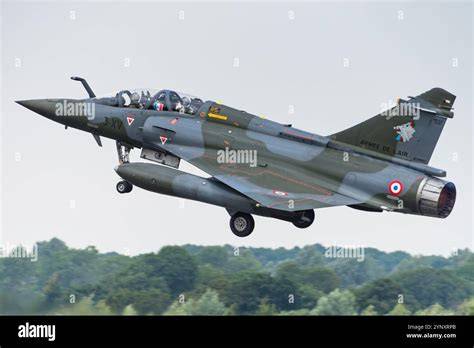
The Mirage 2000 can reach approximately Mach 2.2, or around 1,630 mph (2,623 km/h). Although only slightly faster than the F-16, this difference demonstrates the effectiveness of its aerodynamic design and powerful SNECMA M53-P2 engine.
The aircraft was designed to perform multiple missions, including air defense, interception, ground attack, and nuclear strike roles. Like the F-16, it combined relatively low operating costs with strong combat performance.
One of the Mirage 2000’s defining features is its unstable aerodynamic design controlled by advanced fly-by-wire technology. This approach improved maneuverability while allowing the delta wing to provide excellent performance at high speeds.
The Mirage 2000 has remained in service with several countries, including India, where it gained recognition for its reliability and combat effectiveness.
Sukhoi Su-27 Flanker: Russia’s High-Speed Air Superiority Fighter
The final aircraft on this list is the Sukhoi Su-27 Flanker, a fighter created specifically to challenge American aircraft such as the F-14 Tomcat and F-15 Eagle. The Su-27 combined impressive speed with exceptional maneuverability, making it one of the most capable Soviet fighters of the Cold War.
The aircraft first flew in 1977 and entered operational service in 1985. Powered by two Saturn AL-31F afterburning turbofan engines, the Su-27 can reach speeds of approximately Mach 2.35, or around 1,742 mph (2,803 km/h).
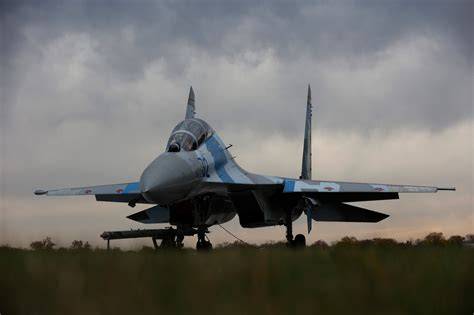
The Su-27’s greatest advantage was not simply speed. It featured an excellent thrust-to-weight ratio, long range, and advanced aerodynamic characteristics. During testing, specialized versions of the aircraft achieved remarkable climb performance records.
The P-42, a modified Su-27 variant designed specifically for record attempts, broke numerous climb-time records during the 1980s. While the standard operational Su-27 was not built purely for speed records, it demonstrated the strength of the underlying design.
Compared with the F-16, the Su-27 offered greater size, endurance, and raw engine power. While the F-16 excelled in agility and affordability, the Flanker represented a heavier class of fighter designed for long-range air superiority missions.
Why the F-16 Remains Important Despite Faster Fighters
Although these five aircraft exceed the F-16 in maximum speed, speed alone does not determine combat effectiveness. Modern air warfare depends heavily on sensors, stealth characteristics, electronic warfare systems, weapons integration, and pilot training.
The F-16’s continued success comes from its balance of performance, affordability, and adaptability. Thousands of aircraft have been produced, and upgrades have transformed the original 1970s design into a modern combat platform capable of competing in today’s environment.
Faster aircraft like the MiG-31 and F-15E demonstrate the importance of raw power, while fighters such as the Mirage 2000 and Su-27 show different approaches to achieving air superiority. The F-16 may not hold the speed record, but its combination of agility, reliability, and global experience has made it one of aviation history’s most influential fighter jets.