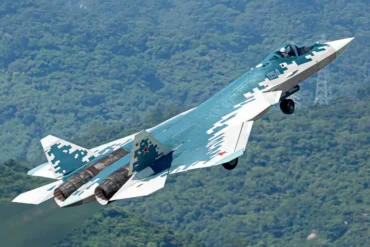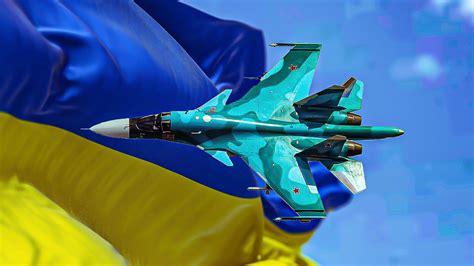
Since the start of its full-scale invasion of Ukraine in February 2022, Russia has suffered catastrophic losses in the air, with over 135 aircraft destroyed, according to recent disclosures from British military intelligence. Among these, the loss of more than 30 Su-34 “Fullback” fighter-bombers stands out as a strategic and symbolic blow to the Kremlin’s aerial warfare capabilities.
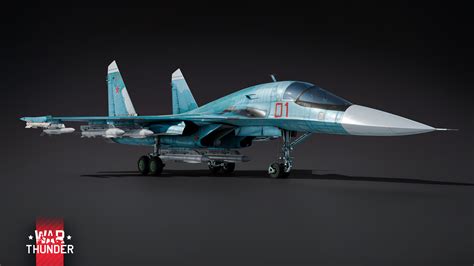
The Su-34, a twin-seat, supersonic, medium-range strike aircraft developed by Sukhoi, has been central to Russia’s daily tactical operations over Ukraine. Designed to carry out high-precision strikes in all weather conditions, day or night, the Fullback is considered a pillar of Russia’s ability to execute deep penetration bombing missions. Its ongoing attrition marks not only a tactical degradation but a symbolic dismantling of Russia’s projected image of air dominance.
British Intelligence Confirms Heavy Su-34 Attrition
British intelligence estimates that at least 30 Su-34 aircraft have been destroyed since the outset of the war, an assessment echoed by multiple Western intelligence sources. This figure represents a substantial portion of Russia’s operational fleet, as it’s believed that the Russian Aerospace Forces (VKS) entered the war with a fleet of approximately 120–130 Su-34s.
The intelligence breakdown came shortly after a Ukrainian UAV strike on June 27, 2025, targeted the Marinovka airbase in Volgograd Oblast. This attack, one of Kyiv’s most daring cross-border drone operations to date, reportedly destroyed two Su-34s outright and rendered at least two more inoperable. Visual confirmations, satellite imagery, and signal intercepts all support the British findings.
This airfield strike is not an isolated incident. On the same weekend, Ukraine also launched successful precision strikes on helicopter bases at Kirovskoye airfield in occupied Crimea, and an ammunition depot in Bryansk, disrupting Russian logistics and forward-deployed assets.
The Strategic Role of the Su-34 in Russian Air Doctrine
The Su-34 Fullback is not just another multirole aircraft—it was built to replace the aging Su-24M Fencer and has steadily become the VKS’s core platform for long-range tactical strike missions. Capable of flying at Mach 1.8 with a range of nearly 4,000 km, the Su-34 is heavily armored and fitted with advanced avionics, including Khibiny electronic countermeasures systems and Leninets V004 passive phased-array radar.
What sets the Fullback apart is its ability to deliver standoff munitions, glide bombs, and anti-ship missiles while maintaining a survivability profile against medium-range surface-to-air missile systems. These qualities made it indispensable in the Russian playbook, particularly in areas like the Zaporizhzhia and Donetsk fronts, where precision and payload often determine ground outcomes.
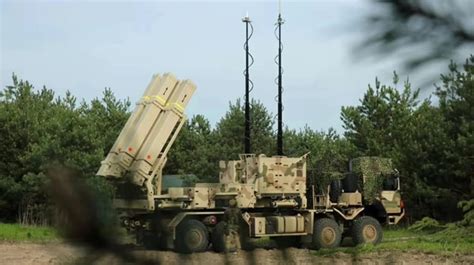
However, the persistent and evolving nature of Ukraine’s air denial tactics, coupled with the integration of NATO-supplied air defense systems like NASAMS and IRIS-T, has steadily eroded the Su-34’s survivability.
A Pattern of Decay: Russia’s Air Force Under Siege
The loss of over 30 Su-34s represents more than just a reduction in numbers—it signals a broader erosion of Russia’s aerial credibility. The VKS’s failure to establish air superiority in the early weeks of the war shifted the burden onto systems like the Su-34 to conduct high-risk low-level missions. Flying close to the frontlines and often within the engagement range of Ukrainian MANPADS, these aircraft became prime targets.
This operational exposure—combined with increasingly sophisticated Ukrainian drone and loitering munition attacks—has made airbase security a critical weakness. Russia’s airfields near the Ukrainian border, including those in Voronezh, Belgorod, and Volgograd, have now become high-priority targets for Kyiv’s expanding drone fleet.
The Marinovka Airbase Strike: A Turning Point
The UAV strike on Marinovka marks a watershed moment in the war. This base, deep in Russian territory and previously considered outside the threat envelope, was believed to be a secure hub for maintaining and rotating Su-34 units. The attack showed that Ukraine’s UAV capabilities have not only evolved in range and stealth but also in targeting accuracy and payload delivery.
Ukrainian military officials, speaking under anonymity, confirmed that the operation utilized long-range fixed-wing drones guided by a combination of open-source satellite intelligence and real-time surveillance from NATO assets. The drones carried thermobaric warheads, which were specifically chosen for their ability to neutralize hardened aircraft shelters and destroy parked aircraft.
Compounded Losses and Aircraft Cannibalization
Russia’s inability to replace Su-34s at the rate of loss has forced the VKS to cannibalize damaged airframes for parts. According to independent Russian aviation blogs and flight trackers, several previously active Su-34 squadrons have seen dwindling operational tempo, with reports of non-combat mechanical failures rising sharply.
The Novosibirsk Aircraft Production Association (NAPO)—the primary Su-34 manufacturer—is believed to be struggling with both labor shortages and component supply constraints due to Western sanctions. Avionics and engine systems reliant on foreign semiconductors have become a critical bottleneck in new production.
Ukraine’s Air Denial Strategy Paying Dividends
The continued downing of Su-34s is a testament to Ukraine’s layered air denial architecture, which combines mobile air defense platforms with drone reconnaissance and precision-guided artillery. Ukrainian operators have grown adept at tracking sortie patterns, predicting ingress routes, and coordinating ambush zones for man-portable air-defense systems (MANPADS).
In regions like Luhansk, Kherson, and Zaporizhzhia, forward observers coordinate with Stugna-P and Patriot missile systems, effectively creating no-fly corridors where Russian aircraft risk destruction even before entering bombing range. The Fullback’s advanced avionics have offered little protection against this level of coordination.
The Long-Term Implications for the Russian Aerospace Forces
Losing more than 30 Su-34s in under three years is an unsustainable attrition rate. Russia is now facing a crisis of aerial sustainability. With mounting pilot casualties, damaged morale, and increasing maintenance burdens, the VKS is being forced into a reactive posture, increasingly favoring standoff tactics and missile warfare over piloted aircraft strikes.
Military analysts suggest that unless Russia can dramatically reduce its loss rate or secure external assistance—possibly from Iran or China—its strike aviation capability could degrade beyond repair in the next 12–18 months.
Conclusion: Air Power Reversed
Russia’s once-formidable air dominance has been systematically dismantled over the skies of Ukraine. The loss of more than 30 Su-34 Fullbacks serves not only as a tactical defeat but as a glaring symbol of the failure to establish supremacy in a war Moscow expected to win quickly. As Ukraine’s capability to strike deep within Russian territory grows, it is increasingly likely that the Kremlin’s front-line air operations will face further decline.
With every Fullback that crashes, burns, or is left smoldering on an exposed runway, the image of Russian air invincibility is shredded further. The Su-34’s fate has become a mirror of the war itself—ambitious, brutal, and increasingly unsustainable in the face of precision, resolve, and an evolving resistance.