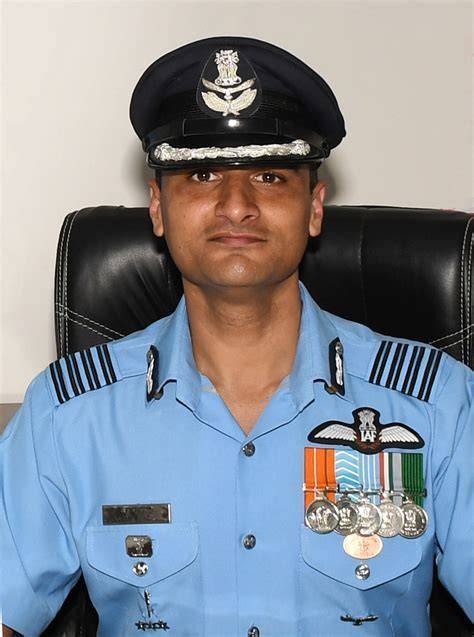
In the turbulent aftermath of Operation Sindoor, the spotlight has shifted sharply onto the Indian Air Force (IAF), with critics questioning the reported loss of aircraft during the campaign. Yet Group Captain Ajay Ahlawat, a veteran fighter pilot, has emerged as a compelling voice pushing back against the noise. His response underscores a broader understanding of modern air warfare—one that goes beyond numbers and delves into mission success, adaptation, and strategic dominance.
Contextualizing the Losses: Numbers Do Not Tell the Full Story
The recent public debate gained traction following Chief of Defence Staff General Anil Chauhan’s acknowledgement during the Shangri-La Dialogue in Singapore. Speaking to Bloomberg TV, he admitted that “in all likelihood, we did lose some aircraft,” sparking media speculation and adversarial propaganda, particularly from Pakistan.
Rather than downplaying the gravity of these losses, Ahlawat contextualized them within the broader reality of combat operations. He made it clear that tactical setbacks are inherent to modern warfare, especially in the opening salvos against a peer adversary with dense air defenses and electronic warfare capabilities. “Every such incident is studied in detail — covering tactics, weapon types, and even the possibility of friendly fire,” he stated.
Dissecting the Claims: Fact vs Fiction in the PAF Narrative
Ahlawat took direct aim at Pakistan Air Force’s (PAF) claims that six Indian aircraft were shot down, calling the assertions “speculative and unsupported.” He pointed out that beyond a sensationalist press conference and doctored social media posts, no verifiable evidence has been produced by Islamabad. Notably, some of the Chinese-made PL15 long-range air-to-air missiles allegedly used in the attacks were found intact on Indian soil, raising serious doubts about their deployment success.
According to Ahlawat, these claims form part of a broader information warfare strategy, aimed more at domestic consumption and morale than any operational truth. “They have failed to provide any evidence other than a sleazy presentation and social media posts,” he emphasized, dismissing the narrative as lacking credibility.
Operational Pause or Tactical Pivot? What Really Happened Post May 6–7
A particularly stinging criticism from detractors has been the accusation that the IAF went dormant following early losses on May 6–7. Ahlawat categorically refuted this. “Nothing could be further from the truth,” he asserted. He detailed that the IAF continued limited strikes, recalibrating its tactics while maintaining 24/7 air defense patrols and SEAD/DEAD missions aimed at suppressing Pakistan’s integrated air defense systems.
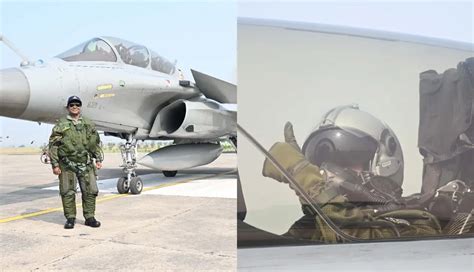
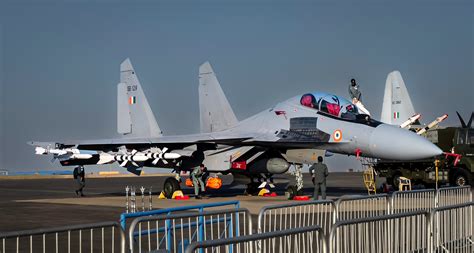
He revealed that the IAF leveraged its Rafale fighters and BrahMos-armed Su-30MKIs to conduct targeted missions on May 8–9, adapting its strike packages based on new EW inputs and battlefield assessments. This period, rather than a pause, was a crucial interlude for tactical recalibration.
Turning Point: Response to Operation Bunyan al-Marsoos
The operational tempo intensified on May 10, when Pakistan launched its offensive under Operation Bunyan al-Marsoos. In a decisive and calculated counter, the IAF unleashed precision retaliatory strikes, backed by satellite surveillance and intelligence inputs. “The IAF rose to challenge the PAF’s hubris with an updated game plan,” Ahlawat remarked.
Key operational elements included:
- Reconfiguration of strike formations
- Enhanced integration of electronics and sensors
- Zero tolerance for restrictive rules of engagement (ROE)
- Lethal intent with “shoot to kill” orders
Ahlawat noted that Pakistan’s much-touted J10C and PL15 missile combo failed miserably, unable to bring down even a single Indian aircraft. Despite operating deep inside Pakistani airspace, these platforms failed to launch a single successful beyond-visual-range (BVR) missile.
Learning from History: The Israeli Example in the Yom Kippur War
To offer perspective on the inevitability of early attrition in air wars, Ahlawat invoked the Israeli Air Force’s (IsAF) performance during the 1973 Yom Kippur War. Despite being technologically superior and better trained, the IsAF lost forty aircraft in the first 12 hours—including thirty A-4 Skyhawks, six Phantoms, and four Super Mystères.
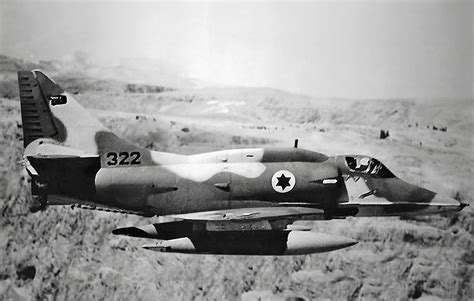
These early losses did not deter Israel; instead, they catalyzed an operational evolution. The IsAF conducted SEAD missions in coordination with artillery, adapted tactics to reduce SAM exposure, and ultimately gained complete air superiority. “The outcome of the war is a well-known historical fact,” Ahlawat remarked, underlining that adaptation and resilience are more critical than initial loss figures.
Attrition in Modern Air Warfare: A Strategic Necessity
One of the most compelling insights from Ahlawat’s analysis is that attrition is not a sign of failure, but rather a calculated cost of achieving air dominance. Modern air campaigns, especially those against technologically capable adversaries, are built around attrition estimates. Commanders prepare for such losses in mission planning, allowing room for tactical agility and strategic breakthroughs.
He elaborated that the early hours of any high-stakes air operation involve flying into highly contested zones, where enemy radars, missiles, and jammers form a deadly shield. Even advanced stealth aircraft are not immune, and history across conflicts—from Vietnam to Kosovo to Ukraine—validates this brutal reality.
Mission Success Over Kill Counts: Rethinking Victory Metrics
Ahlawat’s central thesis is strikingly clear: the success of an air campaign is not measured by aircraft losses alone, but by mission outcomes. He argued that air operations must be judged by the degree to which strategic objectives—termed “conditions of termination”—are fulfilled.
“Wars are dirty business…Victory, however, will be measured against the degree to which the objectives set forth before the campaign were achieved,” he wrote. In this framework, Operation Sindoor was a resounding victory, achieving its intended goals despite expected setbacks.
This includes:
- Disruption of enemy command and control infrastructure
- Suppression of air defense systems
- Establishing air superiority for follow-on operations
- Denial of enemy propaganda victories through precision counter-strikes
The Larger Picture: Psychological and Strategic Superiority
Beyond tactics and hardware, Ahlawat highlighted the psychological and strategic layers of warfare. Pakistan may claim minor tactical wins, but the overall narrative control, operational initiative, and strategic posture remain with India. The IAF’s ability to continue strike operations, modify its approach, and project dominance across the western front has demonstrated a level of airpower maturity that goes far beyond dogfights and downed jets.
He concluded with a pointed reminder for critics: “For people not familiar with the planning and structuring of an air campaign against a peer competitor, the loss of our own aircraft might come as a surprise. However, despite advances in weaponry and sensors, air forces around the world cater for attrition in air war, especially in the early hours, when you fly into a hornet’s nest.”
Final Verdict: India’s Air Power Shows Depth, Not Just Daring
In the face of sensational headlines and viral claims, Group Captain Ajay Ahlawat’s account offers a sobering, professional, and strategically grounded assessment. India’s air campaign during Operation Sindoor, though marred by early losses, showcased a resilient force capable of absorbing shocks and delivering punishing responses.
The war in the air is never just about the first hit—it’s about the last one. And by that measure, the IAF is far from wounded. It is, as Ahlawat put it, “victorious in the only way that counts.”