In the heart of South Asia, where military modernization meets bureaucratic inertia, the Indian Air Force (IAF) has been enduring what many experts describe as a ‘deadly decade.’ Between 2015 and 2024, the IAF has lost a staggering 104 aircraft and 73 pilots, numbers that cast a long shadow over its operational readiness and question the structural flaws underlying India’s airpower.
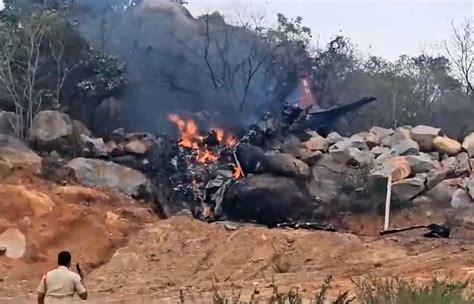
The latest disaster occurred on July 9, 2025, when a SEPECAT Jaguar fighter jet plunged near Churu, Rajasthan, killing two experienced pilots. Notably, this was the fifth major crash of the year, further inflaming debates around safety protocols and aircraft maintenance in India’s air force. Tragically, the Jaguar crash wasn’t isolated: another Jaguar was lost in both March and April, with a Mirage 2000 and Antonov An-32 also crashing in the same year, claiming additional young pilots.
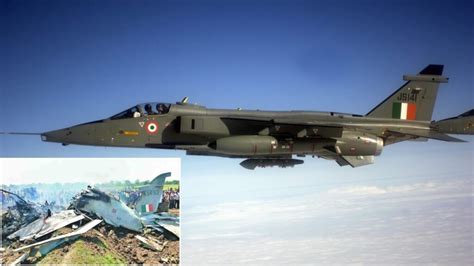
Peacetime Tragedies: The Scale of India’s Air Loss Crisis
To grasp the magnitude of the issue, consider this: India has lost 42 aircraft since 2020, averaging seven aircraft annually in non-combat conditions. The IAF currently operates 31 fighter squadrons, well below the sanctioned strength of 42 squadrons. Yet, ironically, over the past two decades, India has lost aircraft equivalent to 14 entire squadrons during peacetime.
This crisis extends beyond material loss. In the past ten years alone, 73 IAF pilots have died in crashes—a shocking human toll. Between 2012 and 2021, India averaged over seven pilot deaths annually. Earlier decades reveal even grimmer statistics: 122 pilots lost between 2002 and 2011, 190 between 1992 and 2001, and an appalling 230 pilot deaths between 1982 and 1991. From 1952 to 2021, India lost 1,305 IAF pilots, predominantly in non-combat situations.
Non-Combat Missions: India’s Hidden Air Force Killer
The depth of India’s aviation safety crisis becomes evident when comparing wartime and peacetime losses. According to Bharat Rakshak, between 1948 and 2025, India lost 1,804 aircraft (excluding helicopters). Astonishingly, only 143 of those losses occurred in combat. This implies that nearly 92% of all aircraft losses happened during non-combat missions.
Put differently, India lost the equivalent of 92 fighter squadrons in peacetime. Even focusing solely on fighters, over 50 squadrons were lost without facing enemy fire. Comparatively, other major powers like China and Russia rarely publish crash data transparently, but experts speculate that India’s figures may well rank among the highest peacetime aircraft losses globally.
MiG-21: The ‘Flying Coffin’ That Won’t Retire
Perhaps no aircraft embodies India’s aviation tragedy more than the MiG-21. Branded as ‘Flying Coffins’ and ‘Widow Makers’, these aging Soviet-era jets have relentlessly claimed lives. Of the 872 MiG aircraft purchased by India, 482 have crashed, resulting in 171 pilot deaths and additional civilian casualties. Among these, 298 were MiG-21s, notorious for their limited avionics and unforgiving flight handling.
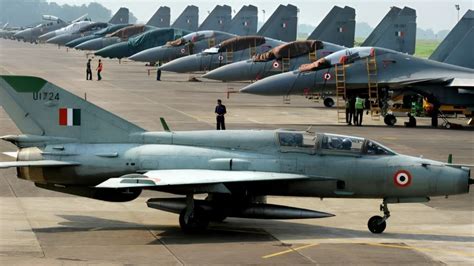
In fact, 25% of India’s fighter jet losses are attributed to MiG-21s, followed by aircraft like the Hunter F56, Vampire FB52, and Jaguar. Still flying despite being introduced in the 1960s, India’s MiG-21 Bison fleet, numbering around 26 to 28 units, is expected to retire by the end of 2025. While this marks the closure of a tragic chapter, its legacy continues to shape IAF’s accident profile.
The Cost of Obsolescence and Systemic Flaws
It’s easy to blame outdated jets like MiG-21s and Jaguars for the crisis. However, India’s problem is far deeper. The IAF still operates over 100 Jaguars, an aircraft retired by countries like Britain, France, Oman, Ecuador, and Nigeria years ago. Despite their obsolescence, these aircraft remain active in India due to bureaucratic delays in procurement and indigenous development challenges.
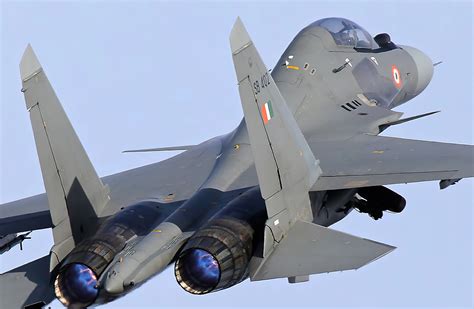
Yet, modern aircraft aren’t immune. The IAF has lost 13 Su-30MKIs, 15 Mirage-2000s, 59 MiG-27s, and 25 MiG-29s over the years. While some debate surrounds Su-30MKI crash counts—whether 12 or 13—the fact remains that India has lost front-line fighters well before their expected service life ended. This reveals a multifaceted issue encompassing human error, technical failures, poor maintenance standards, and insufficient advanced training.
Safety Audits and International Comparisons
Statistical audits offer further insights. A 2002 Public Accounts Committee report disclosed that between 1991 and 1997, India’s aircraft accident rate per 10,000 flying hours ranged from 0.89 to 1.52, with fighter aircraft showing an even worse ratio of 1.89 to 3.53. For MiG-21 variants, the rate soared to 2.29 to 3.99.
Contrast this with the US Air Force, where the fighter aircraft accident rate in the 1990s was 0.29, declining to 0.15 in the 2000s and 0.1 between 2010 and 2018. India’s safety record, when compared to Western standards, is simply dismal.
In 1982, a Parliamentary debate shockingly revealed that India lost nearly as many aircraft during peacetime in two years as it did during the entire 1971 Indo-Pak war. Four decades later, systemic reform remains elusive.
The Slow Path to Safety Reform
While accident rates have marginally declined in recent years, progress is far from satisfactory. India is inducting advanced trainers like the Pilatus PC-7 Mk II and HAL’s HTT-40, and retiring its MiG-21 fleet. Additionally, India is shifting towards twin-engine Western fighters, expected to offer better redundancy and reliability. However, these reforms are gradual and fail to address the immediate vulnerabilities facing pilots.
India’s inability to fully eliminate preventable crashes reflects deeper institutional problems: procurement delays, lack of political urgency, training gaps, and an overreliance on outdated platforms.
Conclusion: Can India Stop The Bleeding?
As India emerges as the world’s fourth-largest economy, its inability to safeguard its own air warriors during peacetime presents a grim paradox. While the retirement of MiG-21s and Jaguars might marginally improve safety figures, unless India overhauls its maintenance practices, procurement strategy, and training standards, the air force risks continued degradation of both morale and combat capability.
From 1952 to 2025, India has sacrificed over 1,305 pilots and lost 1,804 aircraft—predominantly outside of combat. It’s a crisis not just of machinery, but of national policy priorities.
India’s skies, once symbols of ambition and progress, have become graveyards of peacetime tragedies. Whether the nation’s leadership can reverse this trajectory remains a question hanging ominously over the subcontinent.