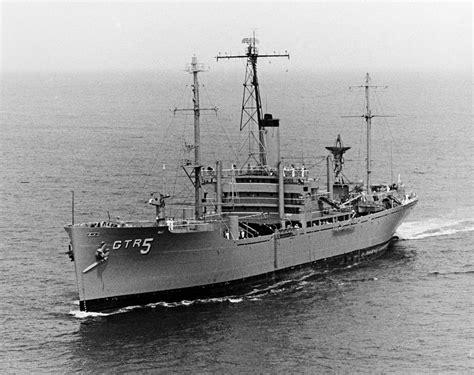
The afternoon sun over the eastern Mediterranean was unforgiving, reflecting sharply off the steel hull of a U.S. Navy vessel that had no expectation of combat. The USS Liberty, sailing in international waters north of the Sinai Peninsula, was not a warship bristling with missiles or strike aircraft. It was an intelligence collector, quiet by design, listening more than speaking. What unfolded on June 8, 1967, during the height of the Six-Day War, would become one of the most controversial and emotionally charged episodes in modern U.S. naval history.
Thirty-four Americans would die, more than 170 would be wounded, and a close alliance would be shaken by an attack officially labeled a mistake—but never fully laid to rest in the minds of survivors and historians alike.
By the time the smoke cleared, the USS Liberty had been strafed by fighter jets, engulfed in napalm-induced fire, and torn open by a torpedo. The ship remained afloat through sheer discipline and improvisation, while questions about intent, communication failures, and political pressure lingered for decades.
A War That Redrew the Middle East in Six Days
The Six-Day War, which erupted on June 5, 1967, was one of the most decisive conflicts in modern military history. Israel launched preemptive air strikes against Egypt, destroying much of the Egyptian Air Force on the ground within hours. Jordan and Syria soon entered the conflict, transforming it into a regional war with global implications.
By June 10, Israel had seized the Sinai Peninsula and Gaza Strip from Egypt, the West Bank and East Jerusalem from Jordan, and the Golan Heights from Syria. The speed and scale of these victories stunned the world and alarmed Washington, which was deeply concerned about possible Soviet intervention on behalf of the Arab states.
Officially, the United States declared neutrality, promising to remain neutral “in thought and deed.” In practice, Israel had already been heavily armed by Washington in the years leading up to the war. What the U.S. did not provide were troops or air support during the conflict itself—making the presence of an American intelligence ship near the battlefield politically sensitive.
Why the USS Liberty Was There
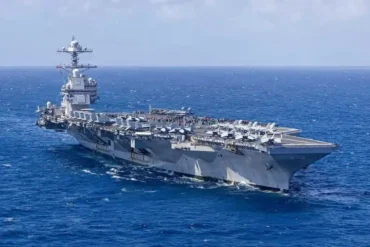
The USS Liberty (AGTR-5) began life as the SS Simmons Victory, a cargo ship built during World War II. Purchased by the U.S. Navy in 1963, it was converted into a technical research ship—a floating listening post designed to collect signals intelligence (SIGINT).
Equipped with advanced antennas and electronic surveillance equipment, the Liberty worked under the joint oversight of the Defense Intelligence Agency, the CIA, the National Security Agency, and the U.S. Sixth Fleet. Its mission in June 1967 was straightforward but risky: monitor communications along the northern coast of the Sinai Peninsula to provide Washington with real-time intelligence during a volatile war.
The ship was lightly armed, carrying only four .50-caliber machine guns, intended for self-defense against boarders, not air or naval assault. Its role was observation, not engagement.
A Ship Seen, Identified, and Then Attacked
On the morning of June 8, Israeli reconnaissance aircraft flew repeatedly over the USS Liberty. Crew members reported clear daylight conditions and visible hull markings. The American flag was flying, though later Israeli accounts would claim it was difficult to identify due to smoke or drooping in light wind.
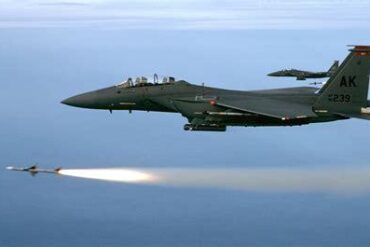
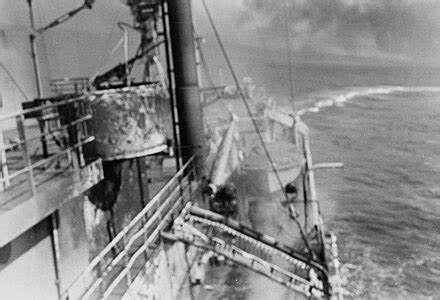
At approximately 3:05 p.m. local time, the calm shattered. Israeli Mirage fighter jets began strafing the ship with 30 mm cannon fire, targeting the bridge, deck, and communications equipment. Within minutes, the Liberty’s antennas were destroyed, and its ability to transmit distress signals was severely compromised.
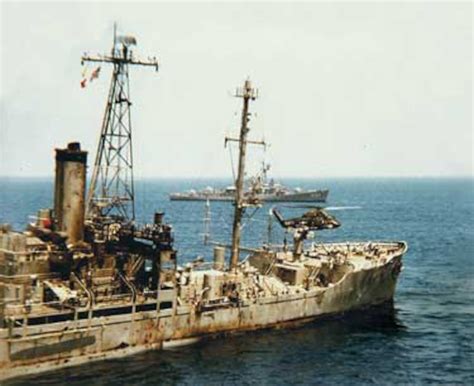
Crew members attempted to defend the ship with their limited machine guns, but the effort was hopeless. The attacking aircraft returned repeatedly, escalating the assault. Super Mystère fighter-bombers followed, dropping napalm, which ignited massive fires across the deck.
The attack was methodical, devastating, and relentless.
Torpedoes in International Waters
As the air assault subsided, the crew hoped the worst was over. Instead, three Israeli torpedo boats approached the damaged vessel at high speed. Without warning, they launched five torpedoes.
One struck the starboard side, ripping open a 39-by-24-foot hole below the waterline. Twenty-five sailors were killed instantly, many trapped in flooded compartments. The torpedo boats then opened fire with deck guns, further raking the ship.
In total, the USS Liberty sustained 821 shell holes, catastrophic structural damage, and casualties that would cripple most vessels. Yet the crew, under the command of Captain William L. McGonagle, fought flooding, fires, and shock with extraordinary resolve.
Survival Against Overwhelming Odds
Captain McGonagle, gravely wounded, refused evacuation and continued directing damage control efforts. Sailors rigged makeshift medical stations, passed ammunition by hand, and sealed compartments with whatever materials they could find.
Against all expectations, the Liberty stayed afloat.
At approximately 4:30 p.m., after nearly 90 minutes of sustained attack, Israeli forces disengaged. The sea fell silent, leaving behind a burning, shattered American ship drifting in hostile waters.
Washington Reacts—and Then Pulls Back
When news of the attack reached Washington, President Lyndon B. Johnson initially feared a Soviet strike, a nightmare scenario during the Cold War. As clarification emerged, Israel quickly accepted responsibility, stating the Liberty had been mistaken for the Egyptian vessel El Quseir.
The USS Liberty eventually managed to contact the USS Saratoga, prompting the launch of U.S. fighter aircraft and refueling tankers to defend the ship. Those aircraft never arrived.
According to later accounts, Secretary of Defense Robert McNamara ordered the mission recalled once it reached Washington. The reasons for that decision remain classified or disputed, fueling speculation that political calculations outweighed military necessity.
Investigations, Gag Orders, and Uneasy Conclusions
The U.S. Navy Court of Inquiry convened shortly after the incident, concluding that the attack was a case of mistaken identity amid wartime confusion. The proceedings were held largely behind closed doors, and survivors were instructed not to discuss the event publicly.
Subsequent investigations by the Joint Chiefs of Staff, the CIA, the NSA, and congressional committees, including a 1991 House Armed Services Committee review, reaffirmed the accidental explanation. They cited communication breakdowns, misidentification, and U.S. message-routing failures that left the Liberty dangerously exposed.
Israel paid compensation for casualties and ship damage and issued a formal apology. Diplomatically, the matter was closed.
Emotionally and historically, it was not.
The Theories That Refused to Die
Despite official conclusions, alternative theories emerged almost immediately. Some survivors and analysts argued that Israeli forces had identified the ship as American hours before the attack but failed to relay that information to strike commanders.
Others suggested darker motives: concealing military operations, preventing intelligence collection related to the Golan Heights, or hiding alleged actions in the Sinai. Author James Bamford proposed that the Liberty may have been attacked to prevent interception of sensitive communications.
No definitive evidence has ever proven these claims, but the persistence of doubt reflects the unusual nature of the assault and the extraordinary political context surrounding it.
A Captain’s Burden and a Lasting Legacy
Captain William L. McGonagle received the Medal of Honor, presented quietly at the Washington Navy Yard rather than at the White House—a detail often noted by historians. Decades later, he stated that while he once believed the attack was an error, he struggled to fully accept that explanation.
The USS Liberty itself never returned to intelligence service. It was eventually decommissioned, its name etched into naval history alongside a somber lesson about friendly fire, miscommunication, and the human cost of geopolitical urgency.
The tragedy stands as a stark reminder that even allies, even in shared strategic cause, can inflict irreversible harm when war compresses decision-making and truth becomes fragmented by noise, fear, and speed.
The deaths of 34 American sailors, Marines, and intelligence personnel were not the result of enemy hostility but of a catastrophic breakdown between partners. In that sense, the USS Liberty incident remains one of the most haunting episodes of the Cold War—officially resolved, yet never fully settled.