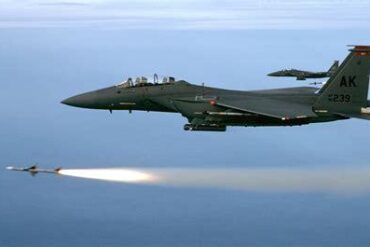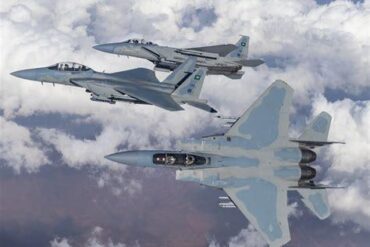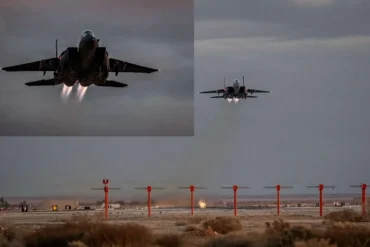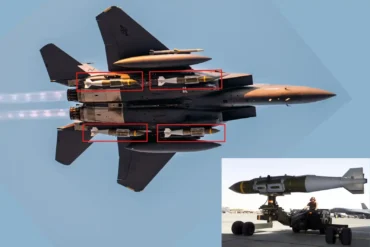
The loss of three U.S. F-15E Strike Eagle fighter jets over Kuwait in a single night has sent shockwaves through military circles already tense from a widening Middle East conflict. Initial claims from Tehran suggested Iranian forces had downed the aircraft. Hours later, the narrative shifted dramatically. The Pentagon confirmed that the aircraft were most likely destroyed in a friendly fire incident, not by Iranian missiles but by allied air defenses operating in one of the most congested battle spaces in modern warfare.
This is not just a tragic operational mishap. It is a stark reminder that, despite two decades of technological evolution, the problem of air defense fratricide remains stubbornly alive. Twenty-three years after a Patriot missile battery in Kuwait mistakenly shot down a British Tornado during the Iraq War, history appears to have rhymed with disturbing precision.
The implications stretch far beyond the loss of aircraft. They force uncomfortable questions about air defense saturation, Identification Friend or Foe (IFF) systems, drone proliferation, and the limits of even the most advanced missile shields.
The Night Three F-15E Strike Eagles Fell Over Kuwait
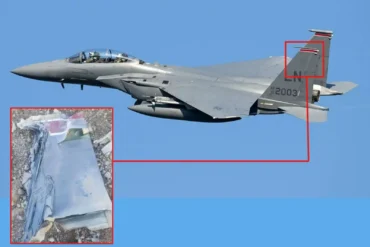
On March 1 at approximately 11:03 p.m. ET, three F-15E Strike Eagles flying in support of Operation Epic Fury went down over Kuwaiti territory. According to U.S. Central Command, the aircraft were operating amid active combat conditions that included Iranian ballistic missiles, cruise missiles, drones, and aerial incursions. In that chaotic sky, Kuwaiti air defense units reportedly misidentified the American fighters as hostile threats.
All six crew members successfully ejected and were recovered in stable condition. That fact alone prevented the incident from becoming a human catastrophe on top of a strategic embarrassment.
F15 Crashes in Kuwait pic.twitter.com/xSRn3TdWVx https://t.co/uvltBXsHUk
— Sidhant Sibal (@sidhant) March 2, 2026
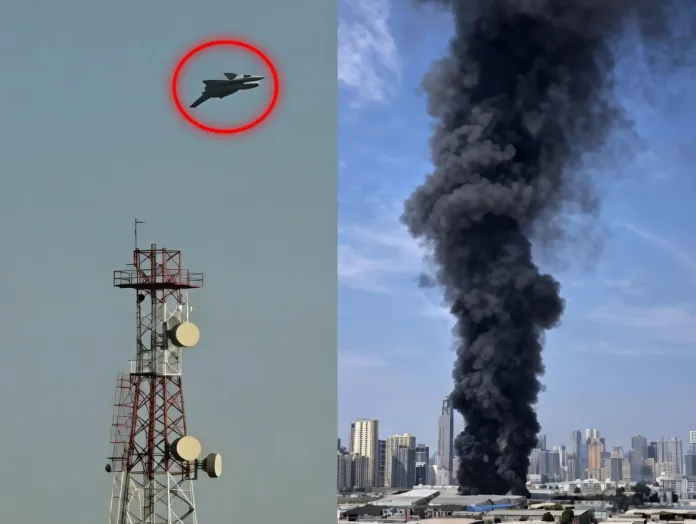
Video circulating online showed one F-15E spiraling downward, flames trailing from its rear fuselage. The footage captured not just a falling aircraft, but the visual embodiment of a system failure. CNN later geolocated at least one crash site within 10 kilometers of Ali Al Salem Air Base, one of two major U.S. facilities in Kuwait.
INJURED US F-15 PILOT IN OXYGEN MASK RUSHED TO HOSPITAL IN CAR TRUNK
‘1 minute 1 minute 1 minute’ https://t.co/eb9eeumxjb pic.twitter.com/eCV7kj3CCi
— RT (@RT_com) March 2, 2026
Iran’s initial claim of responsibility quickly ran into credibility problems. Despite operating advanced air defense systems such as the S-300 and Chinese-made HQ-9B, Iran has struggled historically to down modern U.S. or Israeli fighter aircraft. During recent operations involving over 200 Israeli jets—including F-35I Adir stealth fighters—Tehran failed to shoot down a single aircraft. The probability that Iran suddenly achieved precision kills over Kuwaiti territory more than 100 kilometers away from its border is extraordinarily low.
The far more plausible explanation is a familiar one: friendly fire.
Patriot Missile Batteries and the Recurring Shadow of 2003
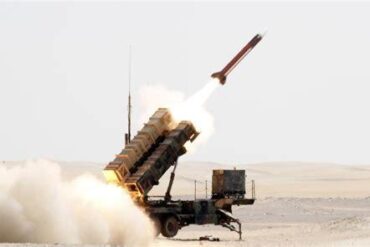
The Patriot air defense system is designed primarily to intercept ballistic missiles. It has evolved through multiple upgrades, including the PAC-3 configuration, which emphasizes hit-to-kill kinetic interceptors. In theory, modern software improvements and enhanced radar discrimination capabilities should reduce misidentification. In practice, the chaos of combat introduces variables no laboratory simulation can fully replicate.
The historical parallel is chilling.
On March 23, 2003, a U.S. Patriot battery shot down a Royal Air Force Tornado GR4 returning to Ali Al Salem Air Base. Flight Lieutenants Kevin Main and Dave Williams were killed. Just twelve days later, another Patriot battery destroyed a U.S. Navy F/A-18C Hornet, killing Lieutenant Nathan White. Within two weeks, allied forces lost three pilots to their own air defenses.
Twenty-three years later, in the same theater, under similarly saturated conditions, Patriot systems appear again at the center of a friendly fire investigation.
This is not an indictment of a single weapons platform. It is a case study in how modern air warfare has outpaced the cognitive bandwidth of both humans and machines.
A Sky Overcrowded: Ballistic Missiles, Cruise Missiles, and Drones
Air defense systems were historically designed to counter relatively discrete threats. During the Cold War, a radar operator might track a handful of high-speed bombers or incoming ballistic missiles. Today’s battlefield looks radically different.
In the Gulf, Patriot batteries are confronting:
- Ballistic missiles descending at hypersonic velocities
- Low-flying cruise missiles with erratic flight paths
- Swarms of one-way attack drones
- Friendly strike aircraft returning at high speed
- Civilian and military air traffic operating in adjacent corridors
Each radar return becomes a potential lethal decision.
The addition of drone warfare has fundamentally transformed air defense complexity. Small unmanned aerial vehicles create radar clutter, forcing systems to discriminate between dozens—sometimes hundreds—of objects in real time. Algorithms trained on limited peacetime datasets must suddenly perform flawlessly under combat stress.
Identification Friend or Foe, or IFF, is meant to solve this problem. Aircraft transmit coded signals confirming friendly status. But IFF systems are not infallible. Signal interference, incorrect coding, equipment malfunction, or simple timing delays can produce fatal ambiguity. In a scenario where ballistic missiles are inbound and seconds matter, hesitation can cost lives on the ground. Action, however, can cost lives in the air.
That is the razor’s edge of modern air defense.
Kuwait’s Layered Air Defense Network
Kuwait maintains one of the densest air defense networks in the Gulf. The country operates approximately 14 Patriot batteries, supplemented by Raytheon’s MIM-23 I-HAWK systems and short-range defenses such as the FIM-92 Stinger and Italy’s Spada 2000. Naval vessels add another protective layer.
In theory, layered defense increases survivability. In practice, it multiplies coordination demands. Multiple radar systems, overlapping engagement zones, and decentralized fire control units require flawless communication. A single miscommunication in a target-dense environment can cascade into tragedy.
Ali Al Salem Air Base lies less than 150 kilometers from Iran. That proximity ensures that any escalation immediately saturates Kuwaiti airspace. When Iranian missiles, drones, and aircraft operate simultaneously, the environment becomes what defense analysts call a high-density air picture—a scenario where radar tracks exceed the tested limits of peacetime training.
The Patriot system was engineered to intercept ballistic missiles. It was not designed for skies filled simultaneously with ballistic threats, cruise missiles, loitering munitions, and returning friendly strike aircraft.
The Fog of War and Human Limits
Technology often receives blame after friendly fire incidents, but human factors are equally decisive. Combat stress, sleep deprivation, compressed decision timelines, and incomplete information create a psychological crucible.
Operators must classify threats within seconds. The margin for error approaches zero. Delay risks allowing an enemy missile to strike a population center or military installation. Immediate engagement risks catastrophic misidentification.
The Iraq War revealed these pressures starkly. Investigations into the 2003 Patriot incidents cited software misclassifications, radar misinterpretation, and procedural breakdowns. Despite upgrades since then, the core challenge persists: real combat introduces unpredictable variables that cannot be fully rehearsed.
The December 2024 Red Sea incident underscores the pattern. A U.S. Navy Ticonderoga-class cruiser USS Gettysburg fired a Standard Missile-2 that downed an F/A-18F Super Hornet returning to the USS Harry S. Truman during sustained drone attacks. The common thread was saturation.
When the sky becomes a storm of radar returns, even advanced systems struggle to distinguish friend from foe.
Iran’s Claims and Strategic Information Warfare
Iran’s rapid assertion that it had shot down multiple F-15s reflects a parallel battlefield: information warfare. In modern conflicts, perception can carry strategic weight equal to kinetic effects.
However, recent operational history weakens Tehran’s claim. During intensive Israeli operations involving F-35I, F-15, and F-16 aircraft over Iranian airspace, no confirmed shoot-downs occurred. Even during a 12-day conflict in 2024, Iranian defenses failed to destroy a single Israeli jet despite repeated sorties.
The absence of verified Iranian air-to-air or surface-to-air successes in recent high-intensity operations makes the Kuwait downings far more consistent with a friendly fire scenario. In war, narratives often move faster than evidence.
Has Air Defense Truly Evolved Since 2003?
The uncomfortable question lingers: after two decades of software upgrades, improved radar arrays, and billions invested in missile defense, why does fratricide remain possible?
One answer lies in system design philosophy. Patriot was optimized for ballistic missile defense. Its radar discrimination algorithms prioritize high-speed descending objects. Modern hybrid warfare, however, blends ballistic missiles with cruise missiles and drones. Each category presents distinct radar signatures and flight behaviors.
Another factor is the increasing tempo of operations. In 2003, airspace congestion was intense but limited compared to today’s drone-heavy battlefield. Now, loitering munitions and commercial quadcopters intermingle with advanced fighters. The system must parse a digital blizzard.
Artificial intelligence is frequently proposed as the next leap forward. Machine learning models could theoretically tag, classify, and prioritize targets in real time. Yet real combat data is messy. Algorithms trained in controlled conditions may behave unpredictably when confronted with novel threat combinations.
Technology reduces risk. It does not eliminate uncertainty.
Global Pattern: Friendly Fire Across Modern Conflicts
The Kuwait incident is not isolated. India’s 2019 downing of a Mi-17 V5 helicopter during air incursions, Russian forces mistakenly shooting down their own Ka-52 helicopter in 2024, and unconfirmed reports of possible friendly fire in Ukraine all reveal the same structural vulnerability.
Friendly fire is not a sign of incompetence. It is a systemic hazard embedded in complex, high-speed, multi-domain warfare.
What makes the Kuwait case particularly sobering is the symbolic repetition. The same country. The same air base. The same missile defense family. Two decades apart.
History rarely repeats itself exactly, but it has a taste for irony.
Strategic Lessons from the Kuwait F-15 Losses
The destruction of three F-15E Strike Eagles in one night exposes a broader strategic reality. Modern air superiority is not solely about defeating the enemy. It is about managing one’s own complexity.
Air forces now operate within layered defense networks that can become liabilities under saturation. As missile ranges increase and drones multiply, allied airspace will grow more crowded, not less. Coordination between nations, platforms, and systems must evolve faster than the threats themselves.
This incident also underscores the fragility of assumptions about technological invulnerability. Advanced fighter jets, equipped with electronic warfare suites and cutting-edge avionics, remain vulnerable to misidentification by their own side.
War is a laboratory that punishes overconfidence.
The Kuwait tragedy serves as a reminder that progress in military hardware does not automatically translate into progress in operational clarity. Radar arrays may be sharper. Missiles may be faster. Software may be more sophisticated. But when the sky fills with objects and seconds tick away, the oldest battlefield truth resurfaces: uncertainty is undefeated.
Three F-15E Strike Eagles fell not because they were outmatched by an adversary, but because complexity overwhelmed coordination. That is the lesson echoing across the Gulf.