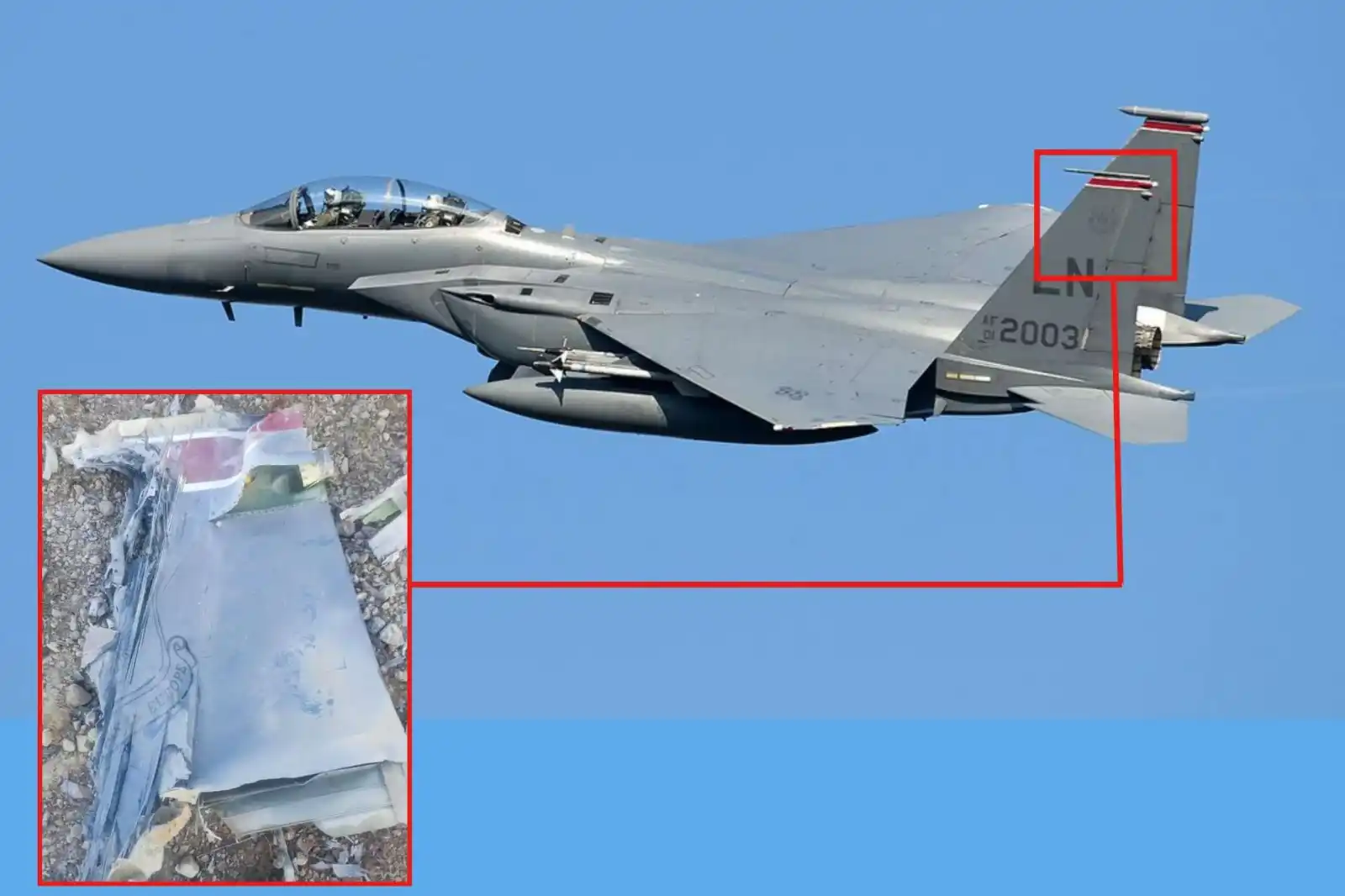
The reported loss of a U.S. Air Force F-15E Strike Eagle over Iranian territory on April 3, 2026, has brought renewed attention to the risks associated with modern deep strike missions. Confirmed by U.S. officials, the aircraft went down during Operation Epic Fury, an ongoing American air campaign targeting elements of Iran’s security infrastructure believed to present imminent threats. The incident immediately triggered a combat search and rescue (CSAR) mission, highlighting both the intensity of the air campaign and the operational hazards faced by strike aircraft operating deep inside heavily defended airspace.
Although official information remains limited, the confirmation that the aircraft was an F-15E Strike Eagle with a two-person crew has already generated significant discussion among defense analysts and military observers. One crew member was successfully recovered after ejecting, while the second remained missing at the time rescue efforts were reported to be ongoing. The episode marks a rare publicly acknowledged U.S. fighter aircraft loss inside Iranian airspace, reinforcing the perception that Operation Epic Fury involves sustained and highly contested aerial operations.
The Strategic Context Behind Operation Epic Fury
Operation Epic Fury represents one of the most complex aerial campaigns conducted by the United States in recent years. According to U.S. Central Command (CENTCOM), the operation was launched under presidential authorization to neutralize facilities and infrastructure linked to Iran’s security apparatus and missile development networks. The objective is not merely symbolic pressure but the disruption of capabilities considered capable of threatening U.S. forces, allies, or maritime traffic in the broader Middle East.
The downing of a Strike Eagle illustrates the operational depth of this campaign. Unlike limited standoff strikes where cruise missiles are launched from distant platforms, deep strike missions require aircraft to penetrate defended airspace, locate and engage targets, and then safely exit the hostile environment. Such missions involve complex coordination between multiple elements of airpower, including electronic warfare aircraft, airborne refueling tankers, intelligence assets, and fighter escorts.
Within this framework, the loss of a single aircraft signals more than a tactical setback. It reflects the reality that modern air operations against capable air defense networks remain inherently dangerous even for technologically advanced forces. The Iranian air defense system combines radar networks, surface-to-air missile batteries, and mobile tactical defenses, creating a layered environment that complicates strike planning and execution.
The Role of the F-15E Strike Eagle in Long-Range Combat Operations
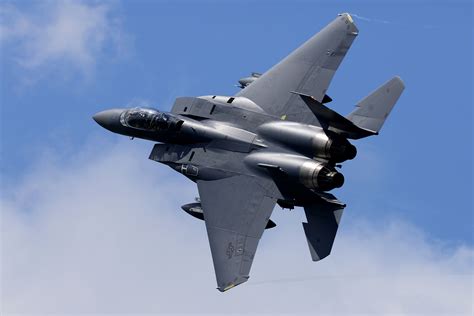
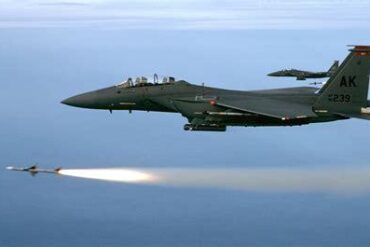
The F-15E Strike Eagle is among the most capable strike fighters in the U.S. Air Force inventory. Developed from the original F-15 air superiority platform, the aircraft was redesigned to perform dual-role combat missions, combining air-to-air combat capability with long-range precision strike performance.
Unlike single-seat fighters, the Strike Eagle operates with two crew members: a pilot responsible for flying the aircraft and managing combat maneuvering, and a Weapons Systems Officer (WSO) who handles targeting systems, navigation, and weapon employment. This two-person configuration allows the aircraft to perform complex missions involving multiple simultaneous tasks.
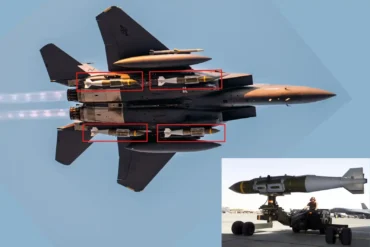
The aircraft’s design enables it to conduct low-altitude penetration missions at night or in adverse weather, making it particularly valuable during deep strike campaigns. Equipped with advanced radar systems, precision targeting pods, and the ability to carry a wide array of guided munitions such as GBU-31 bunker-buster bombs, the F-15E is capable of striking hardened or high-value targets deep inside enemy territory.
For operations like Epic Fury, these capabilities are essential. Strike Eagles can travel long distances, deliver heavy ordnance loads, and maintain situational awareness in contested environments. However, these same mission profiles place them directly in the path of sophisticated defensive systems.
Penetrating Contested Airspace: The Hidden Complexity of Deep Strike Missions
Deep strike missions demand far more than simply reaching a target and releasing weapons. Each sortie requires a carefully coordinated sequence of actions designed to minimize exposure to enemy defenses while maximizing mission effectiveness.
Aircraft assigned to these missions often follow long ingress routes, weaving through radar coverage and adapting to real-time intelligence updates. Navigation may involve flying at extremely low altitudes to avoid radar detection or using electronic warfare support to disrupt enemy sensors. Strike crews must remain prepared to react instantly to surface-to-air missile launches, interceptor aircraft, or rapidly changing battlefield conditions.
The operational challenge becomes even more demanding when targets are mobile or time-sensitive. Strike crews may receive updated targeting data while already inside hostile airspace, forcing them to adjust their approach, coordinate with supporting aircraft, and execute the strike with minimal delay.
Under these conditions, each mission becomes a test of endurance, situational awareness, and crew coordination. The loss of a Strike Eagle during such an operation illustrates how quickly the balance between mission success and operational risk can shift.
The High-Risk Combat Search and Rescue Operation
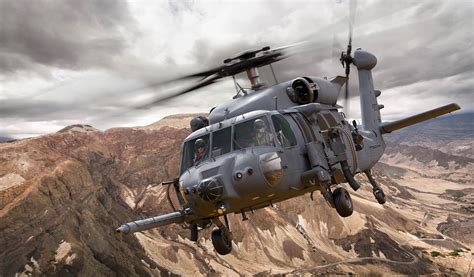
Following the aircraft’s loss, U.S. forces immediately initiated a combat search and rescue mission to recover the downed crew. Such operations are among the most dangerous missions conducted by modern militaries. Once a pilot ejects behind enemy lines, the urgency to locate and extract them becomes a race against time.
Reports indicated that U.S. Black Hawk helicopters involved in the recovery effort encountered hostile fire while operating inside Iranian airspace but were able to withdraw safely after the engagement. These details emphasize the level of risk involved in retrieving downed personnel during an ongoing conflict.
Combat search and rescue doctrine has long been a cornerstone of U.S. military culture. The principle is simple but powerful: no service member is left behind. Recovering downed aircrew not only preserves trained personnel but also reinforces morale across deployed forces. Pilots and crews operate with the understanding that if the worst happens, every available resource will be committed to bring them home.
Executing such missions inside heavily defended territory requires careful coordination between helicopters, escort fighters, and intelligence assets. The presence of hostile air defenses means rescue aircraft must fly quickly, remain unpredictable, and often operate with minimal margin for error.
Information Warfare and Competing Narratives
As with many modern conflicts, the information surrounding the incident quickly became contested. Iranian state-linked media outlets initially claimed that an American F-35 stealth fighter had been shot down, a statement that gained traction across social media platforms before being contradicted by subsequent analysis and U.S. confirmation.
Open-source intelligence analysts examining imagery from the crash site observed features consistent with F-15E wreckage, including structural components associated with the Strike Eagle’s airframe. While such analysis can provide valuable clues, experts remain cautious about drawing definitive conclusions from fragmented visual evidence circulating online.
The divergence between official statements and foreign media reports reflects a broader dimension of modern warfare: information operations aimed at shaping global perception. Governments and military organizations often attempt to frame events in ways that reinforce strategic narratives, influence public opinion, or undermine adversary credibility.
In this case, Iranian outlets presented the event as evidence that their air defense network could inflict significant losses on U.S. forces. Meanwhile, the United States has maintained a more limited public account, confirming the loss of an F-15E while withholding operational details that could reveal tactical vulnerabilities.
Operational Implications for the Air Campaign Over Iran
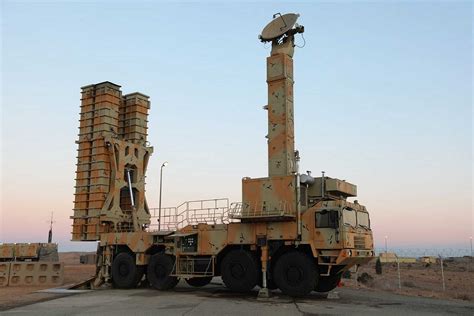
The broader significance of the Strike Eagle loss lies not only in the destruction of an aircraft but also in what it reveals about the intensity of the ongoing air campaign. Operation Epic Fury appears to involve sustained penetrations into Iranian airspace, placing American aircraft in direct contact with advanced air defense systems.
For military planners, incidents like this trigger detailed reviews of tactics, electronic warfare support, and strike planning procedures. Understanding exactly how an aircraft was lost—whether due to surface-to-air missiles, mechanical failure, or another factor—is essential for refining operational methods and reducing future risk.
Even without definitive information on the cause, the event highlights the reality that modern air superiority does not eliminate danger. Nations with layered air defense systems can still impose significant risks on attacking aircraft, particularly during operations that require sustained presence over defended territory.
A Defining Moment in Operation Epic Fury
The confirmed loss of a U.S. F-15E Strike Eagle over Iran represents a defining moment in the unfolding narrative of Operation Epic Fury. The aircraft’s mission profile, the dangerous rescue effort that followed, and the competing narratives emerging from both sides all reflect the complexity of contemporary air warfare.
What remains firmly established is that an American strike fighter was lost during combat operations, one crew member was successfully recovered, and rescue forces were willing to enter hostile airspace to retrieve their personnel. That combination underscores both the hazards of deep strike missions and the operational determination of the United States to continue conducting them.
As the campaign progresses, the incident will likely become a case study in the challenges of operating advanced aircraft against capable air defense networks. Deep strike missions remain among the most demanding tasks in military aviation, requiring not only sophisticated technology but also exceptional coordination, discipline, and resilience from the crews who carry them out.