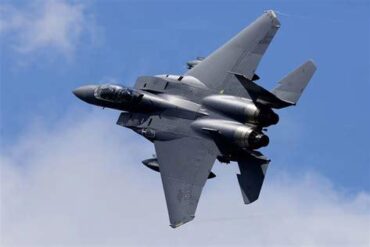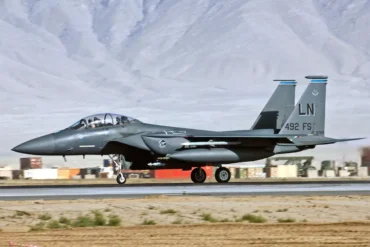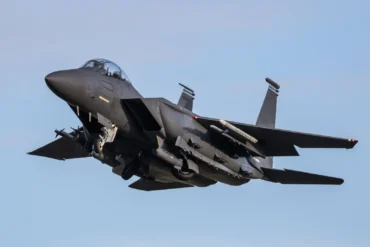
The battle between the McDonnell Douglas F-15E Strike Eagle and the General Dynamics F-16XL remains one of the most fascinating “what if” moments in modern military aviation history. On paper, the F-16XL looked revolutionary. It was faster, sleeker, carried enormous payloads, and possessed a futuristic wing design that seemed decades ahead of its time. Yet despite its remarkable performance, the aircraft lost to the F-15E Strike Eagle in the United States Air Force’s Enhanced Tactical Fighter competition during the early 1980s.
The decision was not merely about speed, payload, or aerodynamic innovation. It reflected the strategic mindset of the Cold War, the evolving realities of deep-strike warfare, and the USAF’s growing obsession with survivability in hostile Soviet airspace. The F-15E was not necessarily the more exciting aircraft, but it was the one military planners trusted to survive the unforgiving battlefield they expected to face in Europe.
The result shaped American airpower for decades. The F-15E Strike Eagle became one of the most successful multirole combat aircraft ever built, while the F-16XL transformed into an aviation legend remembered largely by engineers, pilots, and enthusiasts who still believe it may have been one of the greatest fighters never mass-produced.
By the late 1970s, the USAF faced an increasingly urgent problem. Its aging fleet of General Dynamics F-111 Aardvark bombers was becoming expensive to maintain and increasingly vulnerable against modern Soviet air defenses.
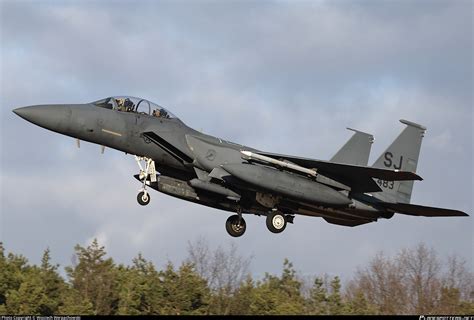
The F-111 had once represented the future of tactical strike aviation. Its variable-sweep wings, terrain-following radar, and long-range penetration capability made it ideal for low-level attack missions deep behind enemy lines. However, by the beginning of the 1980s, the strategic landscape had changed dramatically.
New Soviet fighters like the Mikoyan MiG-29 and the Sukhoi Su-27 were entering service with advanced radar systems, long-range missiles, and superior maneuverability. At the same time, Soviet surface-to-air missile systems were becoming deadlier and more sophisticated. USAF planners feared that older strike aircraft would struggle to penetrate Warsaw Pact defenses during a major European conflict.
This concern drove the creation of the Enhanced Tactical Fighter program in 1981. The USAF wanted an aircraft capable of deep interdiction missions without relying heavily on escorts or electronic warfare support aircraft. The new jet needed to fly long distances, survive in heavily defended airspace, deliver large precision payloads, and still defend itself against enemy fighters.
The competition quickly evolved into a showdown between two radically different philosophies of airpower.
The F-16XL Was the Most Radical Evolution of the Fighting Falcon
The standard General Dynamics F-16 Fighting Falcon had already proven itself as an agile and highly capable fighter. Designed originally through the Lightweight Fighter program, the F-16 prioritized maneuverability, affordability, and pilot visibility. It was compact, fast, and extraordinarily effective in air combat.
General Dynamics believed the aircraft could evolve into something far more ambitious.
The company launched the Supersonic Cruise and Maneuver Prototype project, commonly known as SCAMP, to explore advanced aerodynamic concepts. Engineers sought to create a fighter that could maintain excellent maneuverability while also improving supersonic cruise performance, fuel efficiency, and payload capacity.
The result was the F-16XL.
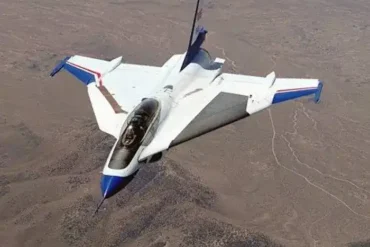
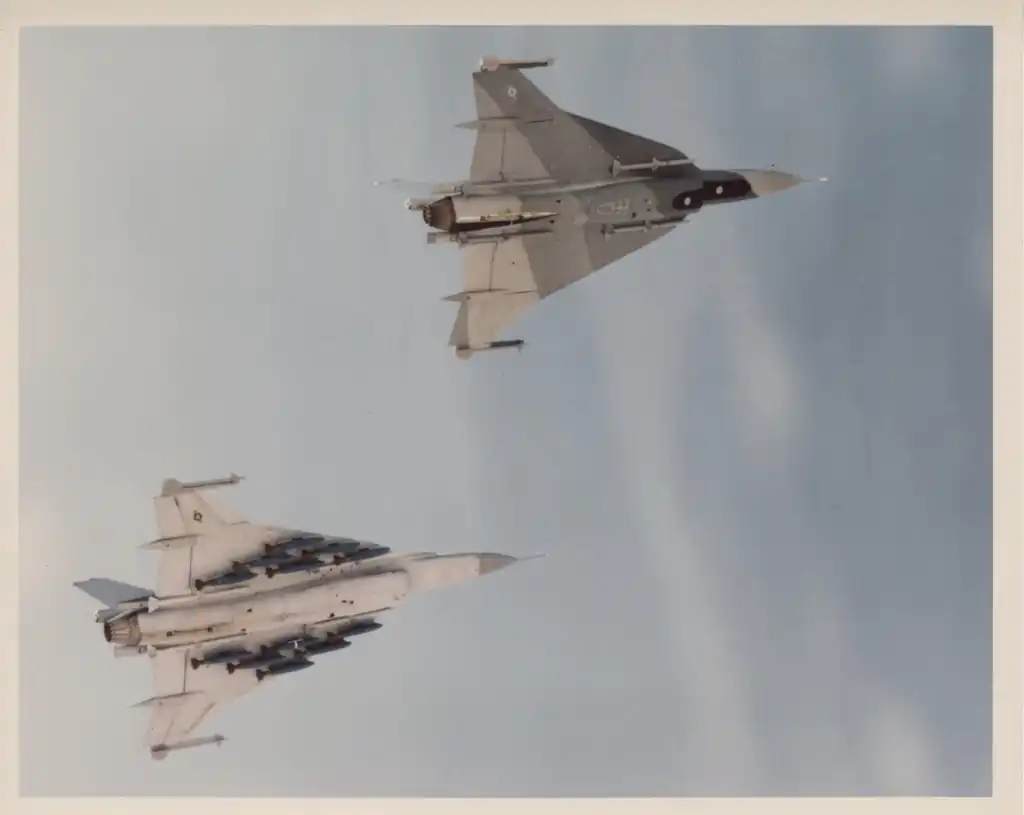
At first glance, the aircraft looked unlike any other variant of the F-16. Its enormous “cranked-arrow” delta wing immediately distinguished it from the standard Fighting Falcon. The wing featured a sharply swept inboard section combined with a less aggressive outer sweep, creating a distinctive shape that dramatically increased lift and internal fuel volume.
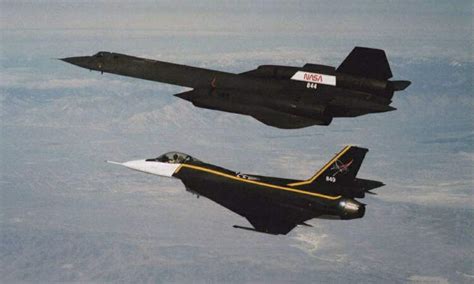
The transformation was far more extensive than a simple wing redesign. The fuselage itself was stretched by approximately 56 inches, significantly increasing internal fuel storage and mission range. Engineers also refined the aircraft’s aerodynamics to improve stability at high speeds and during low-level penetration missions.
The massive wing area provided extraordinary advantages for strike operations. The aircraft could carry a huge quantity of weapons without relying heavily on external fuel tanks. It offered up to 27 hardpoints for munitions, giving it an almost bomber-like weapons capacity while retaining fighter-level performance.
In many ways, the F-16XL represented a bridge between traditional fighter aircraft and the next generation of stealthy strike platforms that would emerge years later.
Why the F-16XL Looked Superior on Paper
Performance figures for the F-16XL were deeply impressive for the era.
The aircraft could achieve speeds approaching Mach 2 while carrying substantial weapons loads. Its expanded fuel capacity enabled extremely long combat radii, allowing it to strike targets much farther away than conventional F-16 variants.
The aerodynamic efficiency of the cranked-arrow wing delivered a significantly improved lift-to-drag ratio, especially during supersonic flight. This translated into greater range, enhanced fuel economy, and stronger sustained performance during combat missions.
Pilots also praised the aircraft’s handling qualities. Despite its larger size, the F-16XL retained remarkable agility. It could sustain high-G maneuvers while carrying heavy ordnance and remained stable during high-speed low-altitude penetration flights.
The aircraft’s strike capability was perhaps its greatest advantage. The F-16XL could carry twice the payload of a standard F-16 over dramatically longer distances. It excelled in deep interdiction scenarios where endurance, fuel efficiency, and weapons flexibility mattered more than close-range dogfighting.
Some analysts even believed the aircraft outperformed the competing F-15E Strike Eagle in several measurable categories, including aerodynamic efficiency and strike range.
The XL also featured subtle survivability advantages. Its blended wing-body design reduced radar reflections compared to earlier fighter aircraft. While not stealthy by modern standards, the aircraft demonstrated an understanding of signature reduction concepts that would later dominate military aviation design philosophy.
For aviation enthusiasts and engineers, the F-16XL became a glimpse into the future.
The F-15E Strike Eagle Offered Something the USAF Valued More
Despite the F-16XL’s extraordinary technical achievements, the USAF viewed the competition through a far harsher operational lens.
The Cold War battlefield envisioned by American strategists was brutal. NATO planners expected strike aircraft to fly deep into heavily defended Soviet territory packed with radar-guided missiles, anti-aircraft artillery, and advanced enemy interceptors.
In that environment, survivability outweighed elegance.
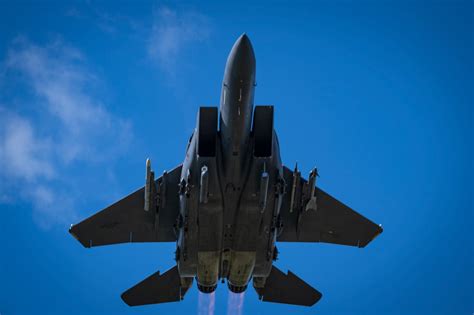
The McDonnell Douglas F-15 Eagle platform already possessed a formidable reputation. The F-15 had been built specifically to dominate hostile airspace, and its combat record quickly became legendary. The aircraft family eventually accumulated well over 100 air-to-air kills without suffering a confirmed loss in aerial combat.
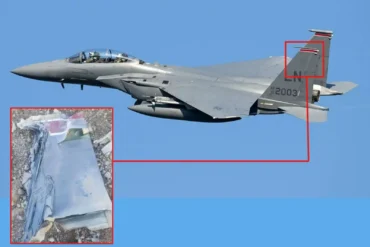
The Strike Eagle variant adapted this proven fighter into a dedicated multirole strike aircraft.
Unlike the single-engine F-16XL, the F-15E used two powerful turbofan engines. That single factor played a massive role in the USAF’s decision-making process.
Military planners worried that a deep-strike aircraft operating far inside enemy territory could easily suffer battle damage from surface-to-air missiles or ground fire. In a twin-engine aircraft, pilots still had a reasonable chance of returning home after losing one engine. In a single-engine jet, even relatively minor damage could prove catastrophic.
That concern became impossible to ignore during the ETF competition.
The F-15E also required far fewer changes to existing production infrastructure. Since it evolved directly from the operational F-15 platform already serving with the USAF, the Strike Eagle benefited from established logistics chains, training pipelines, spare parts inventories, and maintenance systems.
The F-16XL, despite being derived from the Fighting Falcon, demanded substantial structural modifications and new manufacturing processes because of its radically redesigned airframe.
To USAF planners, the F-15E represented the safer and more practical option.
Cold War Doctrine Shaped the Outcome
The USAF’s decision cannot be understood without examining the strategic doctrine dominating military thought during the early 1980s.
NATO’s AirLand Battle doctrine focused heavily on attacking Soviet rear-echelon forces before they could reinforce frontline breakthroughs in Europe. This meant striking supply depots, command centers, bridges, rail networks, and armored formations deep behind enemy lines.
Such missions required aircraft capable of penetrating dense air defenses while carrying large payloads over long distances.
The USAF wanted a strike fighter that could effectively “fight its way in and out” of contested airspace.
The F-15E fit this philosophy perfectly. It combined heavy strike capability with exceptional air-to-air performance inherited from the original Eagle platform. The aircraft could defend itself aggressively against enemy fighters while simultaneously conducting precision strike missions.
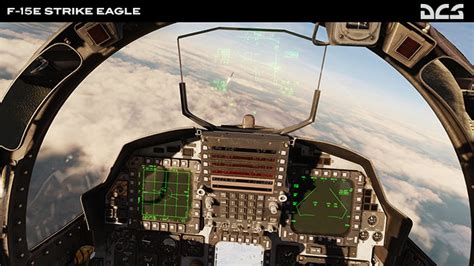
The Strike Eagle also possessed impressive growth potential. Military planners anticipated that future avionics, radar systems, targeting pods, and precision-guided weapons would become increasingly important. The larger F-15 platform offered more room, electrical power, and cooling capacity for future upgrades.
That prediction proved remarkably accurate.
Over the following decades, the F-15E evolved into one of the world’s most capable strike aircraft. It played major roles in conflicts ranging from Operation Desert Storm to campaigns in Afghanistan, Iraq, and Syria. Its adaptability validated many of the USAF’s original assumptions during the ETF competition.
The F-16XL never received the opportunity to demonstrate similar long-term operational evolution.
The F-16XL Was Not a Failure
Calling the F-16XL a failure would completely misunderstand its historical significance.
The aircraft represented one of the boldest aerodynamic experiments ever applied to a modern fighter design. Its advanced wing concept delivered extraordinary efficiency and anticipated many trends later explored in high-speed aviation research.
After losing the ETF competition, the two F-16XL prototypes found a second life with NASA.
NASA used the aircraft extensively for laminar flow research aimed at improving aerodynamic efficiency for future supersonic transport concepts. The aircraft’s unique wing shape made it ideal for studying airflow characteristics at high speeds.
These experiments contributed valuable data for both military and civilian aerospace engineering programs.
Even decades later, aerospace experts continue to admire the F-16XL’s innovative design. Many consider it one of the most aesthetically striking fighter aircraft ever built. Others argue it may have offered exceptional export potential had it entered production.
The aircraft’s cult following has only grown with time.
Why the Strike Eagle Ultimately Won the Future
The ETF competition demonstrated an enduring truth about military procurement: revolutionary technology does not always defeat operational practicality.
The F-16XL pushed the boundaries of aerodynamic design and strike efficiency. In some performance categories, it genuinely appeared superior to the F-15E. Yet the USAF prioritized reliability, survivability, logistical simplicity, and strategic compatibility over raw innovation.
That conservative decision shaped the future of American tactical aviation.
The F-15E Strike Eagle became a cornerstone of USAF combat operations for more than four decades. Its blend of speed, payload, endurance, and survivability turned it into one of the most respected strike fighters in modern history.
Meanwhile, the F-16XL became something different: a symbol of unrealized potential.
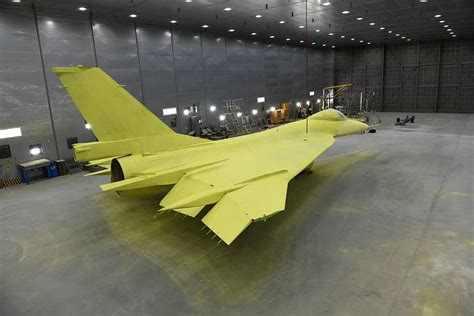
Its story continues to fascinate aviation historians because it represents a rare moment when the most visually radical and technologically ambitious aircraft did not win. The F-16XL proved that brilliance alone is not always enough in military aviation. Strategic doctrine, battlefield assumptions, logistics, and political realities often matter just as much as performance charts.
In another era, under different operational requirements, the F-16XL might have transformed air warfare.
Instead, the F-15E Strike Eagle secured victory by offering exactly what the USAF feared it would need most during the Cold War: a heavily armed, twin-engine warplane capable of surviving the long flight home from the most dangerous missions on Earth.