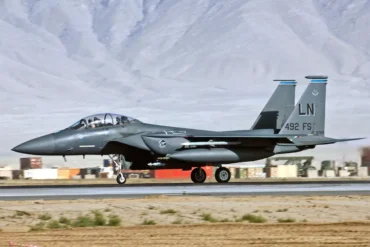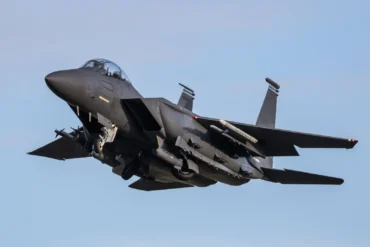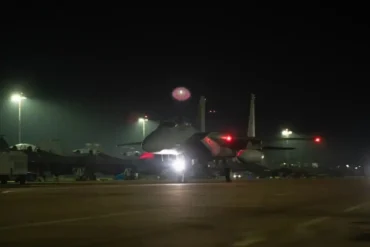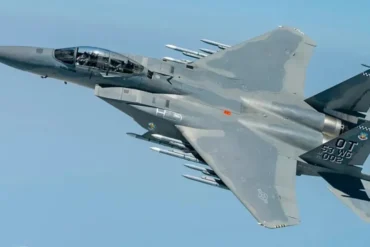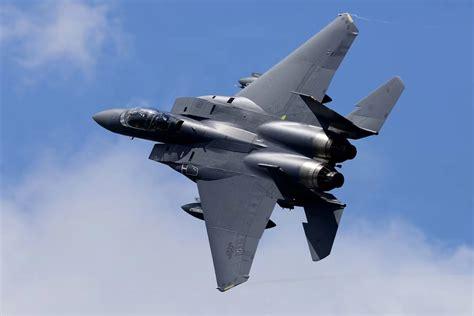
The enduring presence of the F-15E Strike Eagle in the modern arsenal of the United States Air Force is not a relic of inertia—it is a calculated decision grounded in capability, adaptability, and battlefield necessity. While fifth-generation fighters like the F-35A Lightning II dominate headlines with stealth and sensor fusion, the Strike Eagle continues to quietly deliver something just as critical: overwhelming, reliable combat power at scale.
Introduced in 1989, the F-15E was never meant to simply complement air superiority fighters—it was designed to own the deep strike mission. Decades later, it still does. From high-intensity conflicts to complex coalition operations, the aircraft’s blend of payload capacity, range, and crew coordination keeps it not just relevant, but indispensable.
Understanding why requires looking beyond surface-level comparisons and into the structural realities of modern warfare—where range, persistence, payload, and survivability often outweigh stealth alone.
The Strategic Evolution of the F-15E Strike Eagle
The origins of the F-15E trace back to a pivotal shift in U.S. military doctrine during the late Cold War. The need was clear: a platform capable of penetrating deep into contested territory, striking high-value targets, and returning without relying entirely on escort fighters. The result was a radical evolution of the original F-15 Eagle platform.
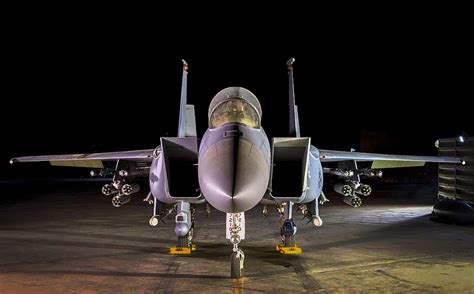
Unlike its predecessor, the Strike Eagle was engineered from the ground up as a dual-role combat aircraft. It retained the raw speed and air-to-air lethality of the F-15 while incorporating a reinforced structure, advanced avionics, and expanded fuel capacity for long-range missions.
Its defining features include:
- A two-seat cockpit for mission specialization
- Conformal fuel tanks (CFTs) for extended range without sacrificing weapon stations
- 11 hardpoints enabling diverse and heavy weapon configurations
This was not just an upgrade—it was a philosophical shift toward multirole dominance.
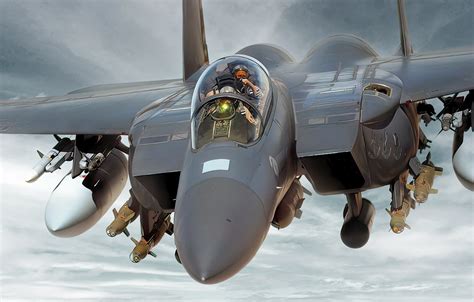
Reason #1: Unmatched Payload Capacity in Modern Air Combat
At the core of the F-15E’s continued relevance lies a brutally simple advantage: it carries more weapons than almost any other fighter in the Western world.
With a payload capacity exceeding 23,000 pounds, the Strike Eagle functions as a true “bomb truck”—but that label undersells its sophistication. It doesn’t just carry more weapons; it delivers them with precision across multiple target sets in a single sortie.
This capability becomes decisive in modern conflicts where target density is high and time-on-target is critical. A single F-15E can:
- Strike hardened infrastructure using GBU-31 JDAMs
- Provide close air support with GBU-12 laser-guided bombs
- Maintain self-defense with AIM-120 AMRAAM missiles
In contrast, stealth fighters like the F-35 often operate with limited internal payloads to preserve low observability. The F-15E, unconstrained by stealth requirements, embraces external carriage to maximize firepower.
The result is a platform that excels when volume of precision strike matters more than invisibility—a scenario far more common than many assume.
Reason #2: Long-Range Strike Capability Without Compromise
Range is power. And in this domain, the F-15E quietly outperforms many newer platforms.
Thanks to its conformal fuel tanks and efficient twin-engine configuration, the Strike Eagle boasts a combat radius of approximately 790 miles without refueling—and significantly more with tanker support. This enables deep-strike missions into contested regions without forward basing, a critical advantage in politically sensitive or logistically constrained theaters.
This capability becomes especially valuable in regions like the Middle East or the Indo-Pacific, where distance and access define operational feasibility.
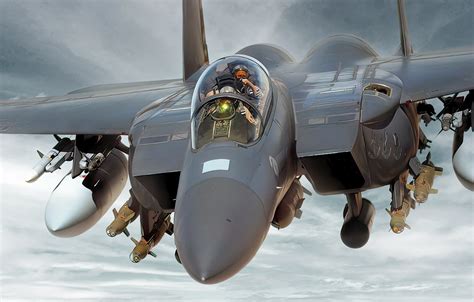
Unlike stealth aircraft that may need to prioritize low radar signatures over fuel and payload, the F-15E is optimized for sustained, high-intensity strike operations. It can loiter, re-engage, and adapt mid-mission—qualities that are indispensable in dynamic combat environments.
Reason #3: A Two-Crew Cockpit Built for Modern Battlefield Complexity
In an era increasingly dominated by automation, the F-15E takes a different approach: it doubles down on human capability.
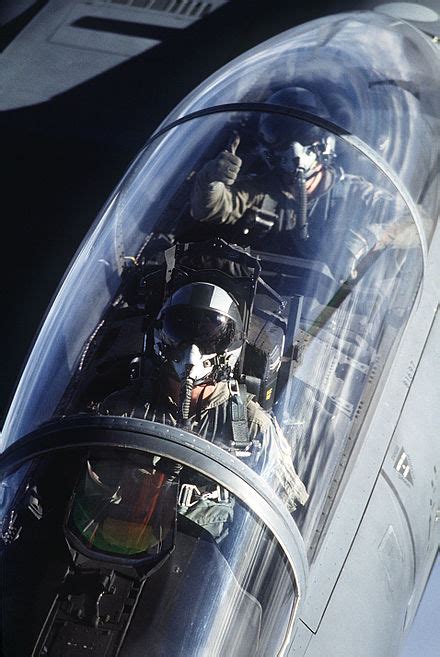
The aircraft’s two-seat configuration pairs a pilot with a Weapon Systems Officer (WSO), creating a division of labor that dramatically enhances mission effectiveness. While the pilot focuses on flying and tactical positioning, the WSO manages:
- Radar and sensor systems
- Target identification and tracking
- Weapon selection and engagement
- Electronic warfare coordination
This arrangement is not a legacy holdover—it is a deliberate design choice for high-complexity missions.
Modern air combat is no longer just about flying and shooting. It involves managing vast streams of data, coordinating with drones, integrating with airborne early warning systems, and adapting to rapidly changing threats. Expecting a single pilot to handle all of this is, frankly, optimistic.
The F-15E’s crew structure ensures higher situational awareness, faster decision-making, and more precise execution—especially during long-duration missions where fatigue becomes a factor.
Reason #4: Continuous Modernization Keeps the Platform Combat-Relevant
One of the most compelling reasons the F-15E remains in service is that it has never stood still. Through aggressive modernization programs, the aircraft has been transformed into a digitally enhanced, network-capable strike platform.
Key upgrades include:
- AN/APG-82(V)1 AESA radar, dramatically improving detection and tracking
- AN/AAQ-33 Sniper Advanced Targeting Pod for long-range precision engagement
- Eagle Passive/Active Warning and Survivability System (EPAWSS) for advanced electronic warfare
The introduction of EPAWSS, developed by BAE Systems, represents a generational leap in survivability. It allows the aircraft to detect, identify, and counter modern radar threats with a level of sophistication previously reserved for newer platforms.
This is the crucial point: the F-15E is not competing with fifth-generation fighters—it is evolving alongside them.
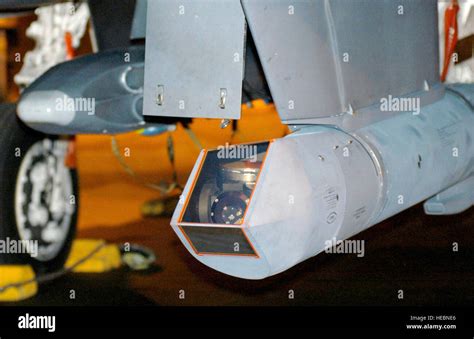
By integrating cutting-edge systems into a proven airframe, the U.S. Air Force achieves a rare combination: low development risk with high operational payoff.
Reason #5: Proven Combat Record Across Decades of Warfare
Experience matters. And few aircraft can match the F-15E’s combat pedigree.
From the Gulf War to operations in Afghanistan, Iraq, and Syria, the Strike Eagle has consistently demonstrated its ability to deliver under pressure. It has flown thousands of combat sorties, often in the most demanding conditions imaginable.
Its track record includes:
- Deep interdiction missions against heavily defended targets
- Close air support for ground forces in urban combat zones
- Precision strikes against time-sensitive targets
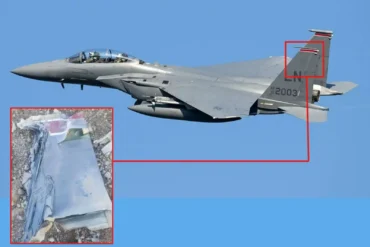
Even in recent operations, including complex coalition environments in 2026, the aircraft has remained actively deployed. Incidents such as friendly-fire engagements highlight the challenges of modern warfare—but they also underscore the reality that the F-15E is still operating at the center of high-stakes missions.
This level of operational trust is not easily replaced. New aircraft may offer advanced features, but they lack the decades of tactical refinement and institutional knowledge built around the Strike Eagle.
The Complementary Role Alongside Fifth-Generation Fighters
Rather than being replaced, the F-15E has found a new role: complementing stealth aircraft.
Platforms like the F-22 Raptor and F-35 excel at penetrating defended airspace and establishing air dominance. Once that environment is shaped, the F-15E moves in to deliver massive, sustained strike capability.
This division of labor reflects a broader shift in airpower doctrine:
- Stealth fighters open the door
- Strike platforms like the F-15E kick it down
It’s not a competition—it’s a force multiplier effect.
Why the F-15E Will Remain Relevant Into the 2030s
Looking ahead, the continued service of the F-15E is not just likely—it is strategically inevitable. With over 100 aircraft still in operation and ongoing upgrades extending their lifespan, the platform is expected to remain active well into the next decade.
Its relevance is anchored in a simple truth: no other aircraft combines payload, range, crew coordination, and upgrade flexibility in quite the same way.
Even as next-generation systems emerge, there will always be a need for a platform that can:
- Carry large quantities of precision weapons
- Operate over long distances
- Adapt to evolving mission requirements
- Integrate seamlessly into joint and coalition operations
The F-15E does all of this—and it does it with a level of reliability that military planners trust implicitly.
Conclusion: A Legacy of Power That Refuses to Fade
The continued operation of the F-15E Strike Eagle is not about nostalgia or budget constraints. It is about capability alignment with real-world mission demands.
In a defense environment often captivated by the newest technology, the Strike Eagle stands as a reminder that effectiveness is measured in outcomes, not headlines.
It remains one of the most lethal, flexible, and dependable aircraft in the U.S. arsenal—not despite its age, but because of how intelligently it has evolved.
And in modern warfare, where complexity is the only constant, that kind of adaptability is not just valuable—it is decisive.