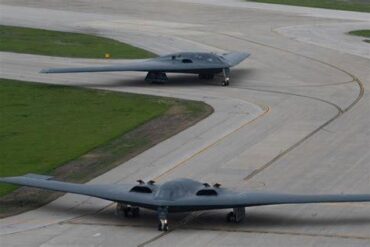
The Northrop Grumman B-2 Spirit remains one of the most extraordinary combat aircraft ever built because it was designed around a ruthless modern truth: if an aircraft can be detected easily, it can be targeted easily. Unlike legacy bombers that depend on escorts, standoff missiles, or overwhelming force, the B-2 was engineered to penetrate defended airspace and strike strategic targets directly. Its success is not based on one magical stealth coating or a single radar trick. It comes from a complete aerodynamic philosophy that merges shape, airflow control, efficiency, and signature reduction into one seamless machine.
Where conventional bombers reveal themselves through vertical tails, exposed engines, drag-heavy weapon pylons, and bulky fuselages, the B-2 eliminates nearly all of those vulnerabilities. The result is an aircraft that can cross continents, carry major payloads, and remain difficult to track throughout much of its mission profile. That is why, decades after its first flight, it still occupies a unique role in military aviation.
1. Flying Wing Design Creates Exceptional Lift-To-Drag Efficiency
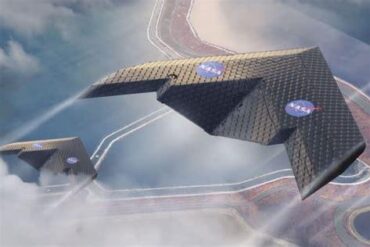
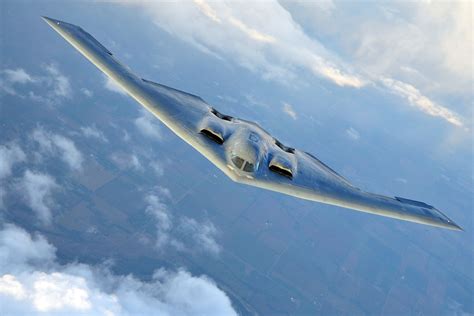
The most obvious aerodynamic advantage of the B-2 Spirit is its pure flying wing configuration. Traditional aircraft separate the fuselage, wings, and tail into distinct components. Each junction creates drag, turbulence, and structural compromise. The B-2 avoids that problem by blending nearly the entire aircraft into one lifting surface.
This matters enormously during long-range missions. More lift generated with less drag means the bomber burns less fuel while cruising. That efficiency translates directly into strategic reach. A bomber that can travel farther without refueling reduces dependence on tanker aircraft, and tankers are often among the most vulnerable assets in wartime.
The B-2’s approximate unrefueled range of around 6,000 nautical miles is not an accident of engine power alone. It is the reward of aerodynamic cleanliness. Because so much of the aircraft contributes to lift, the B-2 can maintain efficient high-subsonic cruise while carrying a heavy internal load.
Traditional bombers may carry more raw payload, but payload means little if access to contested airspace requires multiple support layers. The B-2’s efficiency gives commanders options, and options win wars.
2. Smooth Contours Dramatically Reduce Radar Reflection
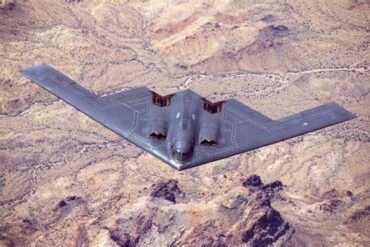
Stealth begins with geometry. The B-2’s sweeping planform, serrated edges, and carefully aligned surfaces are designed to redirect radar energy away from hostile receivers instead of reflecting it back strongly. This is where aerodynamics and survivability become inseparable.
Many older bombers were built in eras when speed, altitude, or payload mattered more than radar invisibility. Their vertical tails, engine nacelles, protrusions, and sharp intersections create abundant radar returns. The B-2 strips away those legacy shapes and replaces them with smooth blended contours.
That smoothness also benefits airflow. Cleaner surfaces reduce unnecessary disturbances and help preserve stable high-altitude cruise efficiency. In other words, the aircraft’s stealthy shape is not merely cosmetic—it is also aerodynamic.
The B-2’s reputedly tiny radar cross-section is the product of this integration. It is not just coated to be stealthy; it is shaped to be stealthy. That distinction matters because shape-based low observability remains valuable even as materials evolve.
A bomber that reflects little radar energy can approach closer before detection, forcing enemy defenders into shorter reaction windows. In combat, seconds matter. The B-2 steals them.
3. Buried Engines Improve Airflow And Lower Infrared Signature
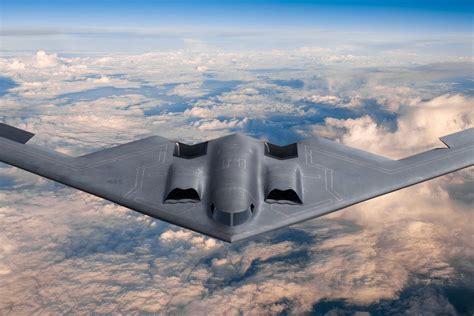
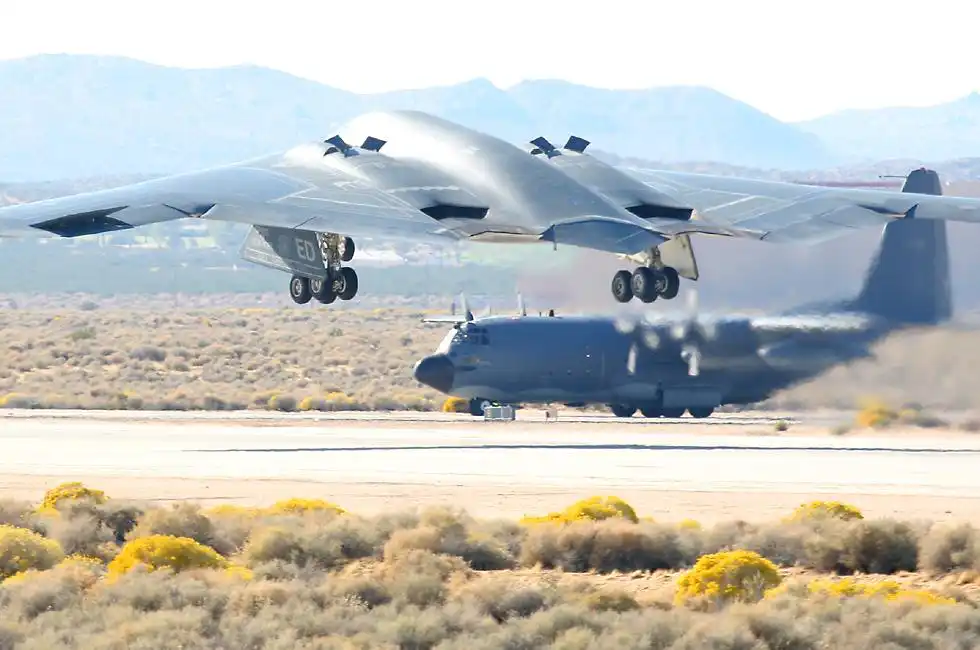
Exposed engines are a double penalty. They create drag externally and generate powerful thermal signatures. The B-2 solves both problems by embedding its four engines within the wing structure.
From an aerodynamic standpoint, internal engine placement preserves the aircraft’s smooth upper surfaces and reduces the kind of bulky nacelle drag common on tube-and-wing aircraft. It also helps maintain cleaner airflow over the aircraft during cruise.
From a survivability standpoint, buried engines conceal hot internal components and reduce the direct line-of-sight infrared signature that enemy sensors often seek. The B-2’s exhaust arrangement spreads hot gases across wider, flatter outlets on the upper surface, allowing faster mixing with cooler surrounding air.
That top-mounted exhaust strategy is clever for another reason. Ground-based sensors looking upward face a more difficult detection geometry than if the hot plume were hanging openly beneath the aircraft.
The B-2 therefore uses engine placement not only for propulsion, but as part of a wider stealth ecosystem. Every thermal reduction measure makes interception harder.
4. Internal Weapons Bays Preserve Range And Stability
One of the biggest aerodynamic mistakes any strike aircraft can make is hanging weapons externally. External bombs and missiles increase drag, disrupt airflow, create vibration, reduce range, and massively enlarge radar signature. The B-2 avoids all of it by carrying munitions internally.
Its large weapons bays allow the bomber to transport precision-guided bombs, gravity weapons, nuclear payloads, and specialized penetrators without compromising the aircraft’s outer mold line. That means the B-2 can launch with a combat load while retaining the same smooth aerodynamic profile it has when clean.
This matters more than many realize. A conventional bomber carrying large external loads may burn significantly more fuel and lose range before ever reaching hostile territory. The B-2 preserves endurance and efficiency deep into mission execution.
Internal carriage also improves stability by keeping mass closer to the centerline and reducing asymmetrical drag effects that can occur with external stores. For an aircraft designed around long-duration precision operations, predictable handling is a major advantage.
There is a tradeoff, of course. Internal bays limit the size and number of weapons compared with some legacy bombers. But for high-value strategic strikes, precision often matters more than sheer tonnage. Delivering the right weapon to the right target undetected is more valuable than dropping more bombs loudly.
5. High-Altitude Efficient Cruise Maximizes Penetration Capability
The B-2 was built for missions measured in continents, not neighborhoods. Its aerodynamic profile enables sustained high-altitude cruise where thinner air reduces drag and improves fuel economy. That operating envelope also complicates interception efforts.
Older bombers often relied on low-level penetration tactics, using terrain masking to avoid radar. While effective in past decades, low-level flight is punishing on airframes, fuel consumption, and crew fatigue. It also exposes aircraft to dense layers of short-range defenses.
The B-2 shifts the equation. Rather than skimming terrain like a desperate intruder, it can travel efficiently at altitude while leveraging low observability. This reduces structural stress, extends aircraft life, and preserves fuel.
High-altitude cruise also broadens mission flexibility. From those altitudes, the B-2 can reposition rapidly, adjust ingress routes, or strike multiple targets with precision weapons. It is less constrained than aircraft forced into terrain-hugging paths.
This aerodynamic advantage is subtle but powerful. The best mission is not the most dramatic one—it is the one completed with minimal exposure, minimal wear, and maximum strategic effect.
Why Legacy Tube-And-Wing Bombers Struggle In Modern Airspace
The B-2’s strengths become even clearer when compared with traditional bombers such as the B-52 Stratofortress, Tu-95, or other large conventional platforms. Those aircraft were designed around payload and endurance, but not low observability.
Their tall tails, exposed engines, cylindrical fuselages, and external carriage options create significant drag and radar visibility. They remain useful as missile carriers and deterrence platforms, but penetrating advanced integrated air defenses is a far riskier proposition.
Even faster aircraft such as the B-1 Lancer face modern challenges. Speed alone no longer guarantees survival when defenders employ networked radars, long-range missiles, and advanced sensors. Aerodynamic efficiency plus stealth has become more relevant than brute-force dash speed.
That shift explains why future bomber programs increasingly resemble the B-2 rather than Cold War giants.
The B-2 Spirit’s Legacy Lives On In The B-21 Era
The greatest compliment to the B-2 Spirit is imitation. Modern next-generation bombers continue to adopt tailless flying-wing concepts because the aerodynamic logic is overwhelming. Reduced drag, longer range, lower signatures, and efficient internal payload carriage remain the formula for penetrating contested airspace.
The upcoming B-21 Raider is expected to refine these principles further with improved maintainability, better all-aspect stealth, and newer systems. Yet its lineage is unmistakable. The B-2 proved that a bomber could be both strategic and elusive, both long-range and survivable.
That is rare in military history. Many aircraft excel in one category while compromising another. The B-2’s genius lies in how thoroughly its aerodynamics support every mission requirement at once.
Final Verdict
The B-2 Spirit remains a masterpiece because its five major aerodynamic advantages work together rather than separately: flying wing efficiency, radar-deflecting contours, buried engines, internal weapons carriage, and high-altitude endurance. None alone would define the aircraft. Combined, they created the world’s premier long-range stealth bomber.
It does not merely fly far. It flies far efficiently. It does not merely carry weapons. It carries them without surrendering range or stealth. It does not merely survive. It makes detection and interception profoundly difficult.
That is why the B-2 Spirit changed bomber design forever—and why every serious future strategic bomber now follows the path it carved through the sky.