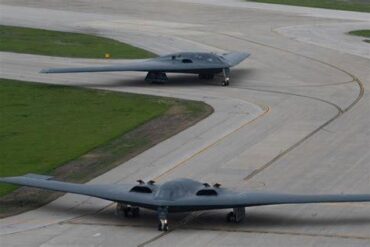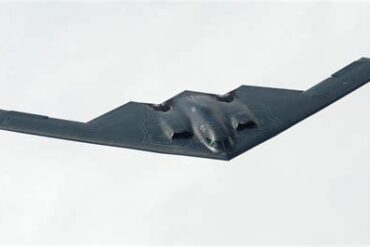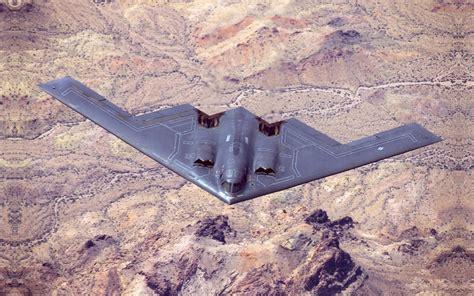
The B-2 Spirit is not just another aircraft—it is the physical manifestation of decades of aerodynamic theory, stealth science, and strategic ambition converging into a single, almost alien shape. Its flying wing design doesn’t merely look unconventional; it fundamentally rewrites how airpower operates in contested environments. The result is a bomber so advanced that even decades after its first flight, no other nation has successfully replicated its combination of stealth, range, and payload.
This aircraft’s dominance is not the result of a single technological breakthrough. It is the product of a ruthless design philosophy: eliminate everything that makes an aircraft detectable, inefficient, or predictable. What remains is a machine that can cross continents, penetrate the most heavily defended airspace on Earth, and deliver devastating firepower—often without being seen, tracked, or engaged.
The Flying Wing Advantage: Redefining Aerodynamic Efficiency
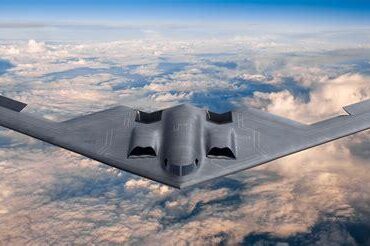
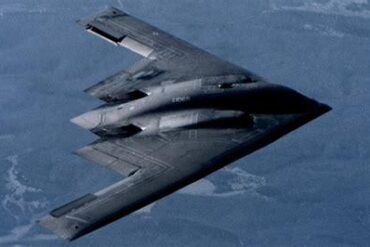
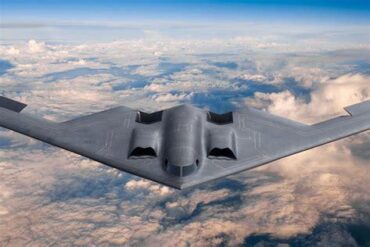
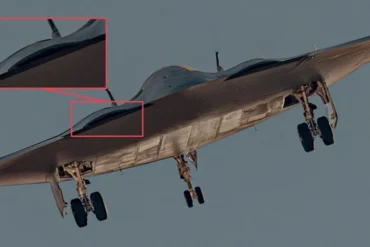
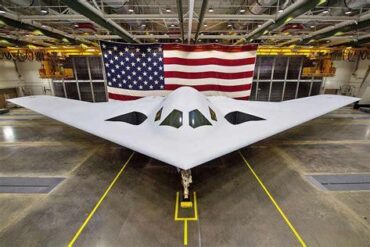
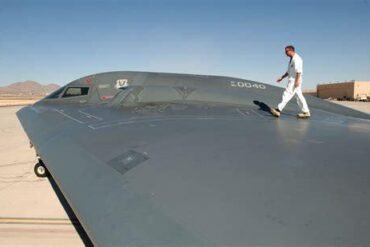
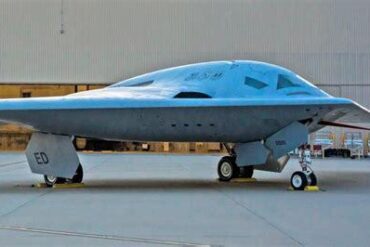
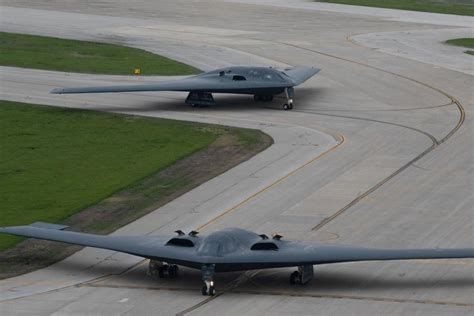
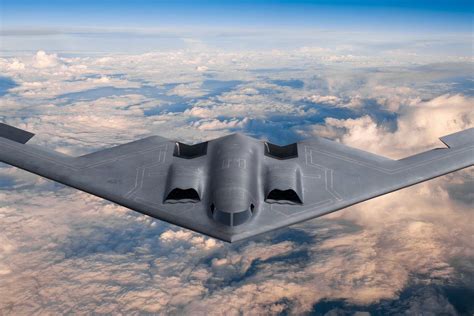
The defining feature of the B-2 Spirit is its pure flying wing configuration—a design that removes the traditional fuselage and tail entirely. Instead, the entire aircraft is essentially one massive wing, seamlessly blending lift, payload capacity, and stealth into a single structure.
This design offers extraordinary aerodynamic efficiency. Without a fuselage generating drag or vertical stabilizers disrupting airflow, the B-2 achieves a superior lift-to-drag ratio compared to conventional bombers. That translates directly into longer range, lower fuel consumption, and higher endurance—all critical for intercontinental strike missions.
But aerodynamic efficiency is only half the story. The real power of the flying wing lies in what it removes: surfaces that reflect radar.
Traditional aircraft are filled with angles and protrusions—vertical tails, engine nacelles, external weapon pylons—all of which act like mirrors for radar waves. The B-2 eliminates these features entirely. Its smooth, continuous curvature allows incoming radar energy to be scattered away from the source rather than reflected back.
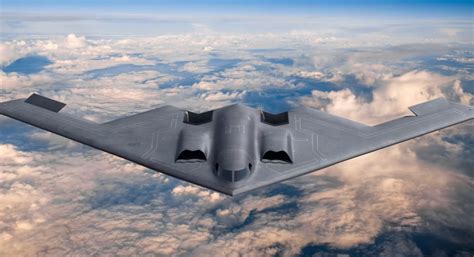
This means the B-2 isn’t just stealthy—it is structurally optimized for invisibility.
Jack Northrop’s Vision: A Dream Decades Ahead of Its Time
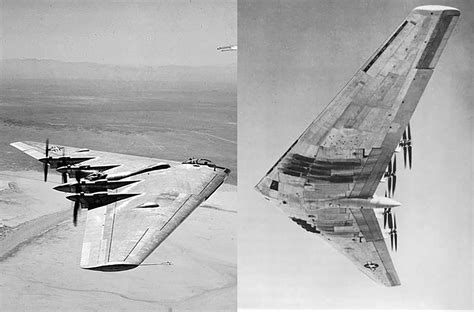
The story of the B-2 begins with Jack Northrop, a visionary engineer obsessed with the idea of the perfect aircraft. His early prototypes, the XB-35 and YB-49, explored the flying wing concept in the 1940s, long before the technology existed to make them viable.
These early aircraft were aerodynamically efficient but dangerously unstable. Without vertical tails, they lacked the natural stability pilots relied on, making them extremely difficult to control. The U.S. military ultimately canceled the program, and Northrop’s dream appeared to die with it.
Decades later, advances in fly-by-wire systems changed everything. Computers could now perform thousands of corrective adjustments per second, stabilizing an inherently unstable aircraft in real time. What was once a fatal flaw became a manageable engineering challenge.
When Northrop was shown a model of what would become the B-2 in 1980, he reportedly recognized it instantly as the realization of his lifelong vision. The flying wing had finally found its moment—not just as an aerodynamic curiosity, but as the ultimate stealth platform.
Stealth by Geometry: Why Shape Beats Technology Alone
The B-2’s stealth capability is often misunderstood as some kind of futuristic cloaking system. In reality, its invisibility is achieved through a meticulous combination of geometry, materials, and electromagnetic discipline.
The aircraft’s planform alignment is one of its most critical features. Every edge—leading and trailing—is aligned at identical angles. This ensures that radar reflections are concentrated into narrow, predictable directions rather than scattered randomly. If a radar system isn’t positioned in exactly the right place, it simply won’t receive a return signal.
The engine intakes are deeply buried within the wing and feature serrated edges to disrupt radar reflections. The highly reflective turbine blades are completely hidden from external view, eliminating one of the most common radar signatures in jet aircraft.
Additionally, the B-2 is coated in advanced radar-absorbent materials (RAM) that convert radar energy into heat rather than reflecting it back. This multi-layered approach ensures that even if some radar energy reaches the aircraft, very little of it returns to the source.
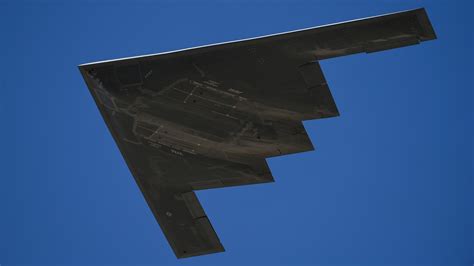
The result is not absolute invisibility, but something far more useful: practical undetectability within real-world combat conditions.
Payload Power: The Hidden Arsenal Within the Wing
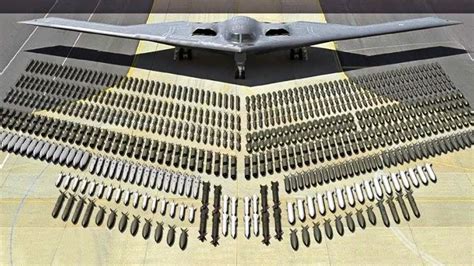
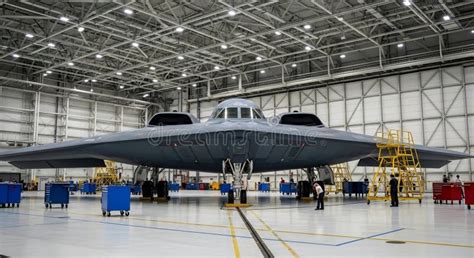
The B-2’s massive flying wing isn’t just about stealth—it also enables one of the largest internal payload capacities of any stealth aircraft ever built. By eliminating a traditional fuselage, the aircraft gains a vast internal volume that can be dedicated to weapons storage.
The bomber can carry up to 40,000 pounds of ordnance, all housed internally to preserve its low radar signature. Among its most formidable weapons is the GBU-57 Massive Ordnance Penetrator, a 30,000-pound bunker-busting bomb capable of destroying deeply buried targets.
This combination of stealth and payload creates a unique strategic capability. The B-2 can strike heavily fortified targets that would be inaccessible to other aircraft, all while remaining undetected.
Unlike conventional bombers that rely on escort fighters and electronic warfare support, the B-2 operates as a self-contained strike platform. It doesn’t need protection—it is the protection.
Extreme Range: Global Strike Without Borders
One of the most underrated aspects of the B-2 Spirit is its intercontinental range. The aircraft can fly more than 6,000 nautical miles without refueling and has demonstrated missions exceeding 40 hours in duration.
This capability fundamentally changes the nature of strategic bombing. The B-2 can launch from bases in the continental United States, strike targets halfway around the world, and return home without ever landing in a foreign country.
This operational flexibility provides enormous strategic advantages:
- Reduced reliance on overseas bases
- Greater mission security and secrecy
- Immediate global reach without forward deployment
During long-duration missions, aerial refueling extends the aircraft’s range even further, making it effectively limited only by crew endurance.
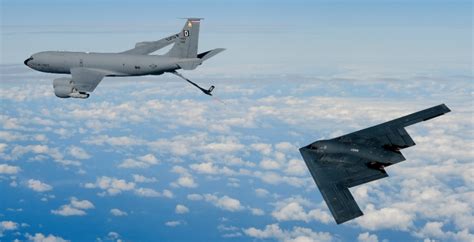
The implication is clear: there is no safe distance from a B-2 strike.
Digital Mastery: How Computers Make the Impossible Fly
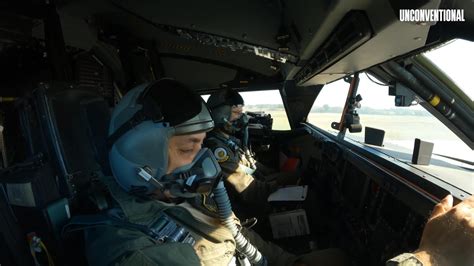
A pure flying wing is inherently unstable. Without vertical stabilizers, the aircraft would be uncontrollable by human pilots alone. The B-2 solves this problem through quadruple-redundant fly-by-wire systems, where computers constantly adjust control surfaces to maintain stability.
The cockpit reflects this digital philosophy. Instead of hundreds of mechanical switches, pilots interact with advanced displays that integrate navigation, targeting, and flight control data into a unified interface.
These systems do more than keep the aircraft airborne—they enable precision control at the edge of aerodynamic limits, allowing the B-2 to maintain stealth profiles while executing complex maneuvers.
Software updates play a continuous role in keeping the aircraft relevant. Programs like Spirit Realm ensure that the B-2 evolves alongside emerging threats, integrating new weapons, communication systems, and defensive capabilities.
Networked Warfare: Seeing Without Being Seen
The B-2 is not just a bomber—it is a node in a vast, interconnected combat network. Through systems like Link 16 and advanced satellite communications, the aircraft can receive real-time targeting data from other platforms without emitting detectable signals.
This allows the B-2 to operate in radio silence, relying on external intelligence sources such as reconnaissance aircraft and electronic warfare platforms. By avoiding active radar use, it minimizes the risk of detection through electronic emissions.
This concept—passive targeting—is a cornerstone of modern stealth operations. The B-2 doesn’t need to search for its targets; it simply receives coordinates and executes the strike with precision.
Cost and Complexity: The Price of Dominance
At approximately $2 billion per aircraft, the B-2 Spirit remains the most expensive military aircraft ever built. This staggering cost reflects not just the hardware, but decades of research and development that pushed the boundaries of aerospace engineering.
Every aspect of the aircraft—from its stealth coatings to its avionics—requires meticulous maintenance. Even minor imperfections in the surface can degrade its radar signature, necessitating constant inspection and repair.
Yet despite its cost, the B-2 delivers unmatched strategic value. It can achieve mission objectives that would otherwise require entire fleets of conventional aircraft, reducing overall operational risk and complexity.
Strategic Impact: The Ultimate First-Strike Platform
The true power of the B-2 lies in its role as a first-strike asset. In the opening hours of a conflict, it can penetrate enemy defenses, destroy critical infrastructure, and cripple command-and-control systems before the adversary even realizes it is under attack.
This capability is central to modern military doctrine. By eliminating high-value targets early, the B-2 creates conditions for follow-on forces to operate with reduced risk.
Its ability to carry both conventional and nuclear weapons further amplifies its strategic significance. It is not just a bomber—it is a cornerstone of deterrence.
The Legacy and the Future of the Flying Wing
Even as newer platforms like the B-21 Raider emerge, the B-2 Spirit remains a benchmark for what stealth aviation can achieve. Its flying wing design has proven that radical ideas, when paired with the right technology, can redefine the limits of airpower.
What makes the B-2 truly “overpowered” is not any single feature, but the way its design integrates multiple advantages into a cohesive whole. Aerodynamics, stealth, payload, range, and digital systems all reinforce one another, creating a platform that is greater than the sum of its parts.
The flying wing is no longer just an experiment—it is a proven blueprint for the future of strategic aviation.
The B-2 Spirit doesn’t just dominate the skies—it operates beyond the reach of conventional warfare logic. And that is precisely what makes it so formidable.