Military aviation has always come with a high price tag, but no aircraft in the history of modern defense spending has ever matched the astronomical cost of the Northrop Grumman B-2 Spirit. Conceived during the height of Cold War tensions and first taking to the skies in 1989, the B-2 wasn’t just a technological marvel—it was and remains an unmatched financial colossus in the world of military aviation. Decades later, this flying-wing stealth bomber still holds the record as the most expensive military aircraft ever built, eclipsing even the latest sixth-generation war machines in cost.
The Cold War Context That Shaped the B-2 Spirit
As tensions between the United States and the Soviet Union reached their peak in the 1980s, the Pentagon sought an edge in long-range strategic bombing capability. The B-2 was born from the need for a bomber that could penetrate heavily defended enemy airspace without being detected by radar. Traditional bombers like the B-52 Stratofortress, though potent, were increasingly vulnerable to the latest Soviet air defense systems. The U.S. needed something revolutionary.
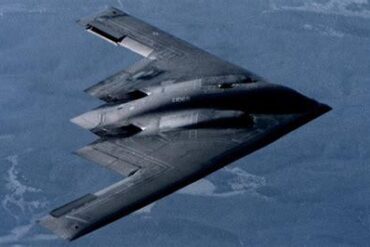
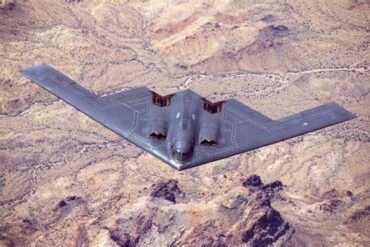
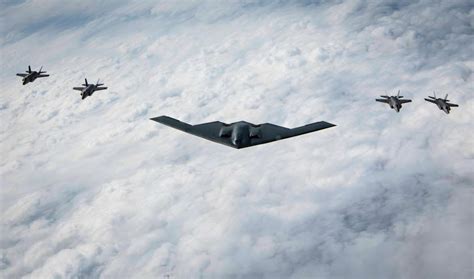
Enter the B-2 Spirit—a sleek, all-wing stealth aircraft that eliminated many radar-reflective features found in conventional planes. Its unique geometry and radar-absorbent coatings enabled it to achieve what no other bomber could: fly directly into enemy territory undetected and unchallenged.
The Mind-Boggling Cost: Breaking Down $2.1 Billion Per Aircraft
While the B-2’s original unit cost was estimated at $737 million, that number quickly spiraled as engineering challenges mounted and geopolitical shifts changed the program’s scope. By the time the final budget was tallied, the true cost per aircraft came in at a jaw-dropping $2.1 billion—when adjusted for inflation, the modern equivalent would be even higher.
Several factors drove the costs skyward:
- Advanced stealth coatings such as Alternate High-Frequency Material (AHFM) require regular, specialized reapplication every few years.
- Flight-hour costs exceed $135,000, including fuel, maintenance, mission prep, and crew training.
- The aircraft’s low-observable features and composite materials demand precision manufacturing not seen in conventional platforms.
- Only 21 aircraft were ever built, with one later destroyed, which exponentially increased the per-unit development cost.
In contrast, Air Force One, the flying command center for the U.S. president, cost just $660 million. Even cutting-edge fighters like the F-22 Raptor and F-35 Lightning II—at $350 million and $80 million per unit respectively—look like bargains by comparison.
Engineering Mastery in the Sky: Specs That Still Dazzle
The B-2’s performance figures remain impressive even by modern standards. Propelled by four General Electric F118-GE-110 turbofans, each delivering 17,300 pounds of thrust, the B-2 can reach a top speed of 628 mph. Its massive maximum takeoff weight is 170,600 kg (376,109 lbs), and it can carry a massive 40,000-pound payload, including conventional and nuclear ordnance.
The aircraft’s stealth comes not just from its shape, but from a meticulous application of radar-absorbing materials, infrared signature suppression techniques, and minimized acoustic and visual profiles. The cockpit layout and fly-by-wire controls are tailored for long-duration missions, often exceeding 6,000 miles without refueling.
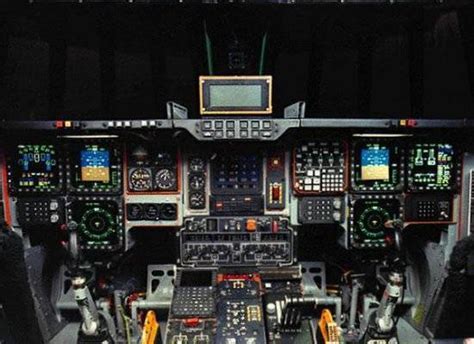
Routine Maintenance at a Premium: $60 Million Every Seven Years
One of the main reasons the B-2’s costs have continued to climb is its extreme maintenance requirements. Every seven years, each aircraft undergoes a major refurbishment process, with a single session costing upwards of $60 million. During these maintenance cycles, technicians strip down the airframe, reapply stealth coatings, upgrade electronic warfare systems, and recalibrate all mission-critical avionics.
This means that, even decades after their rollout, the B-2 fleet continues to rack up enormous bills. The USAF budget allocates hundreds of millions annually to keep these aircraft operational, despite flying a relatively small number of missions each year. The cost-to-benefit ratio has been debated in defense circles for years, but few deny the deterrence value the B-2 has provided.
A Shadow Over the Skies: Strategic Deterrence and Combat Use
Despite being built for high-end conflict with peer adversaries, the B-2 has seen limited but high-profile use in actual combat operations. Its stealth capabilities allowed it to strike Serbian targets in 1999 during NATO’s Operation Allied Force and used in Libya, Afghanistan, and Iraq. These precision missions often took place at night, with the B-2 flying from Whiteman Air Force Base in Missouri all the way to the target and back without refueling.
These missions, while few, sent an unmistakable message: The U.S. could strike anywhere, at any time, and without warning.
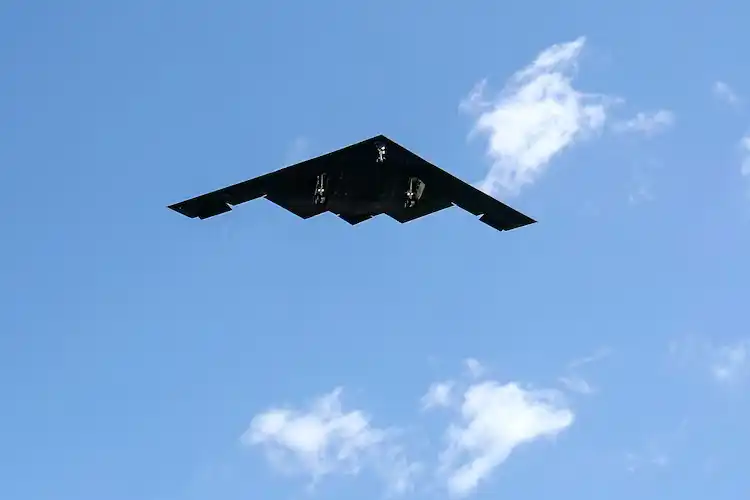
Farewell Flight: Retirement and the Rise of the B-21 Raider
As remarkable as the B-2 is, time and technology move forward, and the aircraft’s retirement is already on the books. By 2029, the B-2 fleet is expected to be phased out in favor of the Northrop Grumman B-21 Raider—a sixth-generation bomber that takes stealth to the next level.
The B-21 is designed with modular architecture, easier maintainability, and a lower radar cross-section than even the B-2. It is expected to match or exceed the B-2’s 6,900-mile operational range while incorporating AI-assisted systems and cloud-integrated warfare capabilities. But what might be most shocking is its relative cost efficiency: the estimated unit cost is $692 million, drastically lower than the B-2’s original price tag and less than one-third of its real-world cost.
Yet the B-2’s legacy endures. The B-21 wouldn’t exist without the trailblazing work that made the B-2 possible. The decades of combat-readiness, mission success, and global influence cement the B-2’s place in military aviation history.
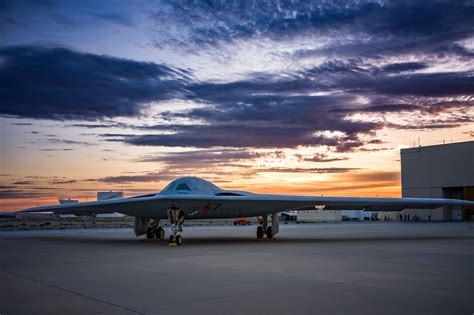
The Most Expensive, But Also the Most Iconic
Few aircraft have influenced global airpower strategy as dramatically as the B-2 Spirit. Beyond its hefty price tag lies a deeper story—one of innovation, fearsome capability, and decades of deterrence power. For over three decades, it has loomed as a symbol of America’s technological supremacy and military might, able to launch from U.S. soil and deliver devastation to any adversary without ever being seen.
While its mission profile is being handed off to newer platforms like the B-21 Raider, the B-2’s legacy as the most expensive aircraft ever built remains untouched. And perhaps, in an era where wars are fought both with weapons and symbols, that price was worth every penny.