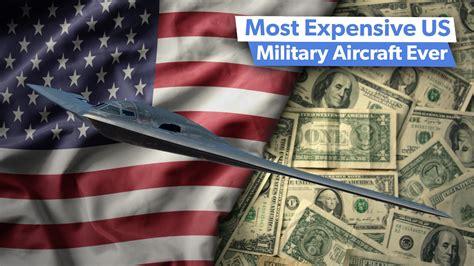
The Enormous Price of American Air Power
For decades, the United States has maintained unmatched dominance in military aviation. From the era of the Army Air Corps to modern stealth aircraft and network-centric warfare, American aerospace development has consistently pushed technological boundaries that later transformed both space exploration and commercial aviation. Today, maintaining that superiority requires programs of unprecedented complexity and cost.
Modern combat aircraft are no longer simply flying machines armed with missiles. They are airborne computing platforms, intelligence hubs, communication nodes, and force multipliers. Their price reflects not only the aircraft themselves but also decades of research, logistics systems, maintenance infrastructure, training networks, and operational expenses.
As the Pentagon modernizes its fleet, several massive programs are reshaping American air power. Some represent evolutionary improvements to proven aircraft, while others introduce revolutionary technologies intended to dominate battlefields well into the second half of the century.
The staggering financial commitments behind these aircraft reveal just how expensive air superiority has become in the twenty-first century.
Why Aircraft Program Costs Go Far Beyond Production
The price tag attached to modern aircraft programs extends far beyond manufacturing. Building an airframe is often only the beginning. Research and development consume billions before the first operational aircraft ever flies. Support infrastructure, spare parts, pilot training, maintenance equipment, software upgrades, and decades of operational costs can multiply acquisition expenses many times over.
Stealth technology further complicates the equation. Maintaining radar-absorbing materials, secure communications, advanced sensors, and increasingly sophisticated software requires specialized facilities and highly trained personnel.
This explains why a fighter costing less than $100 million to purchase can ultimately become part of a trillion-dollar program over its lifetime.
Among active programs, five stand out as the most expensive currently underway.
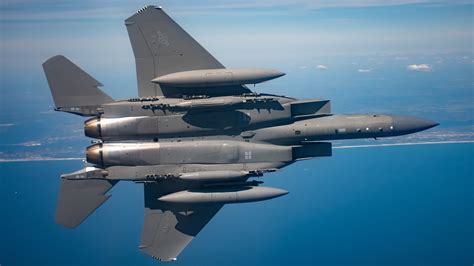
5. Boeing F-15EX Eagle II – More Than $30 Billion
The Boeing F-15EX Eagle II occupies the fifth position among America’s most expensive active aircraft programs. Despite its roots stretching back to the Cold War, the latest descendant of the legendary McDonnell Douglas F-15 Eagle family represents one of the most practical modernization efforts in the Air Force inventory.
Unlike entirely new platforms, the F-15EX leverages decades of proven engineering. Boeing retained the existing production line in St. Louis, allowing the aircraft to enter production quickly without major developmental delays. The result was a stable and comparatively low-risk procurement program.
The Air Force plans to acquire 104 aircraft primarily to replace aging F-15C and F-15D fighters suffering from structural fatigue after decades of service. While many fifth-generation aircraft focus on penetrating heavily defended airspace, the F-15EX has evolved into a highly capable missile carrier designed to support stealth assets operating closer to enemy territory.
Modern avionics, digital architecture, advanced electronic warfare systems, and massive payload capacity make it one of the most heavily armed fighters in the world. It can carry hypersonic weapons, long-range air-to-air missiles, and stand-off munitions while remaining safely outside hostile defenses.
Each aircraft costs approximately $90 to $93 million, producing a procurement bill near $9.6 billion. When infrastructure and thirty years of operational expenses are included, total program costs are expected to range between $30 billion and $35 billion.
4. Boeing F-47 Next Generation Air Dominance – Over $50 Billion
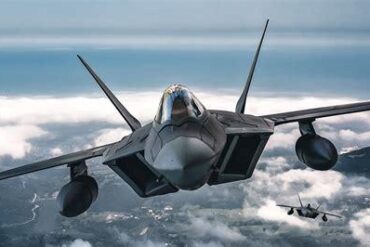
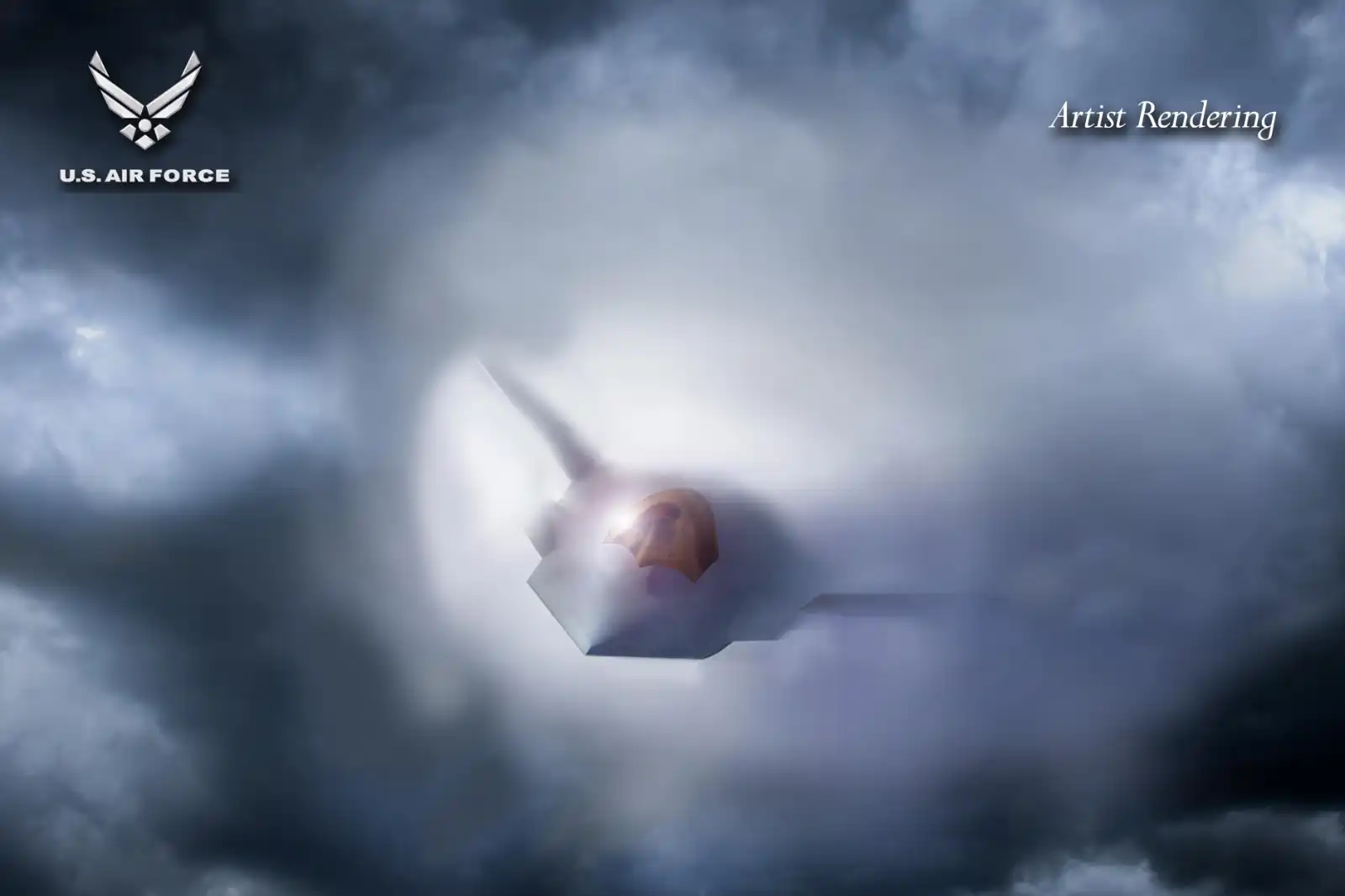
America’s future sixth-generation fighter represents one of the most ambitious aerospace projects ever attempted. Officially designated the Boeing F-47 under the Next Generation Air Dominance initiative, the aircraft is expected to redefine aerial warfare.
Unlike previous generations, the F-47 is being developed as part of an interconnected ecosystem rather than as a standalone fighter. It will operate alongside autonomous drones, sensor networks, and artificial intelligence systems to create a highly integrated combat architecture.
One of its most revolutionary technologies involves adaptive variable-cycle engines. These engines can shift between highly fuel-efficient cruising modes and maximum thrust configurations for supersonic performance. Such flexibility promises exceptional range and endurance.
The aircraft is also expected to generate enormous amounts of electrical power, supporting advanced radar systems, electronic warfare suites, directed-energy weapons, and control of collaborative combat aircraft.
With a combat radius exceeding 1,000 miles, the F-47 aims to provide capabilities far beyond those of today’s fifth-generation fighters.
However, these breakthroughs come at a tremendous cost. Early estimates place unit prices around $300 million per aircraft. Assuming the Air Force acquires 185 fighters, procurement costs alone approach $55.5 billion before accounting for long-term operational expenses.
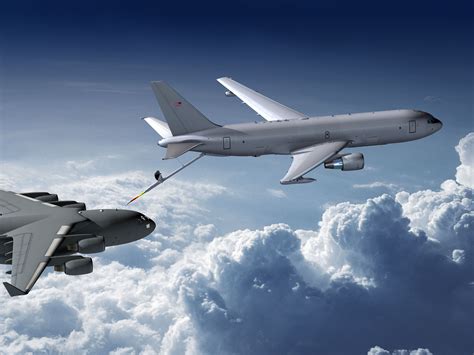
3. Boeing KC-46 Pegasus – More Than $50 Billion
Although aerial tankers rarely receive the same attention as fighters and bombers, they form the backbone of American global power projection. Without air refueling capability, long-range operations would be impossible.
The Boeing KC-46 Pegasus was intended to replace the venerable KC-135 Stratotanker, an aircraft that has served since the Eisenhower administration. Based on the Boeing 767 platform, the Pegasus introduced numerous technological improvements, including a digital cockpit and a sophisticated camera-based Remote Vision System that allows boom operators to refuel aircraft remotely.
Unfortunately, the program became one of Boeing’s most troublesome military ventures.
Persistent deficiencies involving the Remote Vision System and refueling boom created operational limitations and prompted extensive criticism from lawmakers and Pentagon officials. The aircraft received Category I deficiency status, indicating problems severe enough to impact mission effectiveness.
Interestingly, the financial burden of these setbacks has fallen largely on Boeing because the Air Force contract was fixed-price. Government liability was capped at approximately $4.9 billion in research and development costs. Cost overruns have instead generated billions in losses for the manufacturer.
Despite these challenges, the Air Force still expects overall procurement expenses for 179 tankers to reach roughly $52 billion. Continuing modifications and retrofit programs may further complicate future costs.
2. Northrop Grumman B-21 Raider – More Than $200 Billion
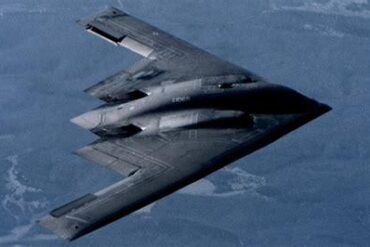
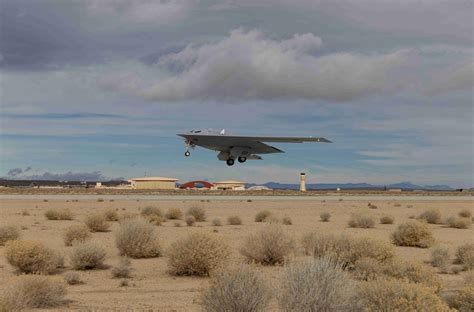
The Northrop Grumman B-21 Raider represents the future of America’s strategic bomber force. Designed to replace much of the aging bomber inventory, the aircraft builds upon lessons learned from the notoriously expensive B-2 Spirit.
Unlike its predecessor, the B-21 program has progressed remarkably smoothly. Program managers deliberately avoided unnecessary complexity while emphasizing affordability and maintainability. The result is a stealth bomber designed not only to survive modern air defenses but also to be easier and cheaper to support.
The aircraft features improved radar-absorbent materials capable of withstanding routine operating conditions without requiring highly specialized facilities. This dramatically reduces maintenance requirements compared with earlier stealth aircraft.
Current estimates place unit procurement costs between $700 million and $750 million per aircraft. While expensive, this represents a significant improvement over the inflation-adjusted cost of the B-2 Spirit, which exceeded $2 billion per aircraft.
The Pentagon currently plans for at least 100 bombers. Including research, procurement, support infrastructure, and thirty years of operations, the program carries an estimated lifetime cost exceeding $200 billion.
Should production expand to 185 or even 225 aircraft, economies of scale could lower unit prices substantially. However, overall program costs could rise beyond $400 billion as fleet size increases.
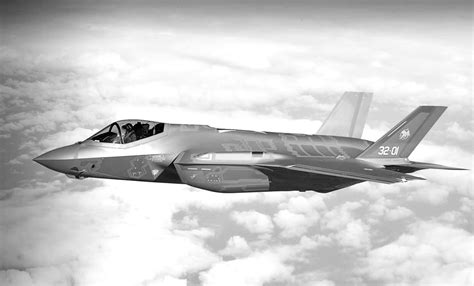
1. Lockheed Martin F-35 Lightning II – More Than $2 Trillion
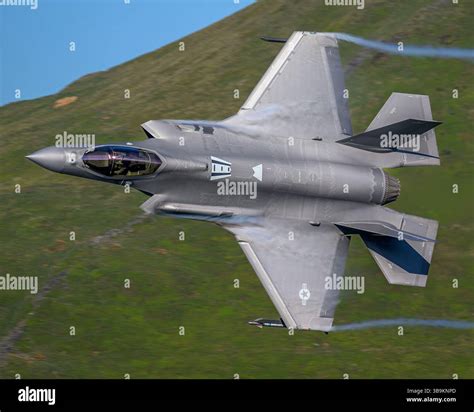
No military aircraft program in history approaches the sheer scale of the Lockheed Martin F-35 Lightning II. The Joint Strike Fighter is not merely a fighter program but an international aerospace ecosystem spanning nearly a century.
Developed to replace multiple aircraft types across the Air Force, Navy, Marine Corps, and allied militaries, the F-35 combines stealth technology, sensor fusion, networking capabilities, and advanced computing power into a single platform.
Three distinct variants serve different missions. The F-35A equips the Air Force, the F-35B provides short takeoff and vertical landing capability for the Marine Corps, and the carrier-based F-35C operates aboard Navy aircraft carriers.
While flyaway costs have gradually declined, operational expenses remain enormous. The F-35A’s basic flyaway cost sits around $82.5 million, but complete acquisition packages push the figure above $110 million. The Marine Corps’ F-35B reaches approximately $109 million, while the naval F-35C costs over $102 million.
Yet acquisition costs tell only part of the story.
Maintaining stealth coatings, specialized support equipment, climate-controlled facilities, software architecture, spare components, and advanced logistics systems creates extraordinary sustainment expenses. Flying a conventional F-16 typically costs between $8,000 and $10,000 per hour. By contrast, the F-35A requires approximately $34,000 to $42,000 for each flight hour.
Technology Refresh 3 upgrades have added further complexity and increased financial pressures. With projected fleets numbering between 2,500 and 3,000 aircraft and expected service life extending close to a century, total lifetime costs are estimated to exceed $2 trillion.
No previous military aviation program has approached this scale. The F-35 stands as both a symbol of technological achievement and a reminder that maintaining air dominance in the modern era demands extraordinary financial commitments.
The Future of Air Dominance Comes With Historic Costs
The cost of maintaining American air superiority has entered a new era. Programs once measured in billions are now measured in hundreds of billions and even trillions. Fighters increasingly function as airborne supercomputers, bombers are becoming smarter and easier to maintain, and support aircraft continue to underpin global operations.
Among them all, the F-35 Lightning II remains unmatched in scale, while the B-21 Raider and emerging F-47 hint at the next generation of warfare. These aircraft programs represent more than procurement contracts. They are investments intended to preserve American air dominance for decades to come, ensuring that the United States remains at the forefront of military aviation in an increasingly competitive world.