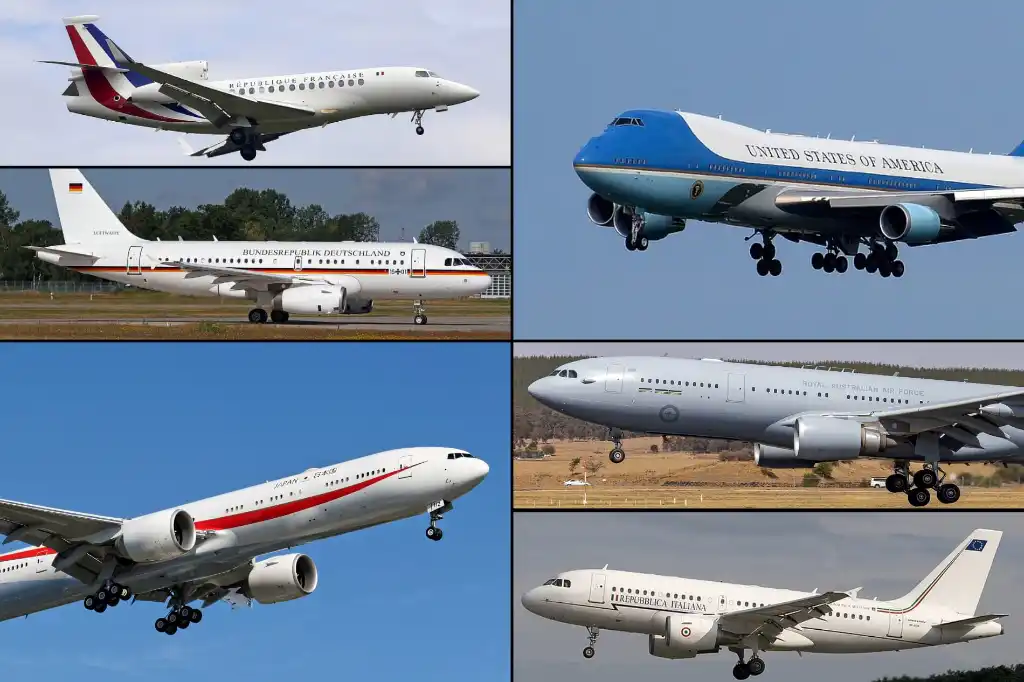
State aircraft are far more than luxurious flying offices. They are airborne command centers, diplomatic tools, symbols of national prestige, and in some cases, strategic military assets capable of operating during global crises. Among the G7 nations, the aircraft chosen to transport presidents, prime ministers, monarchs, and senior officials reveal fascinating differences in political priorities, military doctrine, industrial strength, and national image.
Some governments favor efficiency and flexibility. Others invest heavily in survivability, communications systems, and long-range endurance. From Italy’s compact executive jets to Japan’s enormous Boeing 777-300ER fleet, every aircraft tells a story about how a nation projects itself to the world.
This ranking evaluates the primary presidential or VIP transport aircraft used by the G7 nations outside the United States, focusing on size, capability, operational sophistication, and strategic significance.
6. Italy’s Agile VIP Fleet Prioritizes Flexibility Over Prestige
Italy operates one of the most practical and diversified executive transport fleets in Europe. Rather than relying on a single massive flagship aircraft, the Italian Air Force’s 31st Wing uses a combination of smaller business jets and narrowbody airliners tailored for different mission profiles.
The backbone of the fleet consists of three Airbus VC-319As, military-designated versions of the Airbus ACJ319-115. These aircraft provide the ideal balance between intercontinental range, moderate operating costs, and VIP comfort. They are routinely used by both the President of Italy and the Prime Minister for longer diplomatic missions across Europe, the Middle East, and North America.
Supporting the VC-319As are three Dassault VC-900s and two Dassault VC-50s, modified Falcon 900 and Falcon 50 business jets respectively. These smaller aircraft are especially valuable for rapid European travel, where large airliners would be operationally inefficient.
Italy briefly experimented with operating a far larger Airbus A340-500, an aircraft once leased to provide ultra-long-range capability. However, the four-engine giant became controversial due to its enormous operating expenses and infrequent usage. In a country where public scrutiny of government spending can become politically explosive overnight, the A340 quickly earned criticism as an unnecessary luxury.
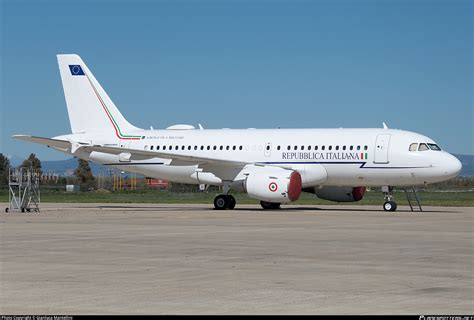
The decision to retire the A340 and focus on the smaller ACJ319 proved strategically sensible. Italy’s current approach emphasizes operational practicality instead of symbolic grandeur. That philosophy continues with the arrival of the Gulfstream VC-650A fleet, based on the ultra-long-range Gulfstream G650ER.
The incoming VC-650As represent a significant technological leap. With exceptional speed, fuel efficiency, and intercontinental range, the aircraft can connect Rome directly with destinations across Asia or the Americas while using smaller airports inaccessible to larger jets. For diplomatic flexibility, that capability is enormously valuable.
Although Italy’s fleet lacks the prestige of Germany’s A350s or Japan’s 777s, it succeeds through versatility and cost-effectiveness. In an era where efficiency matters as much as image, Italy’s strategy looks increasingly modern.
5. The United Kingdom’s “Vespina” Balances Royal Prestige With Military Utility
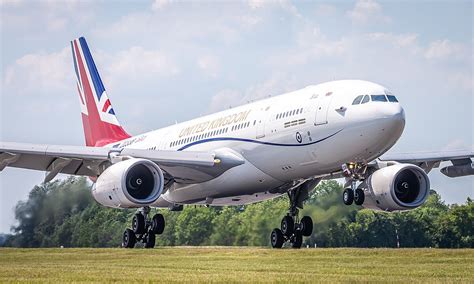
Britain’s VIP transport strategy has long been shaped by political debate. Successive governments struggled for years over whether dedicated state aircraft represented necessary diplomatic tools or excessive extravagance. The compromise eventually produced one of the most distinctive aircraft in Europe: the RAF Voyager KC3 known as “Vespina.”
Based on the Airbus A330 MRTT tanker platform, Vespina entered service in 2016 after conversion from a standard Royal Air Force aerial refueling aircraft. Unlike fully dedicated presidential transports, the aircraft retains its military tanker capability, allowing it to continue operational RAF missions when not transporting senior officials.
That dual-purpose role makes Vespina unique among G7 state aircraft.
Inside, the aircraft features conference areas, secure communications systems, premium seating, and configurable layouts capable of carrying ministers, diplomatic delegations, military personnel, or journalists. Its 58 business-class seats and 100 economy seats allow Britain to transport large government entourages efficiently during international summits.
The aircraft gained international attention after receiving its controversial red, white, and blue livery in 2020. Supporters argued the design better represented modern Britain abroad, while critics questioned the expense during a period of domestic austerity.
Yet despite its visibility, Vespina is surprisingly underused for long-distance diplomatic travel today. The British government increasingly favors a leased Airbus A321LR operated by Titan Airways. Smaller, cheaper to operate, and more flexible, the A321LR has become the preferred option for many overseas trips.
Meanwhile, two Dassault Falcon 900LXs handle shorter European missions.
This layered system reflects Britain’s pragmatic approach to state aviation. Instead of concentrating prestige into a single flagship aircraft, the UK spreads responsibilities across multiple platforms optimized for different operational requirements.
The result is less glamorous than Japan’s twin Boeing 777s or Germany’s luxurious A350s, but highly adaptable. Britain’s fleet mirrors the country itself: practical, military-oriented, and designed to balance symbolism with utility.
4. France Operates a Presidential Airbus A330 With Quiet Elegance
French presidential aviation embodies understated sophistication. While some nations emphasize military power or national branding, France projects authority through refinement, technological capability, and discreet executive comfort.
At the center of this strategy is F-RARF, the French presidential Airbus A330-200 operated by the French Air and Space Force.
Originally delivered to Swissair in 1998, the aircraft passed through several commercial operators before entering French government service in 2010. Despite its civilian origins, the aircraft underwent extensive modification into a highly secure VIP transport platform capable of supporting the demanding schedule of the French presidency.
Internally, the aircraft functions as a flying executive headquarters. Dedicated meeting rooms, private workspaces, secure communications infrastructure, and advanced defensive systems allow the French president to govern effectively while airborne.
Unlike Britain’s Voyager, however, the French A330 lacks aerial refueling capability. Its mission is singular and clear: transporting the president and senior officials with maximum efficiency and comfort.
France complements the A330 with a diverse fleet of Dassault Falcons, including Falcon 7Xs, Falcon 900s, Falcon 2000s, and TBM 700 turboprops. This gives Paris extraordinary flexibility for diplomatic missions ranging from short European visits to transcontinental summits.
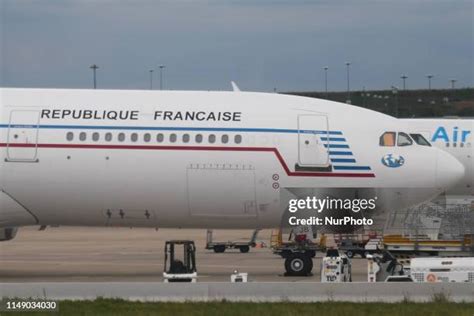
The French model reflects the country’s broader political culture. Prestige matters, but excessive spectacle is avoided. The presidential A330 is luxurious without appearing ostentatious. It is technologically advanced without being militarily aggressive.
That balance aligns perfectly with France’s longstanding self-image as a refined global power capable of projecting influence through diplomacy, culture, and strategic independence rather than overwhelming military symbolism.
3. Canada’s Transition to the CC-330 Husky Marks a New Era
Canada’s VIP aviation capabilities are currently undergoing one of the most important transformations in the country’s military aviation history.
For decades, the Royal Canadian Air Force relied on the Airbus CC-150 Polaris fleet, modified Airbus A310-300 aircraft acquired secondhand from commercial airlines. While dependable for many years, the aging fleet increasingly struggled with maintenance demands and reliability concerns.
The Polaris aircraft served multiple roles simultaneously: VIP transport, strategic airlift, and aerial refueling. One specially configured example, aircraft 15001, featured a dedicated executive interior used primarily by the Prime Minister and senior officials.
But the future now belongs to the Airbus CC-330 Husky.
Based on the Airbus A330 MRTT, the Husky combines modern tanker capability with strategic transport performance and sophisticated VIP accommodations. Canada plans to operate nine examples, with one aircraft specially configured for executive government transport.
The arrival of the Husky dramatically improves Canada’s strategic reach. Compared with the older Polaris fleet, the A330 platform delivers greater fuel efficiency, improved reliability, enhanced communications systems, and significantly expanded operational flexibility.
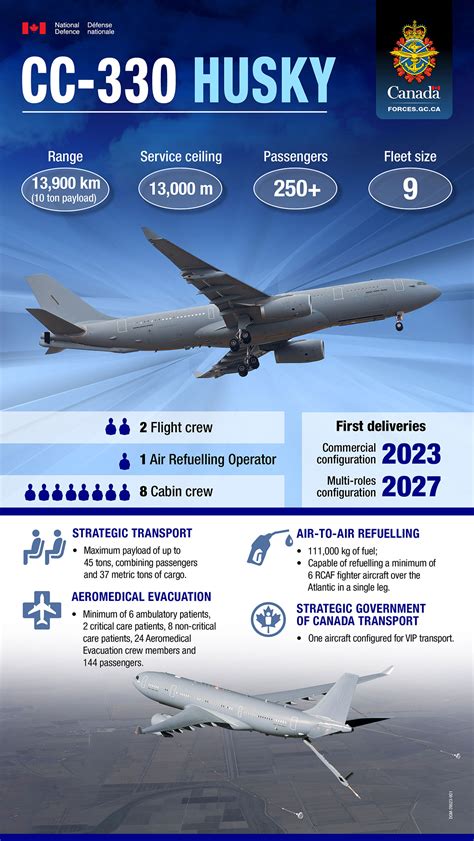
The new fleet also strengthens Canada’s role within NATO operations. Because most Huskies will function primarily as tanker aircraft, the program simultaneously enhances military interoperability and government transport capability.
That dual-use philosophy mirrors Canada’s broader defense posture: practical, alliance-focused, and strategically cooperative rather than aggressively independent.
Unlike the highly symbolic presidential fleets of some nations, Canada’s aircraft emphasize functionality and multinational compatibility. Yet the CC-330 Husky still represents a substantial leap forward in prestige and capability.
For a country with vast geography and global diplomatic responsibilities, modern long-range state aircraft are not luxuries. They are operational necessities.
2. Germany’s Airbus A350 Fleet Represents Europe’s Most Advanced Government Aviation Program
Germany currently operates arguably the most technologically advanced VIP transport fleet in Europe.
Following years of reliability issues with older Airbus A340 aircraft, the Luftwaffe invested heavily in three state-of-the-art Airbus A350-900s between 2021 and 2024. The move transformed Germany’s executive transport capability almost overnight.
The aircraft are operated by the German Air Force’s Executive Transport Wing and are named after former German political leaders, reinforcing their symbolic role as national assets.
The A350 platform offers enormous advantages. Compared with the retired A340 fleet, the twin-engine A350 delivers dramatically lower fuel consumption, longer range, quieter cabins, and vastly improved reliability. For German officials frequently traveling across the Atlantic, Asia, and the Middle East, those improvements are operationally critical.
Inside, Lufthansa Technik created highly customized interiors designed around governmental productivity. Dedicated conference suites, secure offices, communications hubs, and delegation seating allow the Chancellor and President to conduct state business seamlessly during long-haul flights.
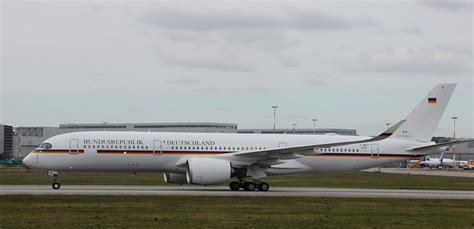
Germany has also prioritized defensive technology. The A350 fleet features advanced communications security systems and is scheduled to receive Directed Infra-Red Countermeasures systems, enhancing protection against missile threats.
That investment reflects lessons learned from embarrassing technical failures suffered by previous German government aircraft. High-profile breakdowns during international trips once damaged Berlin’s diplomatic image and highlighted the risks of relying on aging airframes.
The A350 program solved those issues decisively.
More importantly, the aircraft symbolize Germany’s modern identity: technologically sophisticated, economically powerful, environmentally conscious, and operationally efficient. Even the choice of the ultra-efficient A350 aligns with Germany’s emphasis on sustainability and engineering excellence.
Among European nations, no government fleet currently combines luxury, operational capability, efficiency, and modernity as successfully as Germany’s.
1. Japan’s Boeing 777-300ER Fleet Is the Most Impressive in the G7
Japan operates the most formidable VIP transport aircraft outside the United States.
The Japan Air Self-Defense Force’s twin Boeing 777-300ERs are among the largest, most capable, and most strategically important government aircraft anywhere in the world. Replacing the legendary Boeing 747-400 fleet in 2019, the aircraft continue Japan’s tradition of operating oversized, highly capable state transports designed for both diplomacy and national emergencies.
The decision to acquire the 777-300ER was carefully calculated. Japan required an aircraft capable of matching the passenger capacity, range, and reliability of the outgoing 747 fleet while reducing operating costs and improving fuel efficiency.
The result was ideal.
Configured for approximately 140 passengers, the aircraft can transport the Prime Minister, the Emperor, senior government officials, security personnel, journalists, and support staff simultaneously across intercontinental distances. Yet these aircraft are not merely airborne diplomatic lounges.
They are strategic national assets.
In addition to government transport duties, the 777s can evacuate Japanese citizens during international crises or support military deployment operations when necessary. That multi-role flexibility reflects Japan’s increasingly proactive security posture in the Indo-Pacific region.
Perhaps the most fascinating operational detail is that both aircraft always fly together on official missions. One aircraft transports the primary delegation, while the second acts as a fully operational backup carrying maintenance crews and technical support personnel.
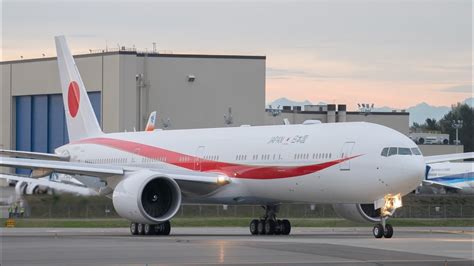
This redundancy ensures extraordinary mission reliability and reflects Japan’s meticulous operational culture.
Visually, the aircraft are striking. Their clean white livery with bold red accents projects simplicity, national pride, and unmistakable identity without excessive decoration. Inside, the aircraft combine spacious layouts with highly advanced communications and security infrastructure.
Japan’s fleet succeeds because it merges prestige, operational readiness, strategic flexibility, and engineering practicality better than any other G7 nation outside the United States.
In many ways, these aircraft perfectly represent modern Japan itself: disciplined, technologically advanced, quietly powerful, and exceptionally prepared.