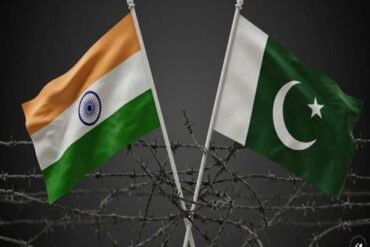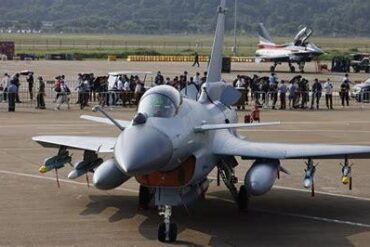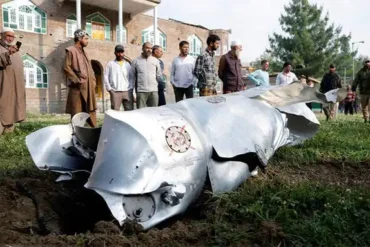
India’s launch of Operation Sindoor, a military offensive targeting what it identifies as terrorist training facilities across the Pakistan border and Pakistan-administered Kashmir, has shaken global diplomatic corridors. With Islamabad responding in kind, claiming the downing of multiple Indian jets and retaliatory strikes on Indian military installations, the subcontinent finds itself at the center of yet another dangerous flare-up. This latest escalation, resulting in the deaths of at least 26 people in Pakistan and 10 in Indian-administered Kashmir, has drawn urgent international attention.
China Urges Caution Amid Growing Instability
Beijing’s response to the escalating military action has been carefully worded but unmistakably serious. A statement issued by the Chinese Ministry of Foreign Affairs voiced “regret” over India’s military actions while urging both nuclear-armed nations to demonstrate restraint and diplomacy. China’s dual stance—condemning terrorism while opposing actions that risk regional instability—reflects its strategic balancing act, maintaining deep economic ties with Pakistan and a complex geopolitical rivalry with India.
“We call on both India and Pakistan to prioritize peace and stability, remain calm and restrained, and avoid taking actions that further complicate the situation,” the ministry’s spokesperson stated. The tone emphasized China’s broader regional strategy: keeping South Asia stable while asserting its position as a responsible global power.
France Balances Sympathy With Diplomacy
French Foreign Minister Jean-Noel Barrot, in an interview on TF1, acknowledged India’s right to self-defense in the face of terrorism but reinforced France’s commitment to preventing military escalation. “We understand India’s desire to protect itself against the scourge of terrorism, but we obviously call on both India and Pakistan to exercise restraint to avoid escalation and, of course, to protect civilians.”
France’s statement reveals a growing trend among Western nations to condemn terrorism without explicitly endorsing military action—a balancing act aimed at preserving alliances without encouraging confrontation.
Iran Echoes Concerns While Warning of Wider Impacts
In a notably measured tone, the Iranian Foreign Ministry described the military escalation as “a serious cause for concern.” Ministry spokesman Esmail Baghaei emphasized the need for de-escalation and urged both sides to pursue diplomatic solutions. Iran, sharing a border with Pakistan and seeking regional stability amid its own geopolitical pressures, avoided assigning blame.
Tehran’s statement reflects a desire to maintain neutrality, possibly influenced by its efforts to retain good relations with both India and Pakistan for economic and strategic reasons.
Israel Unambiguously Supports India
Breaking from the restrained diplomatic language adopted by other nations, Israel’s Ambassador to India, Reuven Azar, was direct in his support. Posting on X, he declared: “Israel supports India’s right for self-defense. Terrorists should know there’s no place to hide from their heinous crimes against the innocent. #OperationSindoor.”
Israel’s unfiltered endorsement underscores a growing strategic alliance with India, particularly in defense and intelligence sharing. This unequivocal backing also aligns with Israel’s global narrative on counterterrorism and security operations.
Japan Warns of a Broader Conflagration
Chief Cabinet Secretary Yoshimasa Hayashi expressed deep concern over the potential for full-scale military conflict. Japan’s condemnation of the terrorist attack in Kashmir on April 22 came coupled with an urgent call for dialogue. “We express strong concern that this situation may lead to further retaliatory exchanges and escalate into a full-scale military conflict,” Hayashi warned.
Tokyo’s emphasis on peace and stability in South Asia also highlights Japan’s broader Indo-Pacific strategy, where rising tensions could disrupt trade and security frameworks.
Qatar and the Gulf’s Diplomatic Approach
The Qatari Ministry of Foreign Affairs released a statement expressing “great concern” over the escalating situation and emphasized the need for diplomatic resolution. “The Ministry of Foreign Affairs emphasizes the urgent need to keep communication channels open between India and Pakistan,” the statement read.
This reflects a Gulf-wide tendency to mediate rather than intervene, aiming to preserve regional energy and economic interests while avoiding political entanglements in South Asia’s complex disputes.
Russia Maintains Strategic Neutrality
Russia’s Ministry of Foreign Affairs conveyed “deep concern” over the intensifying confrontation and reiterated its opposition to terrorism. While maintaining strong bilateral relations with both India and Pakistan, Moscow avoided siding with either nation, instead calling for calm.
Russia’s statement is emblematic of its posture as a traditional ally to India while simultaneously cultivating strategic ties with Pakistan, particularly in defense and counterterrorism cooperation. This neutral position also aligns with its broader goal of maintaining influence in Asia without alienating key partners.
Turkey Criticizes Indian Action, Supports Pakistan
Turkey’s Ministry of Foreign Affairs urged both nations to exercise “common sense” but explicitly warned that India’s strikes posed the risk of “an all-out war.” It echoed Pakistan’s call for an investigation into the April 22 attacks, subtly aligning with Islamabad’s narrative.
Ankara’s stance is not unexpected, given its historic political alignment with Pakistan and contentious relations with New Delhi, particularly over Kashmir. Turkey’s response reflects its continued engagement in Muslim world solidarity politics, often positioning itself as a defender of Muslim communities.
UAE Backs Dialogue Over Deterrence
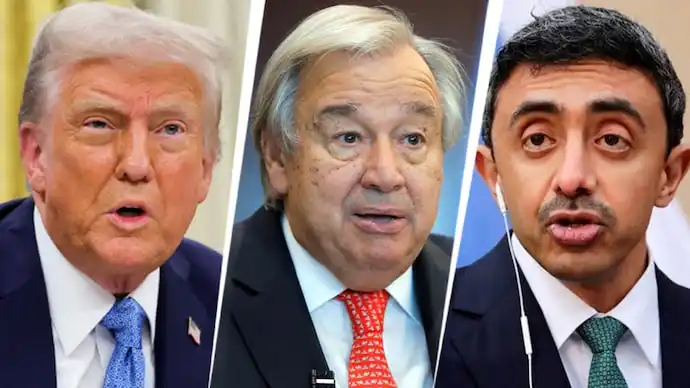
The UAE’s Foreign Minister Abdullah bin Zayed Al Nahyan emphasized that diplomacy and dialogue remain the only sustainable solutions. Calling on both nations to reduce tensions and prevent further escalation, the UAE’s position underscores its commitment to regional stability and non-interventionist diplomacy.
The UAE’s neutral yet proactive stance may also reflect its growing economic partnerships with both India and Pakistan, making a stable subcontinent essential to its long-term interests.
UN Appeals for Maximum Restraint
The United Nations Secretary-General Antonio Guterres, through a spokesperson, expressed grave concern about India’s military operations across the Line of Control and the international border. “He calls for maximum military restraint from both countries,” the statement read.
This response underscores the UN’s longstanding advocacy for peace in South Asia, particularly in the volatile Kashmir region. The reference to the “international border”—rather than solely the Line of Control—signals the global gravity of the situation.
United Kingdom Advocates for Diplomatic Engagement
British Foreign Minister David Lammy stated, “Current tensions between India and Pakistan are a serious concern. The UK government is urging India and Pakistan to show restraint and engage in direct dialogue to find a swift, diplomatic path forward.”
The UK’s position reflects its historical ties with both nations and its desire to remain a stabilizing influence. London is wary of letting violence escalate, particularly with significant South Asian diasporas within its borders and economic stakes in the region.
United States Observes and Engages
U.S. President Donald Trump described the events as “a shame,” urging a swift end to hostilities. He added, “They’ve been fighting for many, many decades. I hope it ends very quickly.” Meanwhile, U.S. Senator Marco Rubio reinforced the administration’s engagement: “I echo @POTUS’s comments… and will continue to engage both Indian and Pakistani leadership towards a peaceful resolution.”
Washington’s response is characteristically cautious but active, reflecting its broader strategic interest in maintaining peace between two key regional allies—India for counter-China containment and Pakistan for Afghanistan and counterterrorism operations.
Conclusion: A World on Edge as South Asia Smolders
As Operation Sindoor unfolds, global reactions reveal both alignment and divergence in foreign policy priorities. While most nations converge on calls for restraint and dialogue, some—like Israel and Turkey—have taken definitive positions, complicating an already volatile situation. The specter of nuclear conflict looms large, and world leaders appear united in one key belief: another war between India and Pakistan is a threat the world cannot afford.
The international community’s urgent responses suggest that what happens in South Asia will not stay in South Asia. The next few days will be critical in determining whether diplomacy prevails—or whether a historic rivalry descends into unthinkable chaos.