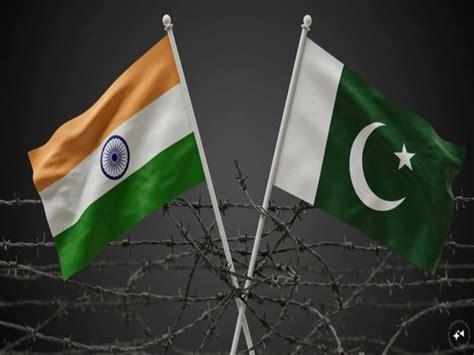
The ongoing conflict between India and Pakistan has escalated to a perilous new level, with both nations accusing each other of cross-border missile strikes targeting vital military infrastructure. This alarming development underscores the fragile state of peace in South Asia, where two nuclear-armed neighbors are teetering dangerously close to full-scale war.
The most recent hostilities erupted early Saturday morning, as Pakistan alleged that India fired six surface-to-air missiles at its key military bases, including Nur Khan, Murid, and Shorkot. Within hours, India countered with its own accusations, claiming that Pakistan initiated a massive assault on 26 strategic sites within Indian territory. This tit-for-tat exchange marks the most significant spike in military tensions in decades.
A Sudden and Fierce Exchange of Fire
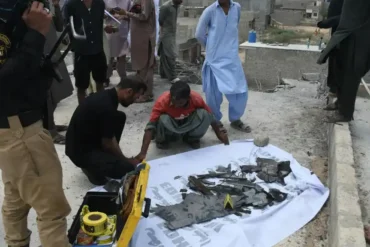
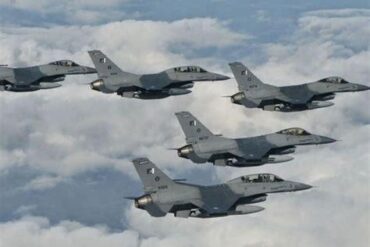
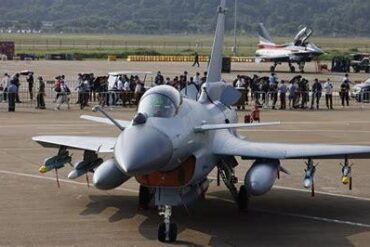
According to Pakistan’s military spokesperson Gen Ahmed Sharif Chaudhry, India’s initial strike was carried out using fighter jets and missile systems aimed at disabling Pakistan’s aerial defenses. The Nur Khan Airbase, situated in Rawalpindi near Islamabad, was among the hardest hit. Flames and thick smoke filled the night sky, sparking widespread panic among residents in the densely populated area. Eyewitness accounts describe scenes of chaos and fear as locals scrambled for safety following the explosions.
Pakistan’s response, codenamed Operation Bunyan Ul Marsoos, involved coordinated counterattacks targeting dozens of Indian military sites. Pakistani officials described these moves as both defensive and retaliatory, aimed at neutralizing Indian military assets while demonstrating resolve. Meanwhile, India reported that its forces successfully intercepted several incoming attacks, though four airbases sustained notable damage. Col Sofiya Qureshi of the Indian Army emphasized that while India’s response was swift and precise, some casualties and equipment losses were inevitable.
Escalation Rooted in Prior Incidents
The current escalation did not materialize out of nowhere. Tensions began spiraling after a militant attack in Indian-administered Kashmir last month, which resulted in the deaths of 25 Hindu tourists and a local guide. India laid the blame squarely on Pakistan-backed extremists, setting off a chain reaction of retaliatory measures. On Wednesday, Indian forces launched missile strikes on nine sites within Pakistan, reportedly killing 31 individuals, which Islamabad vehemently condemned as an unprovoked act of aggression.
Further inflaming the situation, India accused Pakistan of orchestrating two consecutive nights of drone incursions targeting both civilian and military locations. According to Indian defense officials, over 400 drones were intercepted over critical regions in Punjab and Kashmir. These provocations, India claims, left them with no choice but to escalate defensive operations.
Diplomatic Maneuvers and International Reactions
As military engagements unfolded, diplomatic channels were simultaneously activated in a frantic bid to prevent the situation from spiraling out of control. Pakistan’s deputy prime minister and foreign minister Ishaq Dar stated that Pakistan was willing to halt further attacks if India reciprocated. India echoed a similar sentiment, expressing commitment to de-escalation provided Pakistan ceased all hostile actions. However, these statements were undercut by mutual accusations of ongoing military mobilization.
In Washington, US Secretary of State Marco Rubio engaged in urgent conversations with Pakistan’s army chief, Gen Asim Munir, and India’s foreign minister, Subrahmanyam Jaishankar. Rubio called for restraint and offered US mediation to kickstart dialogue between the two adversaries. Despite these overtures, the fragile trust deficit between India and Pakistan remains a significant hurdle.
Ground Realities and Mobilization
On the ground, the consequences of the strikes were palpable. Cities in Indian-administered Kashmir and border states like Punjab and Haryana were placed on red alert, with residents ordered to stay indoors and blackout protocols strictly enforced. In Pakistan, the closure of airspace further disrupted daily life, with flight cancellations adding to the climate of fear and uncertainty.
The Indian military announced the activation of its Territorial Army reserves and large-scale troop mobilization to forward areas along the Line of Control (LoC). Satellite imagery and local reports confirmed the movement of armored units and artillery batteries, underscoring the severity of the standoff. Pakistani forces, too, were seen repositioning troops and enhancing defenses along key border stretches.
Historical Parallels and the Risk of Miscalculation
The current situation bears unsettling similarities to past confrontations, notably the Kargil conflict of 1999 and the 2019 Pulwama-Balakot episode. Both instances saw initial skirmishes rapidly escalate into large-scale military confrontations, albeit without devolving into full-fledged war. Analysts warn that the presence of nuclear arsenals on both sides now adds an even more dangerous dimension to the conflict, raising the stakes of any potential miscalculation.
It is crucial to note that both countries have long-standing grievances rooted in the Kashmir dispute, a territorial conflict that has defined their bilateral relations since independence in 1947. While cross-border shelling and smaller skirmishes are regrettably common, the scale and intensity of the current exchanges represent a marked departure from the norm.
The Road Ahead: Diplomacy or Disaster?
The path forward hinges on whether both governments can muster the political will to pursue meaningful dialogue. Past peace efforts, from the Lahore Declaration to the Agra Summit, have shown that diplomatic breakthroughs are possible but fragile. International pressure, particularly from the US, China, and the UN, is likely to intensify in the coming days, urging both sides to step back from the brink.
However, the entrenched mistrust and domestic political considerations in both India and Pakistan complicate any immediate resolution. For now, the region remains on edge, with millions of lives caught in the crosshairs of a conflict that could spiral into catastrophe with little warning.
Conclusion
As the dust settles from the latest salvo of missile strikes, the urgent need for de-escalation and dialogue becomes glaringly clear. The world watches anxiously, aware that any further provocation could tip South Asia into a conflict of unprecedented scale and destruction. The stakes are immense, and the choices made in the coming days will determine whether this volatile episode is defused diplomatically or allowed to ignite a broader war.