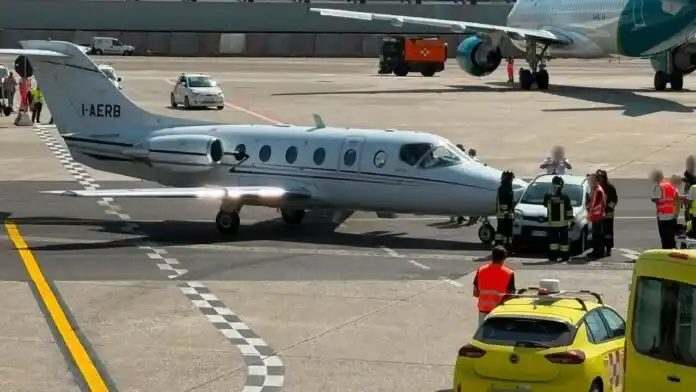
A ground handling car collided with a private jet at Milan Linate Airport on Monday morning, August 10, 2026, in a dramatic incident captured by airport CCTV cameras. The low-speed collision involved a Fiat Panda and a Hawker Beechcraft 400A, with footage showing the car crossing directly in front of the aircraft as it taxied across the apron.
The incident occurred at approximately 11:19 a.m. local time and caused significant visible damage to both vehicles. Despite the alarming nature of the footage, authorities reported no injuries among those involved. Airport emergency services responded quickly, securing the area and inspecting the aircraft and ground vehicle before normal operations could resume.
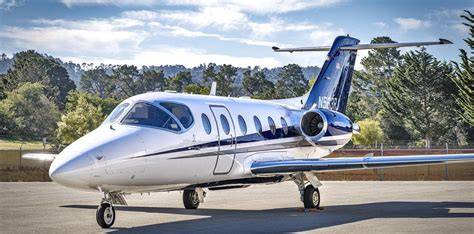
The private jet involved was a Hawker Beechcraft 400A registered as I-AERB. According to available aircraft tracking information, the aircraft is approximately 33 years old and is operated by Slam Lavori Aerei. The jet was taxiing when the Fiat Panda moved across its path, resulting in the aircraft’s nose striking the passenger-side front section of the car.
Dramatic CCTV Footage Shows Private Jet Striking Ground Vehicle
The video footage provides a striking view of how quickly an apparently routine movement on an airport apron can turn into an accident. The Fiat Panda cuts across the aircraft’s path, leaving the Hawker Beechcraft with little opportunity to avoid the vehicle at close range.
The aircraft’s nose subsequently made contact with the side of the Panda and penetrated one of its windows. Fortunately, the impact occurred on the passenger side rather than the driver’s side, which may have helped prevent a more serious outcome.
Although the collision was described as low-speed, the resulting damage was considerable. Airport emergency personnel immediately attended the scene, while operations were temporarily restricted to allow safety teams to examine both the aircraft and vehicle.
A spokesperson for Milan Linate Airport said emergency services responded immediately to inspect the aircraft and secure the apron. Once the necessary safety checks were completed, normal flight operations resumed after approximately 30 minutes.
The short operational pause nevertheless had consequences for aircraft approaching Linate during the incident.
Two Flights Diverted During Milan Linate Airport Closure
The temporary interruption forced two inbound passenger flights to divert to other airports in the Milan area.
KLM flight KL1615 from Amsterdam Schiphol was scheduled to arrive at Linate at approximately noon. Instead, the Boeing-operated service diverted to Milan Malpensa Airport, landing there at 11:58 a.m. After Linate reopened, the aircraft departed Malpensa at 1:08 p.m. and eventually completed its journey to Linate, arriving at 1:29 p.m.
The second affected service was ITA Airways flight AZ2036 from Rome Fiumicino. The domestic flight was scheduled to reach Linate at 11:40 a.m., but it instead landed at Milan Bergamo Airport at 11:56 a.m.
After remaining on the ground for slightly more than an hour, the aircraft departed Bergamo at 1:05 p.m. and reached Linate just 13 minutes later. While neither diversion resulted in a prolonged disruption, the incident demonstrated how even a relatively small apron accident can quickly affect scheduled commercial operations.
Why Airport Ground Vehicles Require Strict Coordination
Airport aprons are among the most carefully controlled environments in commercial aviation. Ground vehicles, service equipment, maintenance crews and aircraft frequently operate within relatively confined spaces, often simultaneously and sometimes with limited visibility.
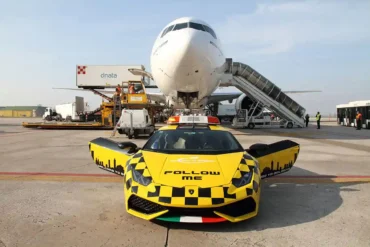
Vehicles such as the Fiat Panda involved in the Milan collision are an important part of this ecosystem. Ground personnel use vehicles to move around terminals, aircraft stands and operational areas, supporting the many activities required to keep an airport functioning.
Their ability to accelerate and maneuver far more quickly than an aircraft does not mean they can move freely. Vehicle movements on controlled airport surfaces are subject to strict procedures designed to keep them separated from aircraft and other equipment.
The Milan incident illustrates why those procedures matter. An aircraft moving at taxiing speed may appear slow compared with a road vehicle, but the aircraft’s size, limited maneuverability and restricted visibility can make an unexpected vehicle crossing extremely difficult to avoid.
Milan Incident Highlights Continuing Risk on Airport Aprons
The collision at Linate also comes amid broader concerns about interactions between aircraft and ground vehicles. While airport accidents involving vehicles are relatively uncommon, their potential consequences can be severe because of the size and complexity of modern aircraft operations.
A particularly serious example occurred earlier in 2026 at New York LaGuardia Airport, where a Bombardier CRJ900 collided with a fire truck after landing. That accident resulted in fatalities and highlighted the potentially devastating consequences when an aircraft and emergency vehicle occupy the same operational space.
The Milan collision was thankfully very different in outcome. No injuries were reported, the aircraft and vehicle could be inspected, and airport operations returned to normal after a relatively short interruption.
Still, the spectacular CCTV footage serves as a reminder that airport safety depends on thousands of coordinated movements every day. Aircraft may dominate the visual landscape of an airport, but the vehicles working around them are equally important to safe and efficient operations. Even a momentary conflict between the two can produce substantial damage and disrupt flights far beyond the immediate accident scene.