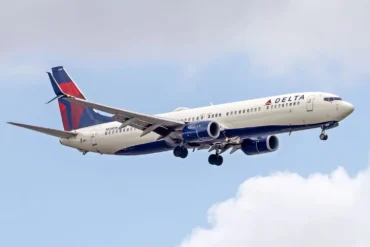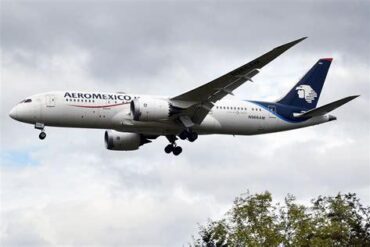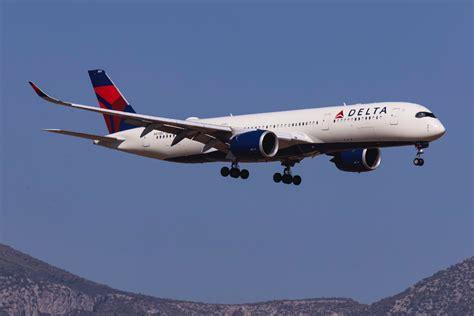
In a chilling near-disaster that could have ended in tragedy, a Delta Air Lines Boeing 737 carrying 144 passengers and six crew members was forced to abort its takeoff at Mexico City’s Benito Juárez International Airport on Monday, July 21, 2025, after an AeroMéxico Embraer 190 unexpectedly came within a dangerously close distance during landing. The Federal Aviation Administration (FAA) and Mexican aviation authorities have launched a full-scale investigation into the alarming incident.
A Near-Fatal Collision Averted
Witnesses and aviation reports describe a tense moment as the Delta aircraft, operating a scheduled flight to Atlanta, accelerated down the runway at approximately 96.56 km/h (60 mph) when AeroMéxico Flight 1631 passed directly overhead — separated by a mere 60 meters (200 feet). The Embraer 190 then proceeded to land on the same runway just moments later. The Delta pilots, reacting instantly, applied maximum braking power and managed to bring the aircraft to a safe stop, averting what could have been one of the most catastrophic collisions in modern commercial aviation.
Air Traffic Control’s Immediate Response
Air traffic control (ATC) recordings captured during the incident highlight the chaotic exchange between controllers and pilots. The Delta captain can be heard saying, “We’re unable to get to our gates because the equipment is blocking the runways,” followed by shocked exclamations from the tower: “Wow” and “Increíble.” These real-time reactions underline the gravity of the situation and the high-stakes environment air traffic controllers face at congested international hubs.
Delta’s Swift Actions and Official Response
Following the incident, the Delta jet returned to the terminal for a three-hour operational reset before a replacement flight eventually carried the passengers to Atlanta. Delta Air Lines issued a statement thanking the flight crew for their quick decision-making and confirmed full cooperation with both FAA investigators and Mexican authorities. The airline emphasized its commitment to passenger safety and confirmed that all affected travelers were accommodated on later flights.
The Escalating Challenge of Runway Congestion
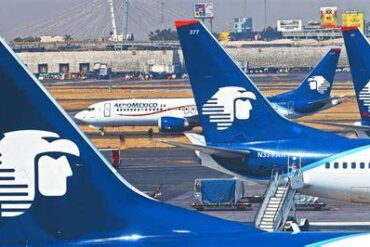
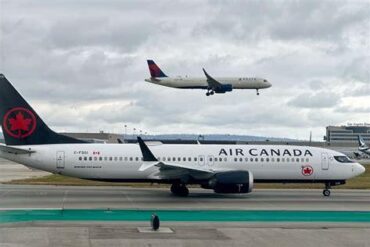
This harrowing near-miss has reignited concerns about runway congestion at high-traffic airports, particularly Benito Juárez, which handles millions of travelers annually. The incident occurred at a time when the airport was experiencing heavy operational loads, raising questions about ATC coordination and pilot communication protocols. Aviation analysts argue that such events are symptoms of broader systemic pressures within global aviation — increasing passenger demand, tight runway scheduling, and strained air traffic management resources.
A Pattern of Close Calls for Delta
Alarmingly, this event comes just two days after another Delta aircraft narrowly avoided a mid-air collision with a B-52 bomber during an approach to Minot International Airport in North Dakota. The back-to-back nature of these incidents adds urgency to ongoing investigations into Delta’s flight operations and broader air traffic safety standards. While these events are unrelated, they collectively highlight the fragile balance between operational efficiency and safety.
Mexico’s Complex Aviation Safety Record
The near-miss also draws renewed attention to Mexico’s aviation safety landscape. In 2021, the FAA downgraded Mexico’s aviation safety rating due to non-compliance with international standards, limiting Mexican carriers from expanding service to the United States. Though Mexico regained its Category 1 status in 2023 with FAA assistance, this latest incident underscores lingering vulnerabilities in operational oversight. Experts warn that without sustained investment in training, communication protocols, and infrastructure upgrades, such close calls may become more frequent.
Investigations Underway
The Mexican Directorate General of Civil Aeronautics (DGAC) has pledged a thorough investigation in partnership with the FAA. Key questions include:
- Why did ATC clear simultaneous operations on the same runway?
- Were there procedural lapses or miscommunications between the two flight crews?
- How can future runway incursions be prevented at Mexico’s busiest airport?
A preliminary report is expected within weeks, but officials have already indicated that operational reforms may follow.
The Imperative for Systemic Change
This incident serves as a sobering reminder of aviation’s inherent risks, even at heavily regulated international airports. Pilot training, crew coordination, and real-time ATC response were crucial in preventing disaster — but experts argue that relying on individual heroics is not a sustainable safety strategy. Instead, system-wide updates are needed, including improved surveillance technology, enhanced controller training, and dynamic runway management systems to ensure near-misses like this do not escalate into tragedies.
What’s Next for Delta and Global Aviation
Delta has submitted comprehensive reports to U.S. and Mexican authorities, while the aviation industry watches closely for regulatory fallout. If the investigation reveals systemic ATC or procedural failures, new international safety mandates could emerge, potentially reshaping operational practices at high-density airports worldwide.
As investigators dissect the chain of events, this incident stands as both a testament to pilot professionalism and a wake-up call for aviation authorities. Ensuring that safety protocols evolve alongside the rapid growth of global air travel remains one of the most pressing challenges facing the industry today.