Qatar Airways Finally Opens Colombia and Venezuela to Doha
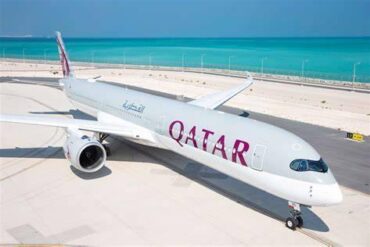
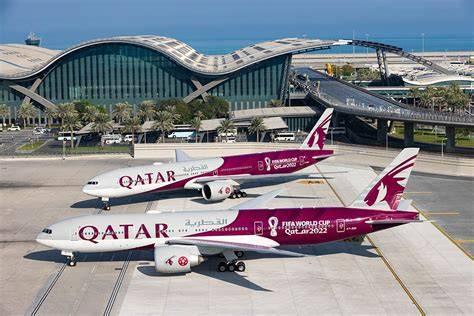
On November 4, Qatar Airways lifted off from Hamad International Airport (DOH) bound for Bogotá and Caracas, launching a 21-hour ultra-long-haul triangular service that has been delayed twice since its May announcement. The launch came three and a half months later than originally planned, after slips from July to September and then to November, all attributed to the ongoing war in Iran. The oneworld member has never previously operated a passenger service to Colombia or Venezuela, and the route expands its South American network from a single country, Brazil, and a single city, São Paulo, to three countries and three cities. For a carrier that prides itself on stitching every corner of the world into its Doha hub, that is a genuinely historic opening.
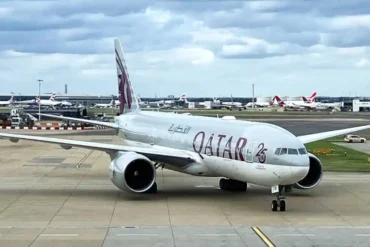
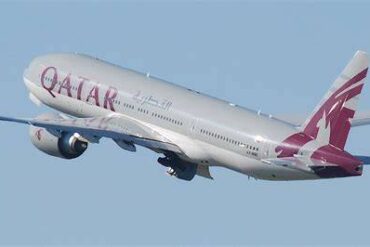
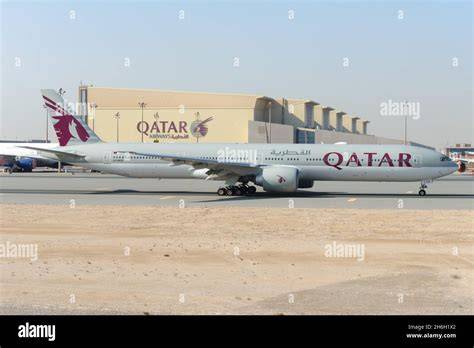
The first service operated as DOH–CCS–BOG–DOH, a direction deliberately chosen before the permanent pattern began. The inaugural airframe was the 17.8-year-old Boeing 777-200LR registered A7-BBB, configured with 272 seats: 42 enclosed QSuites in business at 1-2-1 and 230 economy seats, predominantly 3-4-3 with 32-inch pitch. Starlink Wi-Fi is available throughout, a meaningful detail on a flight that keeps passengers airborne for the better part of a day. From the second service onward, the routing reverses to DOH–BOG–CCS–DOH, operating twice weekly on Wednesdays and Sundays.
The Elevation Trap Behind the Reversed Routing
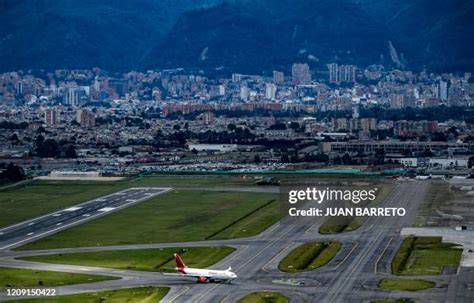
El Dorado International Airport sits at roughly 8,360 feet above sea level, and thinning air at that altitude severely constrains takeoff performance when an aircraft is heavy with fuel and freight. That single geographic fact explains why Qatar Airways stops in Caracas first on the inaugural flight and flies home from Bogotá along a great-circle distance of 7,179 nautical miles (13,296 km). The final leg is by far the punishing part of the triangle, and launching from the Colombian capital with a full long-haul fuel load would have forced painful payload sacrifices. Reversing the route allows a higher passenger and cargo payload to lift out of Bogotá, assuming the cabins are sufficiently full when the aircraft departs South America — an assumption that may not hold in the early months of a brand-new market.
Schedule, Block Times, and Where the Hours Go
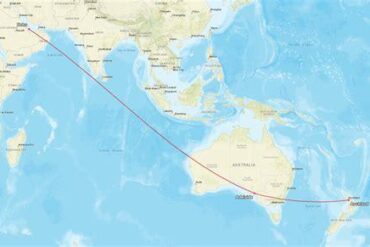
Under the permanent pattern, QR783 departs Doha at 7:25 AM and reaches Bogotá at 4:25 PM local time after 16 hours and 50 minutes in the air. The aircraft then continues to Caracas from 5:55 PM to 9:00 PM in 2 hours and 5 minutes — a sector operated without traffic rights, meaning Qatar Airways cannot sell local Colombia–Venezuela seats. The return leg leaves Caracas at 11:30 PM and lands in Doha at 8:35 PM after 14 hours and 5 minutes. Total block time on DOH–BOG–CCS, including the ground stop in Colombia, peaks at 20 hours and 35 minutes, making it Qatar Airways’ longest single offering and just long enough to edge past the carrier’s rerouted Auckland services, which top out at 20 hours and 15 minutes via Adelaide this season, 20 hours and 10 minutes via Melbourne from early December, and 20 hours and 20 minutes via Brisbane from June 2027.
A Route That May Owe More to Doha Than to Demand
When the service was announced in May, a source in network planning told Simple Flying that the new route had obviously been ordered by the Qatari government, because otherwise it simply would not be operated twice weekly. That frequency is unusually thin for a global operator launching a flagship intercontinental market, and the demand data reinforces how thin the traffic base really is. In the 12 months to August 2026, an estimated 137,000 round-trip passengers flew between Bogotá and Caracas and the Middle East, South Asia, Central Asia, and Eastern and Southern Africa — roughly 375 travelers a day across the combined catchment. That modest pool is already split among Emirates, which reaches Bogotá via Miami, Turkish Airlines, which serves both cities, and European heavyweights including Air France, KLM, and Lufthansa, all of which funnel Bogotá traffic through their own hubs.
Beirut, QSuites, and the Deep Diaspora Case for Caracas
The strongest commercial argument for Caracas is not business traffic but heritage travel. Venezuela is home to more than 750,000 people of Lebanese citizenship or descent, a diaspora that connects directly to Qatar Airways’ Levantine network through Doha, and Beirut is expected to become one of the route’s most important markets. Add the QSuites cabins and Starlink connectivity, and the carrier is clearly positioning the service around premium leisure and family-visiting demand rather than corporate contracts. Whether that is enough to fill a 272-seat aircraft twice a week is the open question, and the aerial map now stretches Qatar Airways’ reach to a corner of South America no Gulf carrier has ever served directly.