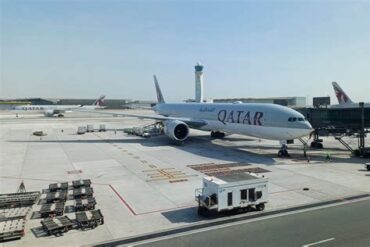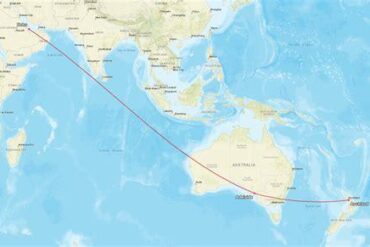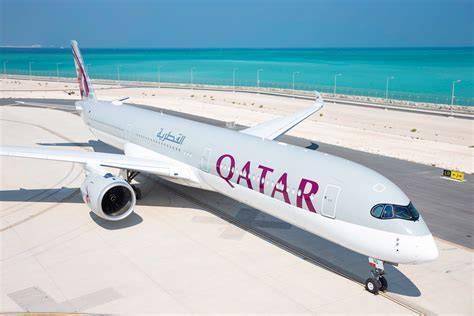
Qatar Airways has confirmed it will connect its Doha Hamad International Airport hub with Australia’s newest gateway, Western Sydney International, on December 15, 2027. The announcement lands nearly fourteen months before the first departure, an extraordinary display of forward planning in an industry where new long-haul services are frequently unveiled with only a few weeks to arrange aircraft, crews, ground handling, and sales campaigns. Air India, by contrast, has sometimes rolled out comparable intercontinental launches with barely one or two months of notice, leaving markets scrambling to fill cabins that were never properly primed.
The timing is deliberate and commercially sharp. A mid-December start plants Qatar Airways squarely in the peak of the southern summer travel season, when Australians travel home for the holidays and inbound holidaymakers flood the continent. Demand lifts sharply around Christmas, fares climb accordingly, and the first quarters of operation can be positioned as steady revenue generators rather than learning curves. Some observers also read strategic caution into the gap, noting the ongoing conflict involving Iran, which adds a layer of uncertainty to Gulf overflight patterns. In an unpredictable geopolitical climate, a generous runway gives the airline room to reshape schedules without tearing up freshly sold inventory.
That generous lead time cuts both ways. Fourteen months is ample room for a route to be upgraded, trimmed, retimed, or quietly shelved if conditions shift. Yet the financial logic is visible on paper: Europe-bound flows, Middle East connections, and African feeders all converge on Doha, which makes an Australian approach worth nurturing even before a single seat is sold. The carrier is not gambling on novelty; it is expanding an already formidable web.
Flight Schedule, Timings, and the Boeing 777-300ER
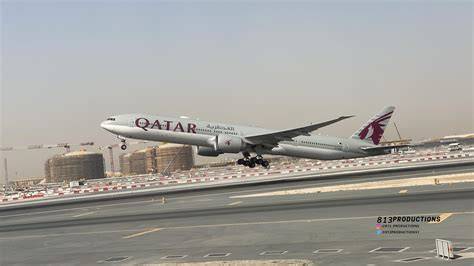
The initial service will run three times weekly, rotating through Mondays, Wednesdays, and Fridays out of Doha, and returning from Western Sydney on Tuesdays, Thursdays, and Saturdays. Departures from Doha are scheduled for 1:40 AM with a same-day 11:45 PM arrival in Western Sydney, a block time of roughly fifteen hours that ranks among the longest nonstop sectors any Gulf carrier operates into Australia. The westbound return lifts off at 4:10 PM and touches down in Doha at 11:45 PM, benefiting from favorable routing and typically shorter elapsed time.
Those early-morning departures carry a deeper significance. Sydney’s main airport operates under a curfew, which historically blocked Qatar Airways from landing in the city late at night. Western Sydney carries no such constraint, unlocking a slot the carrier could never secure at Kingsford Smith. The result is a late-evening arrival that dovetails neatly with Qatar Airways’ existing late-night service into Brisbane and Virgin Australia’s inbound Melbourne flights, creating a synchronized wave across eastern Australia.
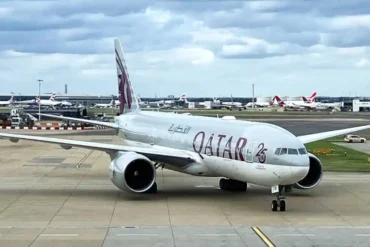
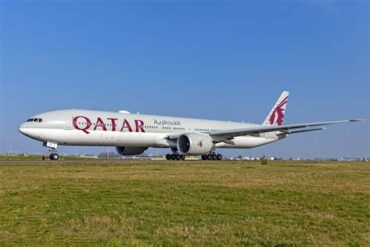
The aircraft assigned is the Boeing 777-300ER, a proven widebody with substantial belly and premium capacity. Frequency starts modestly at three weekly, becoming the airline’s least-served Australian service at launch, but the intent is to build toward daily operations by the end of 2028, subject to traffic rights, aircraft availability, and market performance. To maximize two-way connectivity across Europe, the Middle East, and Africa, the aircraft will sit on the ground in Western Sydney for many hours—lengthy ground time being the sacrifice required for well-timed connections at both ends.
Federal Support and the A$16 Million Behind the Launch
The decision was reinforced by more than AUD$16 million in government support, part of a package of incentives and risk-sharing arrangements that have become routine tools for attracting airlines to new airports. Revenue guarantees and marketing contributions reduce the downside for a carrier betting on an untested market, and Western Sydney’s operators clearly consider the investment worthwhile. Such support is not exclusive to Australia: Lufthansa has secured nearly US$50 million for its upcoming Frankfurt to Columbus, Ohio service. The cautionary lesson is familiar—some airlines withdraw the moment subsidies lapse—so the endurance of the route will ultimately rest on genuine demand rather than public money.
The Seventh Australian Destination and a Broader Regime
With Western Sydney added, Qatar Airways will serve seven Australian airports, an unusually wide footprint for a single Gulf carrier. Adelaide receives daily Airbus A350-900 service; Brisbane and Melbourne each see daily 777-300ER flights; Canberra is served via Melbourne; Perth sees daily 777-300ER; and Sydney Kingsford Smith remains a daily fixture. Emirates, by contrast, reaches five of those airports, Etihad only two, and Cathay Pacific four. The numbers reveal how aggressively Qatar Airways has embedded itself in Australian aviation.
Singapore Airlines operates in a different league altogether. With November 2026 Western Sydney flights joining Cairns and Darwin, it will serve eight Australian airports, sustained by geographic proximity and the deployment of the Boeing 737 MAX 8 on thinner links. Notably, Canberra has dropped off its map.
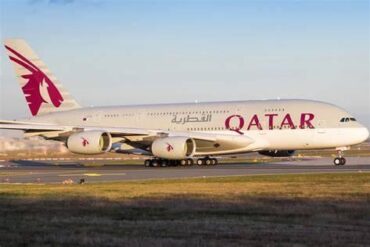
The Qatar Airways story cannot be separated from Virgin Australia. The domestic carrier flies to Doha using Qatar Airways aircraft, a structure that bypasses Australia’s restrictive traffic rights and effectively doubles the Gulf carrier’s presence through the back door. Together, the two carriers will eventually offer up to eleven daily nonstop services from Doha, with the Canberra extension excluded to avoid double counting. That equals Cathay Pacific’s maximum frequency but remains half of Singapore Airlines’ offering. Emirates plans ten daily services from late March 2027 and will dominate seats for sale, deploying the Airbus A380 on seven of those flights to Brisbane, Melbourne, Perth, and Sydney.
What Western Sydney Gains From a 15-Hour Nonstop
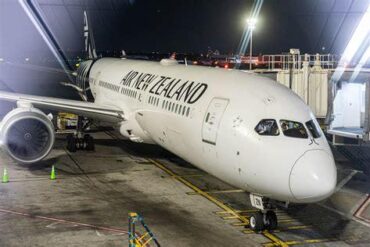
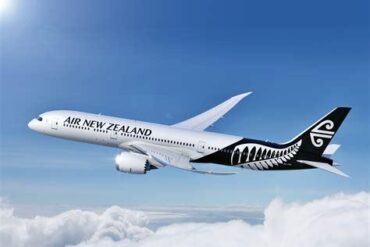
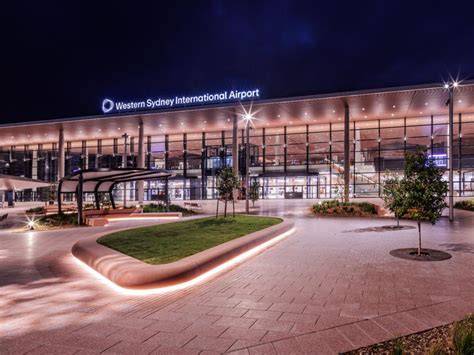
Western Sydney International opens to commercial passenger traffic on October 25, 2026, when Jetstar flies to the Gold Coast and Melbourne. Air New Zealand arrives from Auckland the following day, delivering the airport’s first international service, and Singapore Airlines follows in November. Qatar Airways will not appear until more than a year later, but it brings something Singapore Airlines’ shorter hops cannot match: a true long-haul anchor linking western Sydney to Europe, Africa, and the Middle East through a single Doha connection. For a region of more than two million residents, that is a direct economic and social dividend.
Industry watchers should treat the fourteen-month window as a statement of confidence rather than a formality. Three weekly flights offer room to test demand gently, oneworld connectivity fills the cabin with onward travelers, and the A$16 million cushion protects early losses. If the route performs, daily service and perhaps additional capacity will follow. If conditions sour, the airline retains flexibility. For now, the map speaks clearly: Doha’s reach now stretches to a brand-new airport in Australia’s fastest-growing metropolitan corridor.