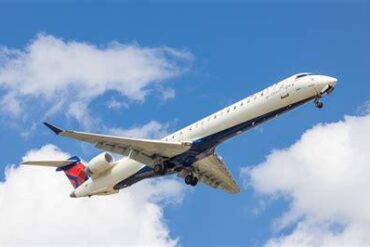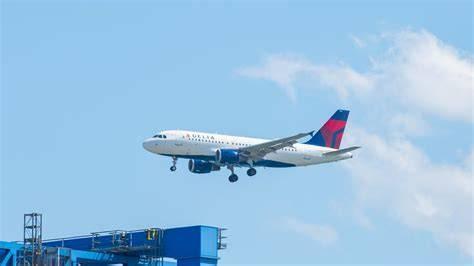
A magnitude 5.2 earthquake struck off the Southern California coast on Saturday, sending roughly 30 seconds of shaking through Los Angeles International Airport and forcing air traffic controllers to wave off an arriving Delta Air Lines jet at the worst possible moment — the final seconds of its approach. Flight DL1972, an Airbus A319-114 inbound from Kansas City International Airport, was ordered to complete a go-around as the tremor rattled the airport, aborting its landing just before touchdown, and the maneuver was captured live on camera by Airline Videos.
Delta A319 From Kansas City Forced Into Go-Around Over LAX
Delta Flight 1972 departed Kansas City late, at 8:08 a.m., and flew for nearly four hours before reaching Los Angeles airspace, according to Simple Flying’s Flight Tracker. The jet was on short final when the ground beneath the airport began to move. Controllers instructed the crew to break off the approach, and the A319 applied takeoff thrust, climbed away from the runway environment and set up for a fresh approach or a holding pattern, allowing airport personnel time to reassess conditions. The aircraft ultimately reached the gate at 10:01 a.m. local time, one hour and 13 minutes behind schedule, with the go-around itself adding only about ten extra minutes to the total flight time.
Why Controllers Ordered the Delta Jet to Abort Its Landing
The go-around was almost certainly a routine precaution rather than an emergency response. Keeping the A319 airborne ensured the plane did not touch down while the ground was still moving, and it gave controllers and airport staff room to inspect runways, lighting and other infrastructure before resuming normal operations. Within the terminal, several ceiling tiles fell to the floor as the building swayed, though no major damage or injuries have been reported. Aftershocks remain possible in the hours and days ahead, and safety checks are underway across the airport and the wider city, a reminder that a 5.2 event at a facility handling this much traffic demands verification before the next arrival is cleared.
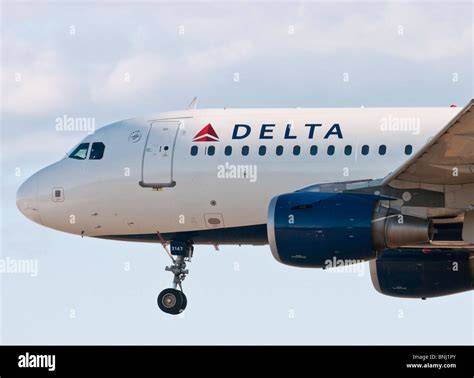
N362NB: The 23.5-Year-Old Airbus at the Center of the Incident
The aircraft involved was N362NB, a mainline A319-114 that began life as a Northwest Airlines jet. It performed its first test flight on May 19, 2003, and was delivered to Northwest on June 6, 2003; when Delta absorbed Northwest in 2009, the jet transferred to Delta on July 27, 2009, giving it more than 23.5 years of total service. Carrying manufacturer serial number 1982 and hex code A414E8, it seats up to 132 passengers in two classes — 12 in Domestic First and 120 in the Main Cabin — and is the smallest type in Delta’s Airbus narrowbody family, routinely deployed on medium-demand domestic routes that include this Kansas City–Los Angeles rotation. These older A319s are slated for eventual replacement by the Airbus A321neo and the Boeing 737 MAX.
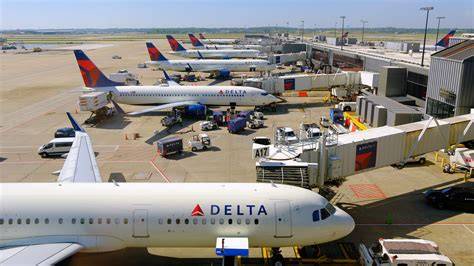
What the LAX Earthquake Moment Reveals About Airport Resilience
The incident compressed an entire chain of safety decisions into roughly half a minute. Earthquakes strike without warning, and an airport’s first line of defense is the discipline of its air traffic controllers and pilots — crews trained to treat any anomaly near the runway as grounds to climb rather than press on. The Delta crew did precisely that, trading a small schedule penalty for the certainty that the aircraft stayed clear of uncertain ground. For passengers, the visible result was a routine ten-minute delay; beneath it sat a coordinated pause in which flight crews, controllers and ground inspectors recalibrated together. The A319 was quickly returned to service, departing LAX at 11:11 a.m. as DL2568 bound for San Antonio with an expected 3:31 p.m. arrival, proof that the precaution did not cascade into wider disruption. Even so, the falling ceiling tiles underscore a quieter truth: when the earth moves under one of the world’s busiest airports, every decision from the cockpit to the terminal stands on the same shaking foundation.