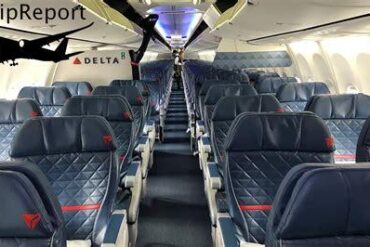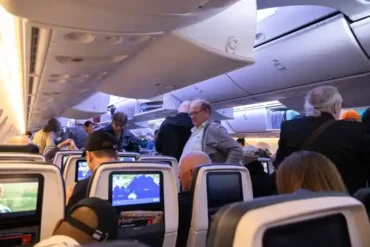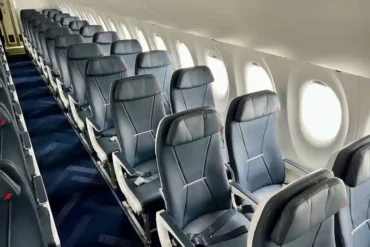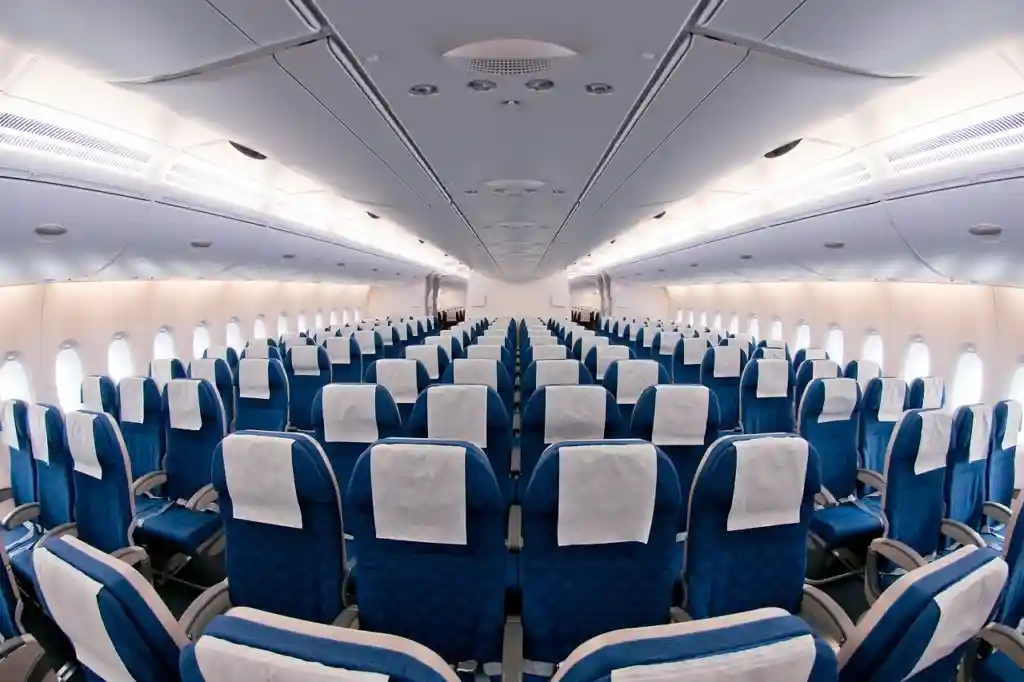
The Airbus A380 gives passengers a contradiction the moment they step through the main deck door. It is the largest commercial airliner ever built, with a cabin wider than any competitor and ceilings that rise higher than almost anything else in the sky. Yet economy passengers file down the aisle and find the same ten seats across that travelers grumble about on a Boeing 777. That number, repeated across two very different aircraft, hides one of the most interesting comfort stories in modern aviation. On the superjumbo, the layout is identical on paper but meaningfully different in practice, and the gap between expectation and reality is far wider than most passengers assume.
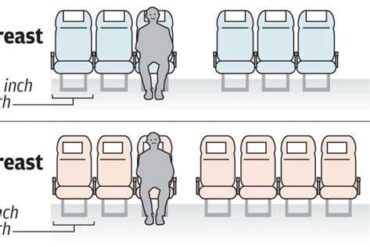
Ten abreast first appeared in serious volume on the Boeing 747, and it is now the standard on the 777, where it has earned a reputation for squeezing shoulders and elbows into spaces that feel engineered for smaller travelers. The A380 inherits that configuration but not its geometry. Airbus designed the main deck around a cabin roughly 21 feet seven inches, or 6.58 meters, wide. The Boeing 777 measures 19 feet three inches, or 5.86 meters, while the incoming 777X stretches to 19 feet seven inches, or 5.97 meters. The 747 main deck sits at about 20 feet, or 6.1 meters. Those figures sound academic until they are divided across a row, because every extra inch of cabin width is shared among the same number of seats and passengers.
Why The A380’s Extra Cabin Width Changes Economy Seating
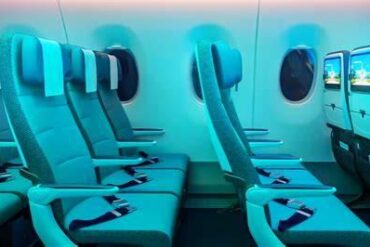
The arithmetic is the entire story. The A380 main deck is more than two feet wider than a 777, and that surplus does not disappear when airlines install ten seats. It spreads across every element of the row. Seats can be wider, aisles can be wider, and both improvements land simultaneously in a way that simply is not possible on narrower fuselages. Airlines generally install economy seats at least 18 inches, or 45.7 centimeters, wide on the A380. Some carriers push to 18.5 inches, territory that premium economy configurations occupy on other aircraft, and a handful go further still by trimming the armrests rather than the cushion.
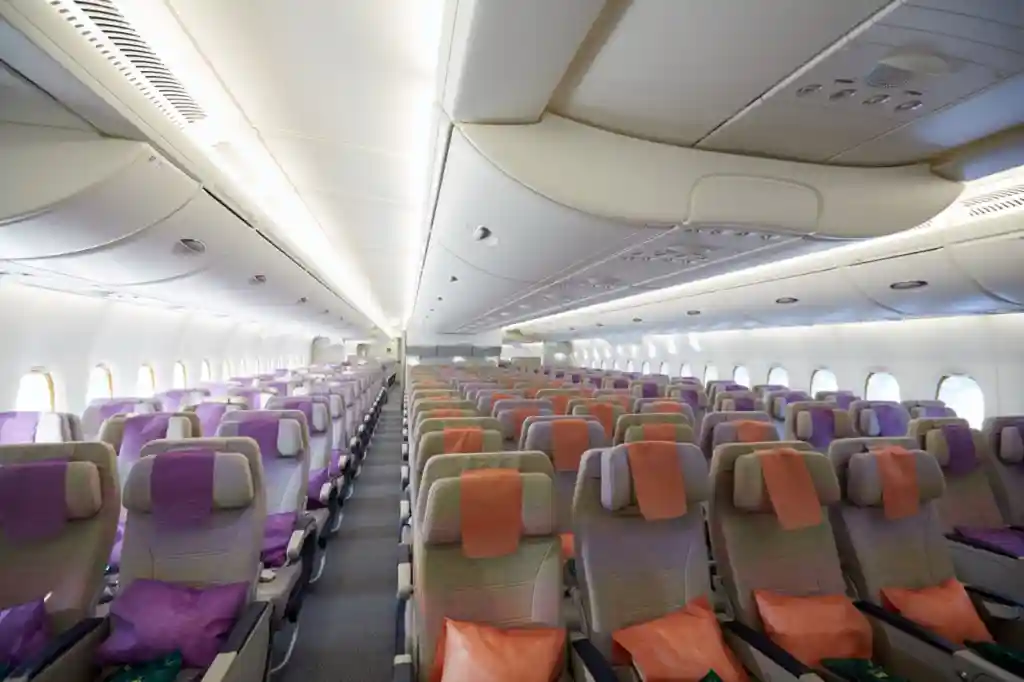
Wider aisles matter more than brochures suggest. On a ten-abreast 777, the aisle is a negotiation, and aisle-seat passengers spend the flight absorbing shoulders, elbows, and service carts. On the A380 main deck, crew and passengers pass with noticeably less contact, which means fewer interrupted meals, fewer accidental bumps, and easier movement toward the lavatories. Getting out of an aisle seat mid-flight becomes a routine action rather than a tactical operation. That improvement compounds over a twelve-hour sector, when the cabin is at its most restless.
Ten Seats Across And The Middle-Seat Problem
Honesty demands acknowledging what the layout costs. Ten abreast means four seats in the middle block, and two of those are full middle seats with neighbors on both sides. No amount of cabin width changes the psychology of sitting dead center of the row. Those passengers have no window to lean toward and no easy aisle escape, and they must ask two people to move whenever they need to stand. The configuration also makes life harder for window-seat passengers, who now face a longer, more awkward shuffle whenever nature calls mid-flight.
There is also the simple question of scale. The A380 can carry hundreds of passengers on a single deck, and even a spacious cabin holding that many people can generate a communal, high-volume atmosphere. Some travelers read that as the cattle-car feeling, and no cabin width banishes it entirely. The A380’s response is architectural rather than configurational. The main deck ceiling ranks among the tallest on any commercial airliner, and the combination of height and width creates a volume of space that no single-aisle or conventional widebody can match.
Ceiling Height, Sidewalls, And The Sensation Of Space
The psychological effect of that volume should not be underestimated. Traditional aircraft sidewalls curve inward from the window line toward the ceiling, enclosing passengers in a tube that narrows overhead. The A380 main deck sidewalls curve far less aggressively, leaving a flatter, more vertical surface beside the window seats. The result is a cabin that reads as a room rather than a tunnel. On a packed flight, where the sense of crowding comes as much from the visual boundaries as from the seat pitch, that geometry earns its keep.
The engines reinforce the same impression from a different direction. The four Trent or GP7200 powerplants sit unusually far from the fuselage, so the noise that reaches the cabin is muffled by distance before it is ever absorbed by insulation. The A380 debuted as a technological statement in 2007, with engines that were state of the art for fuel burn and acoustics. Even today the type is routinely named among the quietest airliners in service, mentioned alongside the Boeing 787 and Airbus A350 despite predating both. The cabin altitude, meanwhile, is tuned closer to those newer composites than to older metal widebodies, easing fatigue and softening the effects of jet lag on long eastbound or westbound journeys. The airframe is aluminum, but the pressurization profile behaves like a much younger aircraft.
Old Interiors, Small Windows, And The Real Drawbacks
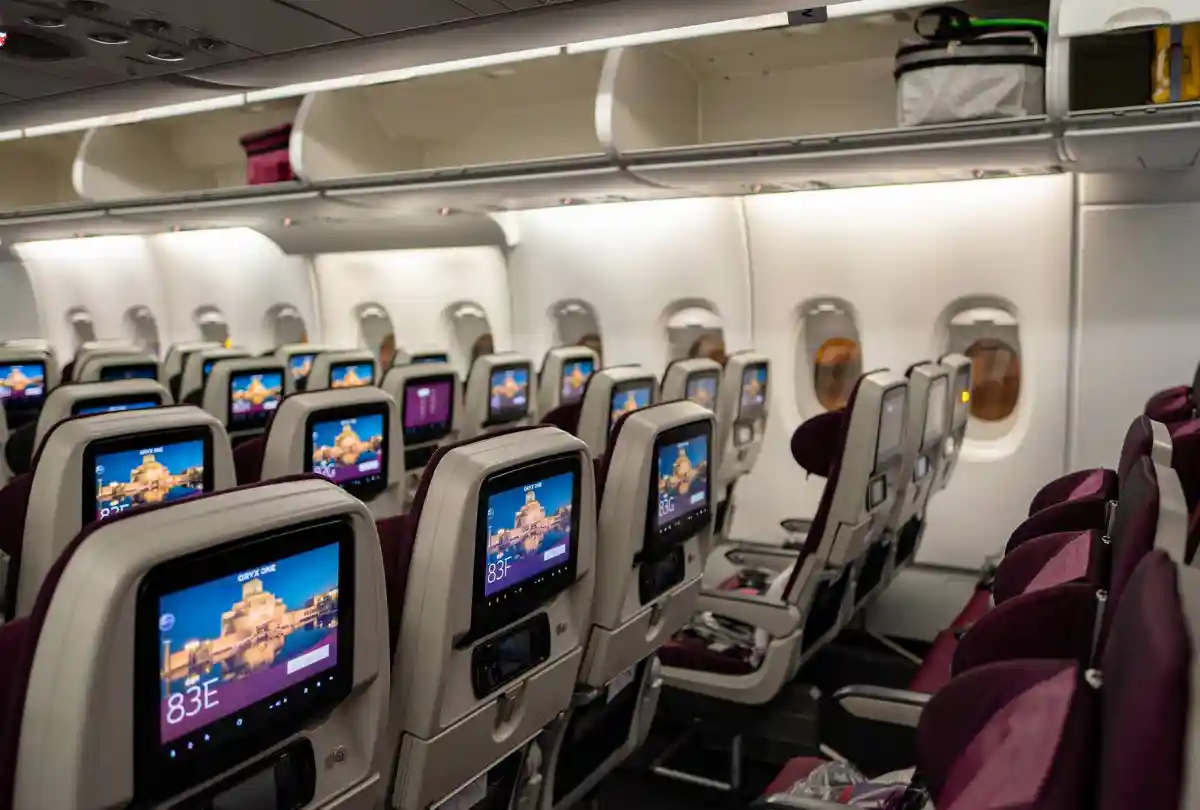
The honest weakness of the A380 today has little to do with the airframe and everything to do with what airlines put inside it. Most superjumbos were delivered between roughly 2007 and the mid-2010s, and retrofitting one of these double-decker giants is fearsomely expensive. A large number of carriers have therefore kept original cabins, with seats that feel less ergonomic by current standards, screens that are smaller and lower in resolution than modern expectations, and limited or poorly positioned charging options. Passengers on a 2026 flight can find themselves strapped into 2012 hardware.
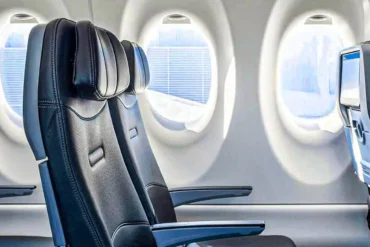
The windows compound the age issue. The interior window panel on the lower deck is generously sized, but the actual cutout is comparable to older Airbus widebodies and visibly smaller than the large windows on the 787 and A350. The A380 entered service about four years before the Dreamliner and more than seven before the A350, and that chronology shows through glass. None of this undermines the ride quality, the quiet, or the sense of space, but it does mean the experience depends heavily on which airline’s aircraft shows up at the gate.
How The Upper Deck Compares To The Main Deck
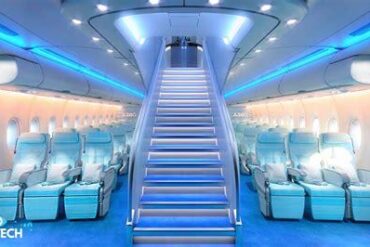
The upper deck is the A380’s signature feature and, in economy, a narrower proposition. Its usable width runs roughly 19 feet, or 5.8 meters, the ceiling sits lower, and the sidewalls curve inward more sharply. Airlines can generally fit only eight economy seats per row there, using seats around 18 inches, or 45.7 centimeters, wide. The surplus space finds a purpose: storage bins along the sidewalls, a genuine advantage for upper-deck passengers, plus wide aisles and an even quieter cabin than the main deck.
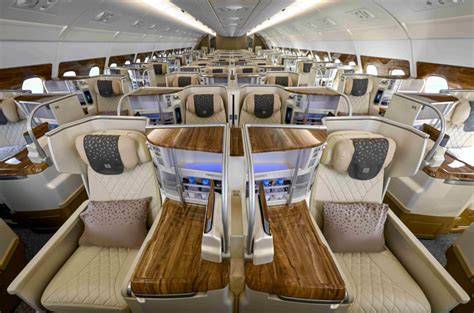
Most carriers reserve the upper deck for premium cabins, and those spaces vary wildly. Singapore Airlines introduced its latest A380 interiors in December 2017, and those remain its newest long-haul cabins currently flying. Emirates kept largely the same premium seat models from 2008 to 2021, refreshing technology and finishes along the way. Qatar Airways and Etihad Airways still operate their original 2010s cabins, which include direct aisle access in business class, no longer cutting edge but still above average. ANA’s three aircraft arrived in 2019 and 2020 and remain modern. Qantas refurbished its fleet with new direct aisle access business seats, Lufthansa is following with the Thompson Vantage XL, and British Airways, Asiana Airlines, and Korean Air still fly original interiors, including Korean Air’s six-abreast business cabin without direct aisle access. British Airways plans new cabins featuring Club Suites with sliding doors, which would mark the first A380 business class suites of that kind.
Who Flies The A380 And Why The Layout Persists
The operator list explains why the main deck experience varies so much. Emirates alone flies 116 A380s, more than all other carriers combined, and its sheer scale has shaped how travelers perceive the whole type. British Airways and Singapore Airlines and Qantas each operate twelve, Etihad flies nine, Qatar and Lufthansa fly eight, Asiana six, Korean Air five, and ANA three. Each airline made its own decisions about density, cabin hierarchy, and retrofit timing, and those decisions define the flight.
The ten-abreast main deck endures because it works commercially. Airlines can match the seat count of a 777 row while delivering wider seats, wider aisles, and a dramatically larger cabin volume. The trade-off is a row that concentrates middle seats and puts the window passenger slightly farther from the aisle. Weigh that against the superior width per traveler, the high ceilings, the near-silent engines, the lower cabin altitude, and the smooth ride through turbulence, and the balance lands firmly in the A380’s favor.
The Verdict On Ten Abreast In The Sky
Ten abreast on the A380 main deck is a different animal from ten abreast on a 777. The fuselage is more than two feet wider, and that width converts directly into shoulder room, elbow clearance, and aisles wide enough to walk without turning sideways. Passengers receive what amounts to premium-width cushions at economy prices, seated beneath one of the tallest ceilings in commercial aviation and beside sidewalls that refuse to close in. The middle seats remain middle seats, the windows remain stubbornly small, and the seats themselves may predate smartphones with better screens than the entertainment system.
That is the true texture of flying economy on the world’s largest airliner. It is a vast, quiet, surprisingly unhurried space, shaped by remarkable engineering and constrained by the financial realities of retrofit budgets. For a passenger who books ten abreast on a 777 expecting discomfort, the A380 main deck delivers something closer to relief. The layout is the same number. The experience is not.