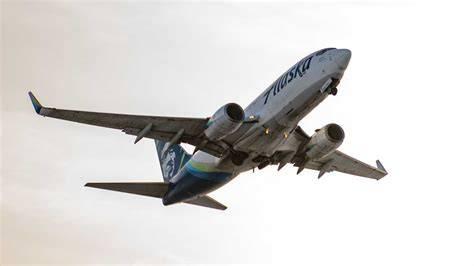
Alaska Airlines is retiring its entire passenger fleet of Boeing 737-700s by the end of 2027, and the replacement plan is a two-tier solution rather than a single aircraft type. The airline splits the work between older Next Generation 737-800s and brand-new 737 MAX 10s, assigning each airframe to the routes where its size actually makes sense. The decision matters beyond fleet accounting because the 737-700 is the aircraft that keeps Southeast Alaska connected: for more than a quarter of a century, the 124-seat jets have flown the famous “Milk Run,” threading through roadless coastal towns between Seattle and Anchorage where no highway exists.
The final handover was unlocked on October 20, when the Federal Aviation Administration certified the 737 MAX 10 after a certification campaign lasting years. Alaska confirmed shortly afterward that all 11 of its remaining 737-700s will leave the fleet by the end of 2027, with retirements beginning early next year and wrapping up by the end of next summer. The jets being parked carry 25 to 26 years of service, and Alaska’s Alaska Market Manager Scott Habberstad was blunt about their fate in comments to the Wrangell Sentinel: “Most will probably go to the graveyard.” Before that happens, maintenance crews will strip every usable component, and the airframes themselves will be dismantled at a boneyard so the aluminum can be recycled rather than wasted.
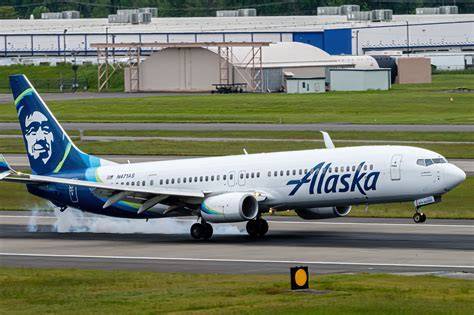
Why the 737-700’s Retirement Is a Southeast Alaska Story
The 737-700’s defining mission is unlike almost any other mainline route in North America. The Milk Run links Seattle to Anchorage through stops such as Ketchikan, Wrangell, Petersburg, and Juneau, communities of a few thousand residents that cannot be reached by road and depend on aviation for nearly every seat and every ton of freight. Those towns are served by short coastal runways with little margin for overshooting, which constrains how large a jet can reliably operate there. The 737-700’s modest length and lighter weight made it the natural platform for that tempo: frequent departures, quick turns, and relatively shallow passenger demand per stop.
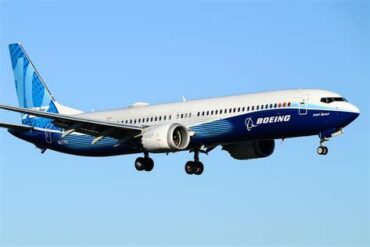
Alaska’s replacement strategy reflects that reality on two levels. The stretched MAX 10 is simply oversized for the corridor. Boeing’s largest 737 variant measures nearly 144 feet (43.8 meters) long and is certified to carry up to 230 people, a capacity that no community of a few thousand residents could regularly fill. Rather than send half-empty jets to Ketchikan or Wrangell, Alaska routes the new deliveries to busier domestic markets and pulls planes from its existing fleet of nearly 60 737-800s to cover Southeast Alaska. The upgauge is deliberate: the 737-800 adds 37 seats and 50% more cargo space per flight, enough to lift more high-value freight, fresh-caught seafood, and medical supplies on every sortie while still matching the operational profile of the communities it serves.
129 Feet of 737-800 Fit Where 144 Feet of MAX 10 Does Not
At 129 feet, 6 inches (39.47 meters) long, the 737-800 is about 20 feet (6 meters) longer than the retiring 737-700 and seats 161 passengers, compared with 124 on the outgoing aircraft. That makes it the right size for the historic air corridor: big enough to absorb growing demand, small enough to fill consistently, and familiar enough to Alaska’s crews and ground teams that it requires no operational reinvention at outstations. The airline’s assessment is that the modest step up from 737-700 to 737-800 delivers higher seat capacity and cargo hold space as demand increases over time, without the financial penalty of flying a two-hundred-seat aircraft into a market that needs one hundred fifty.
The MAX 10 is far better suited to packed mainland flights, where its seat count and longer legs turn into revenue instead of idle capacity. The Milk Run’s rapid, multi-stop rhythm reinforces the logic: after a 15-minute hop, pilots on segments such as Wrangell to Petersburg barely reach cruise altitude before beginning descent. That profile leaves little room for the MAX 10 to harvest its cruise efficiency advantage, which is most valuable on the long transcontinental missions the aircraft will now fly for Alaska.
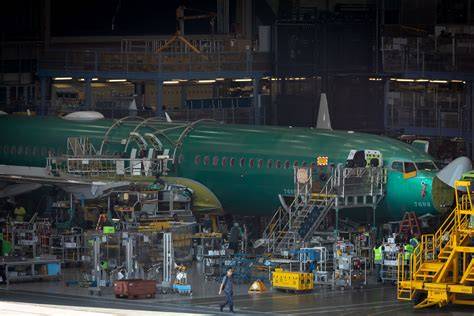
Alaska’s Record 737 MAX 10 Order and the Aircraft It Skipped
In January, Alaska placed the largest order in its history for 105 examples of the 737 MAX 10, along with purchase rights for 35 more and five Boeing 787 widebody jets. That landmark agreement pushed Alaska’s total Boeing orderbook to 245 aircraft, on top of the 94 MAX jets already on the flightline. Critically, when the time came to choose the successor to the 737-700, Alaska opted to move up to larger airframes instead of the smaller 737 MAX 7, which would have offered a nearly like-for-like replacement in seat count. The airline’s calculation was that growth in its network, not preservation of the smallest jet, would drive the next decade of profitability.
Alaska holds 168 firm 737 MAX orders, mostly for the MAX 10, with 27 scheduled to arrive next spring. Those aircraft are the hinge of the whole plan. Each new MAX 10 that enters mainland service frees a 737-800 from the routes it currently flies, and those released 737-800s are precisely the airframes assigned to take over the Milk Run and support the upcoming work on Hawaii’s inter-island network. Without that cascade of substitutions, Alaska would have to choose between keeping remote Alaskan towns connected and keeping its newly acquired Hawaiian routes running.
The Cargo Exception: Three Freighters That Stay
Not every 737-700 leaves passenger service permanently. Three aircraft converted to 737-700BDSF freighters will remain in service on dedicated cargo duty until 2028, providing lift to remote communities across Alaska’s far reaches. Keeping them flying alongside Alaska’s existing freighters prevents any dip in service while the passenger aircraft retire. In July, Alaska also announced that four leased Boeing 737-800BCF aircraft will enter service during the first half of next year across Alaska and Hawaii, expanding its 737 freighter fleet from five jets to nine.
That cargo capacity is tied to a strategic target: $150 million in new annual profit from cargo growth. Deploying nine 737 freighters across Alaska and Hawaii gives the airline more flexibility to move perishable cargo, medical supplies, and commercial freight year-round, and it keeps the freighter economics working even as three 737-700BDSF conversions age out of the plan.
The Hawaii Domino Effect and the Fleet Margin Problem
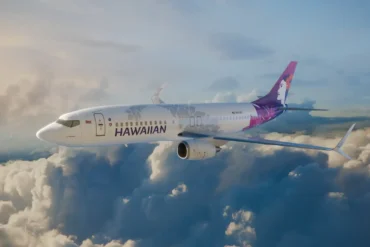
Reassigning 737-800s to Southeast Alaska creates a second fleet squeeze. In July, Alaska announced that Hawaiian Airlines-branded 737-800s will replace the retiring Boeing 717 fleet on Neighbor Island flights starting in 2028, and the airline introduced interim Honolulu to Kahului 737-800 flights last month while preparing for that switch. The result is that Alaska’s existing 737-800 fleet is simultaneously needed to keep remote Alaskan towns connected and to keep Hawaii’s inter-island shuttle running, with essentially zero margin for error if Boeing falls behind.
The choice of a 25-year-old Boeing design to replace Hawaiian’s 25-year-old 717 fleet is more practical than it sounds: the 737-800 delivers per-seat fuel efficiency gains, standardization across the newly merged narrowbody fleets, and cabins that can be refurbished to Alaska’s modern standards. When Hawaiian-branded 737-800s enter Neighbor Island service, each aircraft will feature more than 30 Premium Class seats, reclining leather seats, USB charging, 110V power outlets, twice as many first class seats, and free Starlink WiFi. That cabin is substantially better than what the retiring 717s and 737-700s offer today.
Certification, Fuel Savings, and the MAX 10’s Efficiency Case
The MAX 10’s path to certification was thorough. Nearly 1,000 test flights totaling more than 2,000 flight hours, plus 1,000 ground test hours, were required before the FAA issued amended type certificates. Boeing completed extensive safety and human factors documentation under the 2020 federal certification reform law enacted after the two fatal 737 MAX 8 crashes, and the FAA oversaw an overhaul of the flight control software and an enhanced angle-of-attack system before approval. Compared with previous Next Generation 737 models, the 737 MAX family burns 20% less fuel and emits 20% less carbon, with fuel consumption per seat reduced and airport noise footprints cut by 50% as more air moves smoothly around the engine core.
Those savings matter most on long mainland trips, where fuel accounts for a large share of operating expenses. Alaska’s next-generation cabin plans go further: when the airline launches Aurora Suites and Premium Reserve rooms on select 737 MAX 10 routes in 2028, 25 MAX 10 airframes will eventually be fitted with larger reclining seats and lie-flat suites alongside the planned 787 long-haul fleet.
Cost Pressure on the Ground and the $147 Million Quarter
The financial motivation for retiring the oldest 737-700s is unambiguous. Alaska Air Group posted a third-quarter loss of $147 million on $4.31 billion in revenue, and CEO Ben Minicucci acknowledged the airline is “not satisfied with this quarter’s result or the $1.8 billion fuel headwind this year,” while emphasizing confidence in executing on what it can control, including widening the spread between unit revenue and unit costs excluding fuel. The airline also announced post-quarter workforce reductions affecting approximately 200 employees, an $11 million fourth-quarter severance charge, and $100 million in overhead reduction next year, showing that cost discipline extends well beyond the flightline.
The MAX 10’s fuel burn and the higher seat density of the 737-800 both attack the same margin problem from the aircraft side. Retiring 25-year-old airframes eliminates their maintenance burden, and each new MAX 10 replaces fuel-hungry flying with a 20% efficiency advantage on the routes where that advantage is fully realized.
Boeing’s Renton Delivery Cadence Sets Alaska’s Timeline
Everything converges on Boeing’s factory output. With 27 MAX 10 deliveries scheduled next year and 23 more in 2028, Boeing must balance 1,555 global 737 MAX 10 orders across more than 30 airlines and lessor clients to deliver Alaska’s 50 new aircraft within two years. Any bottleneck inside Boeing’s Washington assembly plants would force Alaska to recalculate its fleet modernization strategy, because the airline cannot release 737-800s for Southeast Alaska until the MAX 10s relieve pressure on its mainland network.
Two operational milestones over the next 12 months determine whether Alaska retires its oldest mainline jets without cutting Milk Run departures: Boeing must deliver all 27 scheduled MAX 10s next year, and Alaska must bring its four leased 737-800BCF freighters online before the last passenger 737-700 departs late next summer. If either slips, the airline has limited slack to absorb the delay, since the same 737-800s are already committed to Hawaii’s Neighbor Island transition in 2028.
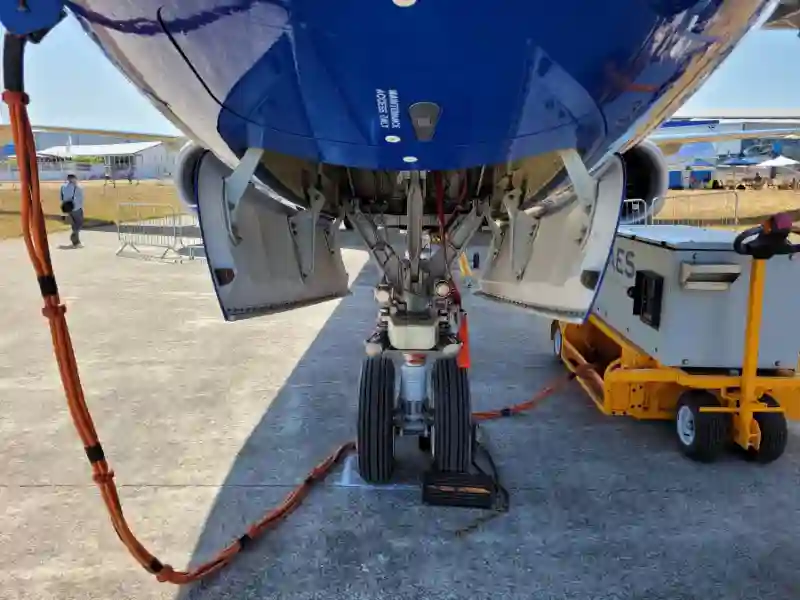
What the Milk Run Looks Like After the 737-700
For travelers and shippers in Ketchikan, Wrangell, Petersburg, Juneau, and Anchorage, the practical change is measurable: more seats on every departure and a hold that can absorb more freight on each leg, delivered by an aircraft whose operational characteristics have been proven on the corridor for years. The 737-800’s familiarity means fewer surprises in the air and on the ramp, and its 161-seat cabin is a reasonable middle ground between the 124-seat 737-700 and the far larger MAX 10.
For Alaska Air Group, the transition accomplishes two retirements at once, modernizes the combined Alaska-Hawaiian narrowbody fleet, and converts a cost problem into a capacity opportunity. The plan is only as reliable as Boeing’s delivery discipline, which is why the next twelve months at Renton matter as much as anything that happens in Southeast Alaska’s skies.