The Boeing 757 occupies a rare place in commercial aviation history. It was not simply another narrowbody jet entering airline fleets during the deregulation era of the 1980s. It became an aircraft that airlines molded entire route strategies around. Decades after its first flight, carriers still rely on it for missions that many newer aircraft struggle to perform with the same flexibility. The aircraft combined exceptional runway performance, long-range capability, strong payload economics, and unusually high passenger capacity for a single-aisle jet. That combination created a category almost entirely its own.
Even though production ended in 2004, the aircraft remains deeply relevant because airlines still need what the 757 provided. Many carriers have spent years trying to identify a true successor, but replacing the 757 has proven far more difficult than replacing older aircraft like the Boeing 727 or McDonnell Douglas MD-80. Modern aviation economics prioritize fuel efficiency and lower operating costs, while the 757 was designed during a period when raw performance and versatility mattered just as much.
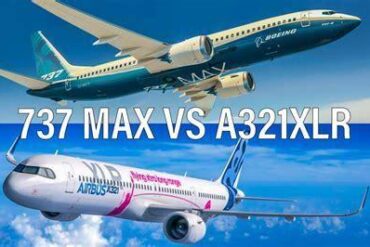
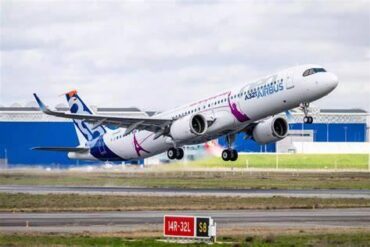
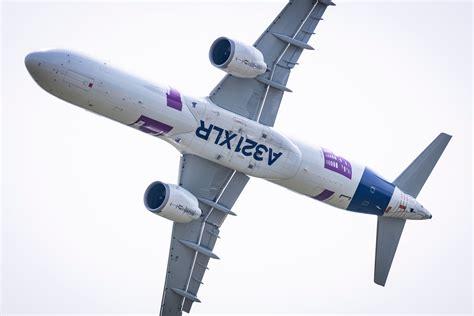
For years, no single aircraft could replicate everything the 757 delivered. Instead, manufacturers gradually developed specialized narrowbody jets capable of replacing different parts of the 757’s mission profile. Today, the market finally has aircraft capable of assuming most of those roles, led primarily by the Airbus A321neo family, especially the A321XLR, alongside Boeing’s delayed but highly anticipated 737 MAX 10.
The replacement for the Boeing 757 has not emerged as one airplane. Instead, the industry has fragmented the 757’s responsibilities among several highly optimized aircraft.
After two decades of searching, airlines are finally building fleets that can retire the iconic jet for good.

Why The Boeing 757 Became One Of Aviation’s Most Unique Aircraft
When Boeing introduced the 757 in the early 1980s, the company intended it primarily as a replacement for the aging Boeing 727. Airlines wanted a more efficient aircraft capable of carrying additional passengers while maintaining strong takeoff performance at airports with short runways or operational restrictions.
Boeing delivered exactly that.
The 757 featured enormous wings for a narrowbody aircraft, powerful Rolls-Royce RB211 or Pratt & Whitney PW2000 engines, and impressive structural capability. The result was an airplane capable of taking off from challenging airports while carrying nearly 200 passengers over transcontinental or even transatlantic distances.
That versatility turned the 757 into an operational workhorse.
Major US airlines used it on dense domestic routes connecting hubs like Atlanta, Chicago, Dallas, and New York. At the same time, airlines such as United Airlines, Icelandair, and Aer Lingus deployed the aircraft across the Atlantic Ocean on routes previously uneconomical for larger widebody jets.
The aircraft effectively created the modern long-haul narrowbody market decades before airlines fully understood its future importance.
The standard 757-200 became the backbone of the family, with more than 900 passenger units delivered. Airlines appreciated its combination of range and seating capacity, while pilots admired its extraordinary power. Many aviators still describe the 757 as one of the best-performing commercial jets ever built.
The stretched 757-300 arrived later and delivered incredibly low per-seat operating costs. Although sales remained limited, the aircraft demonstrated how efficient a large narrowbody could become on dense leisure and domestic routes.
Yet despite its strengths, the 757 disappeared from Boeing’s production line because the aviation industry evolved around it.
Fuel prices rose sharply during the 2000s. Airlines prioritized efficiency above all else. Twin-engine technology improved rapidly. Modern composite materials and advanced aerodynamics changed aircraft design philosophies completely.
The 757 suddenly became too specialized, too heavy, and too expensive for many routes where airlines could now operate lighter aircraft with lower trip costs.
The Airbus A321XLR Is The Closest True Boeing 757 Replacement
Among all modern aircraft, the Airbus A321XLR comes closest to fully replacing the Boeing 757.
The aircraft represents the culmination of Airbus’ long-term strategy to dominate the upper narrowbody market. Rather than building an entirely new aircraft, Airbus continuously refined and stretched the successful A320 platform until it entered territory once controlled almost exclusively by the 757.
The A321XLR changes the economics of long-range narrowbody operations dramatically.
With a range of approximately 4,700 nautical miles, the aircraft can fly farther than many Boeing 757 variants while consuming substantially less fuel. Airlines can now operate thinner international routes profitably without needing larger twin-aisle aircraft like the Boeing 787 or Airbus A330.
This capability matters enormously in today’s airline industry.
Instead of funneling passengers through massive international hubs, airlines increasingly favor direct point-to-point routes between smaller cities. The A321XLR enables precisely that strategy.
American Airlines and United Airlines both selected the aircraft specifically to replace aging 757 fleets operating long-haul services. Icelandair, one of the world’s most famous 757 operators, also embraced the type because it perfectly suits the airline’s North Atlantic network structure.
The aircraft includes several critical engineering improvements that extend its capabilities beyond earlier A321 variants:
- Structural strengthening for higher maximum takeoff weight
- Redesigned flaps for improved aerodynamic efficiency
- Integrated rear center fuel tank
- Advanced Pratt & Whitney or CFM engines
- Reduced fuel consumption per seat
Unlike older auxiliary fuel tank systems, the integrated fuel tank design preserves valuable cargo space while extending operational range significantly.
That efficiency gives airlines remarkable flexibility.
Routes once considered impossible or financially risky for narrowbody aircraft are suddenly viable. Flights connecting secondary North American cities to Europe can now operate with lower operating costs and improved profitability.
Why Airlines Are Rapidly Retiring Boeing 757 Fleets
The Boeing 757 remains capable, but economics increasingly favor newer aircraft.
Many existing 757s are now more than 25 years old. Aging fleets create rising maintenance costs, reduced parts availability, and operational complexity. Airlines must also contend with higher fuel burn compared to new-generation narrowbody aircraft.
Modern engines alone provide enormous savings.
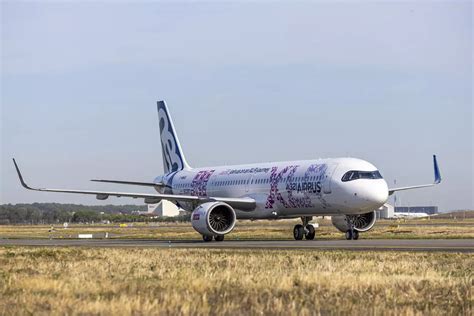
The A321neo family uses advanced powerplants that dramatically reduce fuel consumption while lowering noise emissions and maintenance requirements. For airlines operating hundreds of daily flights, these savings quickly become impossible to ignore.
The economics become even more compelling because of fleet commonality.
Airlines already operating Airbus A320 family aircraft can integrate A321neos and A321XLRs with minimal disruption. Pilots require limited additional training, maintenance infrastructure already exists, and spare parts networks remain standardized.
The 757 cannot compete with those efficiencies.
This reality explains why carriers across Europe retired their 757 fleets years ago. Airlines such as British Airways and Iberia found that standard Airbus A321 variants already handled most short and medium-haul missions more efficiently than the older Boeing jet.
Even in North America, where the 757 maintained stronger relevance longer than anywhere else, retirement momentum accelerated rapidly during the 2020s.
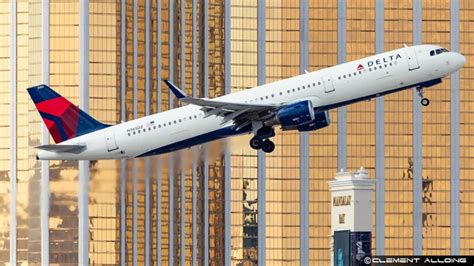
Delta Air Lines, still the world’s largest 757 operator, increasingly uses Airbus A321neos on routes historically dominated by the aircraft. American Airlines has largely completed its transition away from the type, while United Airlines continues balancing 757 operations against incoming A321XLR deliveries.
The transition reflects broader industry priorities.
Today’s airlines prioritize:
- Lower operating costs
- Better fuel efficiency
- Reduced emissions
- Fleet standardization
- Higher reliability
- Simplified maintenance operations
The Boeing 757 still excels operationally, but modern airlines increasingly value efficiency over brute capability.
The Airbus A321neo Quietly Became The 757’s Domestic Successor
While the A321XLR receives enormous attention for replacing transatlantic 757 routes, the standard Airbus A321neo has arguably become the true everyday successor to the aircraft.
Most Boeing 757s never crossed oceans regularly.
Instead, airlines used them primarily on high-demand domestic and regional routes. The aircraft thrived on transcontinental US flights, Hawaii services, and busy short-haul operations throughout Europe and North America.
For these missions, the A321neo fits almost perfectly.
The aircraft offers comparable passenger capacity while delivering dramatically improved fuel efficiency. Modern cabin layouts allow airlines to maximize seating density without sacrificing passenger comfort.
In some configurations, the A321neo can even exceed the passenger capacity of certain 757 layouts.
| Aircraft | Typical Maximum Passenger Capacity |
|---|---|
| Boeing 757-200 | 239 |
| Airbus A321neo | 244 |
| Boeing 737 MAX 10 | Approximately 230 |
This capacity advantage matters because airlines increasingly rely on maximizing seat economics rather than raw aircraft performance.
The A321neo also achieves operating efficiencies unimaginable during the 757 era. Airlines can operate the aircraft profitably on routes where the 757 would generate significantly higher costs.
That explains why carriers such as Condor retired 757-300 fleets in favor of the A321neo. The economics simply became too compelling to ignore.
Can The Boeing 737 MAX 10 Truly Replace The 757?
Boeing’s answer to the 757 replacement challenge arrives in the form of the 737 MAX 10.
The aircraft represents Boeing’s attempt to compete directly with the Airbus A321neo family after Airbus gained overwhelming dominance in the upper narrowbody segment.
For years, Boeing struggled to offer a true alternative.
The older 737-900ER lacked the 757’s capacity and range while also falling behind the A321 in per-seat economics. Although United Airlines used the aircraft as a partial replacement, it never fully replicated the 757’s operational flexibility.
The MAX 10 changes that equation considerably.
The aircraft stretches the 737 platform to its practical limits, enabling passenger capacity approaching that of the 757-200. Boeing claims the aircraft will achieve industry-leading per-seat economics, especially on shorter routes where fast turnarounds and efficient operations matter most.
Major US carriers clearly believe the aircraft still has significant value.
American Airlines, Delta Air Lines, and United Airlines collectively ordered hundreds of MAX 10 aircraft. These carriers understand the aircraft’s role perfectly: replacing domestic 757 missions where long-range capability matters less than seat economics and operational efficiency.
For example, Delta frequently deploys 757s on dense routes such as Atlanta to Orlando or other major domestic corridors. The MAX 10 fits these operations naturally because it combines high seating capacity with substantially lower operating costs.
However, limitations remain.
The 737 platform itself dates back to the 1960s, and despite extensive modernization, it lacks some of the structural advantages of the newer Airbus A321neo platform. The MAX 10 also cannot match the A321XLR’s long-range capability.
As a result, Boeing’s strategy focuses more heavily on domestic and medium-haul markets rather than long-range narrowbody dominance.
Why No Aircraft Fully Matches The Boeing 757’s Performance
Despite modern technological advances, one area remains difficult to replace completely: the Boeing 757’s extraordinary field performance.
The aircraft possessed remarkable takeoff capability thanks to its high-thrust engines and oversized wing design. Pilots could operate the jet from airports and runways where similarly sized aircraft struggled.
That capability became especially valuable at:
- Hot-and-high airports
- Short runway airports
- Noise-restricted urban airports
- Challenging transcontinental departure locations
Even modern aircraft like the A321XLR cannot fully duplicate those characteristics.
But aviation economics no longer justify designing a specialized aircraft around those relatively rare requirements.
Instead, airlines adapt using smaller aircraft such as the Airbus A319, Boeing 737-700, or future variants like the 737 MAX 7 and A319neo. These aircraft can handle many short-field missions adequately without requiring an entirely unique aircraft category.
The industry essentially accepted a compromise.
Modern aircraft prioritize efficiency and profitability over extreme versatility.
That tradeoff explains why the Boeing 757 still maintains such a legendary reputation among aviation enthusiasts and airline crews alike. It represented an era when aircraft designers built machines capable of handling almost any mission airlines demanded.
The Boeing 757’s Legacy Is Still Shaping Modern Aviation
The Boeing 757 may no longer be in production, but its influence remains visible across the aviation industry.
The aircraft proved airlines could successfully operate long-range narrowbody flights decades before the market fully embraced the concept. It demonstrated the value of flexible route planning, efficient transatlantic operations, and high-capacity single-aisle aircraft.
Modern aircraft like the Airbus A321XLR exist largely because the 757 showed airlines what was possible.
Today, the replacement process is finally reaching maturity. The Airbus A321neo family dominates the market for airlines seeking efficient high-capacity narrowbody aircraft, while Boeing hopes the 737 MAX 10 can recover lost ground in domestic and medium-haul operations.
Yet the replacement remains fragmented because the 757 itself was uniquely versatile.
No single aircraft fully duplicates its combination of range, runway performance, passenger capacity, and operational flexibility. Instead, airlines now use multiple aircraft types to cover missions once handled effortlessly by one jet.
That reality says everything about how exceptional the Boeing 757 truly was.
More than twenty years after production ended, airlines are still designing fleets around the benchmark it established.