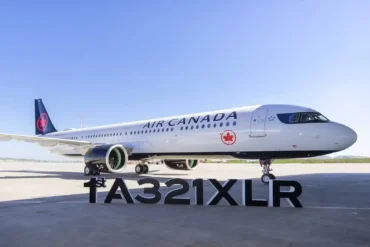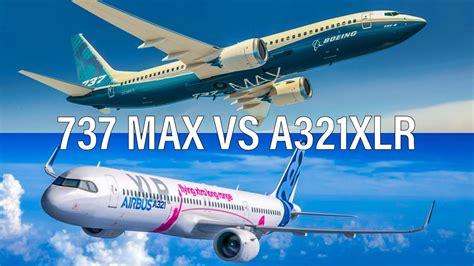
In the ever-evolving realm of single-aisle aircraft, range has emerged as a defining attribute, reshaping airline strategies and redrawing the global aviation map. The rivalry between the Airbus A321XLR and Boeing 737 MAX is more than a competition of specs—it’s a decisive battle over the future of medium- and long-haul travel. With airlines aggressively seeking new transcontinental opportunities while minimizing costs, the A321XLR’s superior range is not just a marketing victory, but a transformational leap that is already shifting the landscape of commercial aviation.
The Defining Distance: Quantifying the A321XLR’s Range Advantage
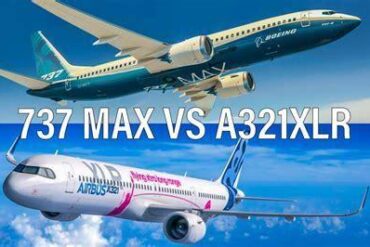
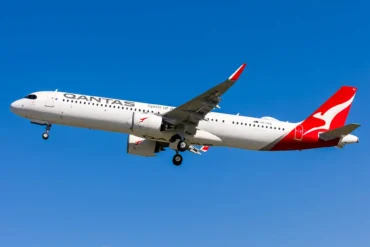
The Airbus A321XLR boasts an advertised range of 4,700 nautical miles (nm), a remarkable achievement for a narrowbody aircraft. In contrast, the Boeing 737 MAX-10—the largest variant in the MAX lineup—manages just 3,100 nm. This difference of 1,600 nm marks a turning point: more than a 50% leap in range that places the A321XLR squarely into the long-haul territory.
Even when considering the 737 MAX-7, the MAX family’s longest-range version, the 3,800 nm capability still falls nearly 1,000 nm short of the A321XLR’s reach. The significance of this extends beyond numbers—it defines which routes are accessible, what payloads can be carried, and how airlines can structure their international operations.
The Impact of Extended Range on Real-World Missions
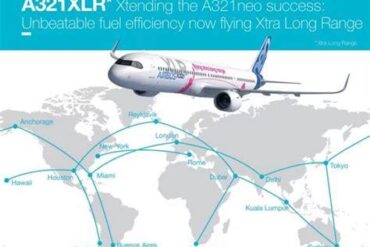
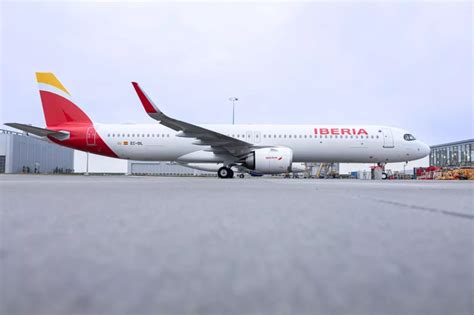
This extended range unlocks new city pairs previously unreachable by narrowbodies, enabling cost-effective flights on routes historically dominated by widebodies. The A321XLR can fly New York to Rome, London to Vancouver, Delhi to London, and Sydney to Kuala Lumpur—missions far beyond the MAX-10’s limitations. These are not niche theoretical routes, but real examples being explored or operated by airlines like American Airlines, Wizz Air, and Iberia.
The shift is profound: rather than using widebodies that may fly half-empty on certain sectors, airlines can now profitably operate “long-thin” routes—long-haul destinations with moderate demand. This enables hub-bypass strategies, supporting more point-to-point connectivity in a world increasingly favoring direct travel.
Engineering Behind The Numbers: What Makes The A321XLR Fly Farther
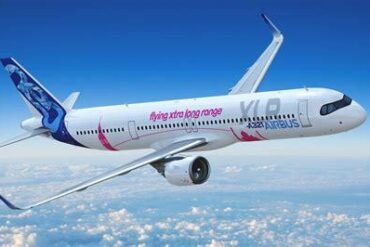
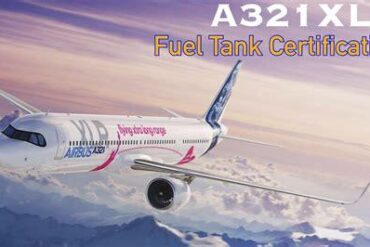
The A321XLR’s impressive performance isn’t a coincidence. Airbus engineered this aircraft for extended missions, leveraging a Maximum Takeoff Weight (MTOW) of 101 tonnes, a permanently installed Rear Center Tank (RCT) for additional fuel, and aerodynamic enhancements refined from earlier A321neo variants. These allow the jet to carry more fuel without compromising cabin space or performance.
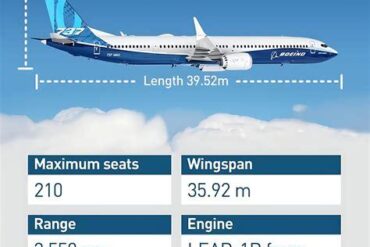
Boeing’s MAX-10, while efficient, is tailored to short and medium-haul markets. With a published range of 3,100 nm, an MTOW of ~92 tonnes, and seating for up to 230 passengers, it focuses on capacity optimization rather than long-range operations.
Aircraft Capabilities: Numbers That Tell The Story
| Aircraft | Typical 2-Class Seats | Max Seats | Advertised Range (nm) | MTOW | Engines |
|---|---|---|---|---|---|
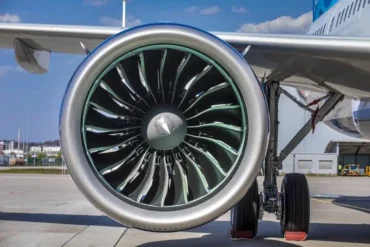
| Airbus A321XLR | 206–220 | 244 | 4,700 | ~101 t | CFM LEAP-1A or PW1100G-JM |
| Boeing 737 MAX-10 | 188–204 | 230 | 3,100 | ~92 t | CFM LEAP-1B |
| Boeing 737 MAX-7 | 138–153 | 172 | 3,800 | ~80.3 t | CFM LEAP-1B |
The comparison shows a clear divergence: the A321XLR is built to approach widebody mission profiles, while the MAX-10 is optimized for high-density, short-to-medium haul flights.
The Real World vs Theoretical Numbers
While aircraft manufacturers often present optimistic range figures, real-world operational variables—such as payload, wind patterns, air traffic routing, and reserve fuel requirements—typically lower these estimates. For the A321XLR, analysts expect most long-haul missions to operate within the 4,000–4,500 nm range, still well beyond the MAX-10’s 2,500–3,000 nm operational ceiling.
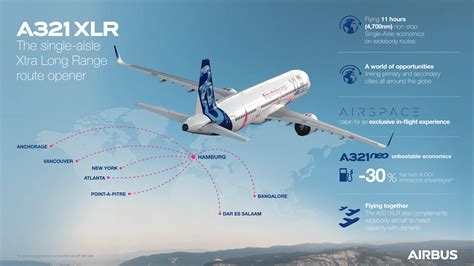
This reality translates into operational flexibility. Airlines can confidently schedule 7–10 hour flights with the A321XLR while retaining full passenger and cargo loads. The MAX-10, by contrast, performs best on 3–6 hour segments, such as transcontinental U.S. routes, intra-Asia missions, or high-frequency intra-European networks.
Certification & Timing: The Crucial Market Window
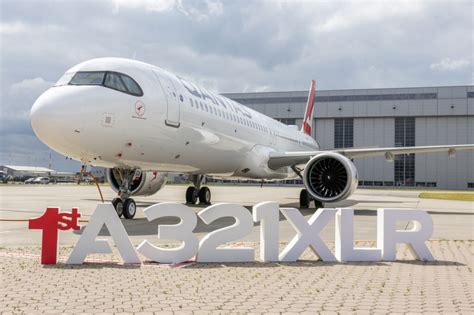
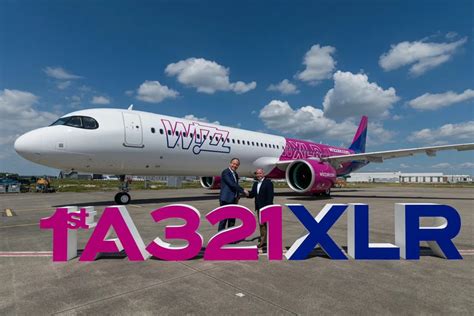
Airbus’s strategic foresight in certifying the A321XLR ahead of Boeing’s MAX-10 has given it a critical market advantage. The XLR is already approved by EASA, with initial deliveries being made to Aer Lingus, Iberia, and Wizz Air. In contrast, the MAX-10 continues to await FAA certification, facing delays into 2026 due to engine anti-ice system redesigns and other compliance requirements.
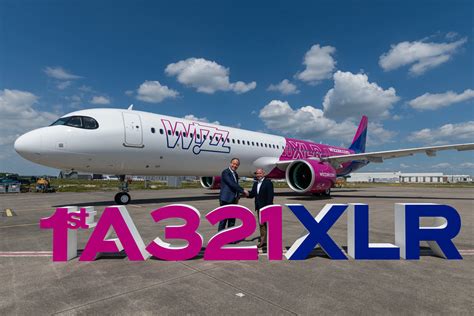
This delay has granted Airbus a multi-year head start, allowing airlines to integrate the XLR into their networks, test operational models, and stake their claims on profitable new routes. Boeing, despite the MAX-10’s efficiency, will have to fight an uphill battle when it finally enters service.
New Horizons in Route Planning: What Airlines Can Now Do
The operational potential of the A321XLR is staggering. From Australian east coast cities like Sydney and Melbourne, airlines can now reach Tokyo, Seoul, Singapore, Jakarta, and even Mauritius with a single-aisle aircraft. This kind of range allows for a paradigm shift in regional and transoceanic service planning.
From Europe and North America, city pairs such as Boston–Dublin, Madrid–Washington, and London–Toronto can now be flown profitably without widebodies. The flexibility this provides is not simply about adding destinations—it’s about restructuring fleets around lower operating costs, greater scheduling agility, and higher frequency on key routes.
Fleet Simplification & Operational Synergy
Another major benefit for Airbus operators is the cockpit commonality across the A320neo family. Pilots type-rated on the A320 can transition to the A321XLR with minimal training, reducing crew costs and increasing scheduling flexibility. Ground operations and maintenance also benefit from standardized processes, lowering total cost of ownership for airlines integrating the XLR into existing Airbus fleets.

This approach contrasts with Boeing’s strategy, which, while unified under the MAX family, lacks a narrowbody variant capable of matching the XLR’s range, effectively segmenting fleet utility and forcing operators to rely on widebodies for long-haul narrow demand.
A Strategic Disruption: How Airbus Redefined The Long-Haul Equation
The A321XLR’s disruptive range capability is more than a technical advantage—it fundamentally redefines how airlines approach global route networks. With 1,600 nm more reach than the MAX-10, Airbus has not only widened the performance gap but introduced a new category: ultra-long-range narrowbodies.
This capability has spurred renewed industry discussion around Boeing’s potential need for a clean-sheet “middle of the market” aircraft, a product Boeing once teased with the now-defunct NMA (New Midsize Airplane) concept. Until such an aircraft materializes, Airbus’s A321XLR enjoys an unchallenged position, capturing orders from full-service carriers and low-cost operators alike.
Market Realities: Efficiency, Profitability, and Sustainability
In today’s aviation market, efficiency is more than a buzzword—it is currency. The A321XLR’s ability to burn up to 30% less fuel per seat than older-generation widebodies makes it an ideal choice for environmentally conscious operations, especially on long-thin routes that can’t support a 787 or A350.
As governments and regulators increasingly push for emission reductions, aircraft like the XLR help bridge the gap between profitability and sustainability. For carriers committed to ESG goals, the A321XLR presents a compelling solution without sacrificing reach or performance.
Final Analysis: A New Narrowbody Era Has Arrived
The gap between the Airbus A321XLR and Boeing 737 MAX-10 is not simply about distance. It reflects philosophical differences in design, market positioning, and strategic vision. Airbus has boldly moved the needle, turning what was once a regional aircraft into a transcontinental workhorse. Boeing’s MAX-10, though efficient and spacious, remains grounded—both figuratively and literally—by its more limited capabilities and delayed certification.
The arrival of the A321XLR signals a new era in air travel, where the range of a widebody meets the economics of a narrowbody, and where routes once deemed unprofitable become not only viable, but lucrative. Whether flying over oceans, crossing continents, or connecting underserved cities, the A321XLR doesn’t just go the distance—it changes the game.