United Airlines is quietly rewriting the rules of long-haul narrowbody flying, pushing the Boeing 737 MAX 8 far beyond what most travelers expect from a single-aisle aircraft. Once confined to short and medium-haul routes, the MAX is now stretching its legs across transcontinental and transatlantic journeys approaching eight hours, delivering a hybrid experience that blurs the line between narrowbody efficiency and widebody ambition.
The scale of this shift is striking. Within the United States market alone, United commands a staggering 82% share of long-haul Boeing 737 MAX operations, effectively dominating a niche that few competitors have seriously pursued. Even when global carriers are factored in, United still holds a powerful position, second only to Copa Airlines—a strategic partner that has long embraced the MAX for extended routes across the Americas.
What makes this transformation compelling is not just the aircraft, but the strategy behind it. United is using the 737 MAX as a precision tool, deploying it on routes where demand is strong but not quite enough to justify larger widebody jets. The result is a network that feels both surgical and expansive, connecting cities in ways that were previously impractical.
Pushing the Limits: 8 Hours on a Single-Aisle Aircraft
At the heart of this evolution lies a simple question: how far can a narrowbody aircraft realistically go without compromising passenger comfort? United’s answer is bold—up to eight hours, with routes like Santiago de Compostela to Newark clocking in at exactly that duration.
This isn’t an isolated experiment. Several other routes hover just below that threshold, including Newark to Anchorage (7h 48m) and Funchal to Newark (7h 45m). These are not fringe operations; they are becoming a core part of United’s seasonal and strategic network, especially during peak travel periods.
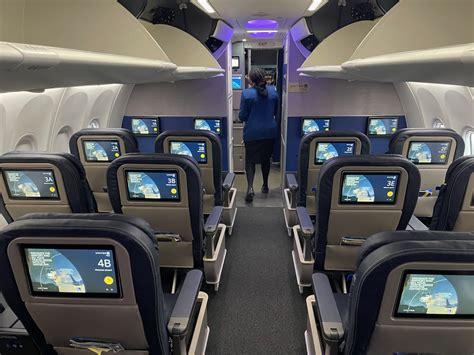
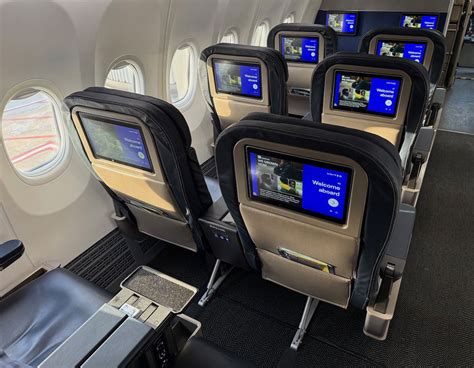
The experience onboard reflects a careful balancing act. While the 737 MAX cabin is narrower than widebody aircraft, United mitigates this with modern interiors, quieter engines, and improved fuel efficiency that enables these longer journeys. For passengers, the trade-off often comes down to direct routing versus aircraft size—and increasingly, nonstop convenience is winning.
A Network Built on Opportunity, Not Tradition
United’s longest MAX routes reveal a fascinating pattern: they are not just about distance, but about untapped market potential. Take San Juan to Denver, a domestic route spanning nearly seven hours, or Houston to Anchorage, which stretches deep into Alaska’s seasonal demand.
These routes highlight a deliberate strategy. Instead of relying solely on traditional hubs and high-volume corridors, United is identifying underserved city pairs where a narrowbody aircraft can operate profitably. This includes:
- Secondary European destinations like Funchal and Glasgow
- Leisure-heavy markets such as Punta Cana and Costa Rica
- Remote domestic links connecting Alaska with major US hubs
Each route is a calculated move, designed to maximize aircraft utilization while minimizing risk. The 737 MAX, with its lower operating costs compared to widebodies, becomes the ideal platform for this approach.
Santiago de Compostela: A Breakthrough Transatlantic Route
Perhaps the most symbolic example of this strategy is United’s upcoming Newark to Santiago de Compostela service, launching in May 2026. This route is more than just another addition—it represents the first-ever nonstop connection between the United States and Northwest Spain.

Historically, Santiago’s connectivity has been limited, with its longest routes barely exceeding three hours. Yet behind the scenes, there is a steady stream of indirect demand. Around 53,000 passengers annually have been traveling between this region and North America via connecting flights.
United’s entry changes the equation entirely. By deploying a 166-seat Boeing 737 MAX 8, the airline is taking a measured, low-risk approach, offering roughly 17,000 seats in its first season. This controlled capacity allows United to stimulate demand without oversaturating the market, a tactic that aligns perfectly with the economics of narrowbody long-haul operations.
The implications are significant. If successful, this route could pave the way for similar connections to secondary European cities, fundamentally reshaping transatlantic travel patterns.
Anchorage Routes: Where Distance Meets Demand
Alaska plays a surprisingly central role in United’s long-haul MAX network. Routes like Washington Dulles to Anchorage (7h 42m) and Chicago O’Hare to Anchorage (6h 46m) demonstrate how the aircraft is being used to bridge vast domestic distances.
These flights are not just long—they are strategically vital. Anchorage serves as both a destination and a gateway, particularly during peak summer travel. Data from the US Department of Transportation shows that United achieved a load factor of up to 76.7% on the Dulles-Anchorage route, a strong performance for such a lengthy narrowbody flight.

Interestingly, more than half of passengers on this route are local travelers flying directly between the two cities. This high proportion of point-to-point demand is crucial, as it supports stronger yields and more stable profitability.
United’s decision to expand the operating window for these flights in 2026 suggests growing confidence. It’s a clear signal that long-haul domestic routes on narrowbody aircraft are not just viable—they’re thriving.
Passenger Experience: Comfort vs Convenience
Spending eight hours on a single-aisle aircraft inevitably raises questions about comfort. Yet for many travelers, the equation is shifting. The appeal of a nonstop flight often outweighs the benefits of a larger cabin, especially when the alternative involves connections, delays, and extended travel times.
The Boeing 737 MAX offers several advantages that make these journeys more tolerable:
- Improved cabin pressurization and humidity compared to older narrowbodies
- Quieter engines, reducing fatigue over long durations
- Modern seating and in-flight entertainment options on United’s fleet
Still, the experience is undeniably different from a widebody flight. Space is more limited, and the sense of openness is reduced. But for a growing segment of passengers, the trade-off is clear: arrive faster, with fewer complications.
The Future of Narrowbody Long-Haul Flying
United Airlines’ aggressive use of the 737 MAX for extended routes signals a broader shift in the aviation industry. As airlines continue to seek efficiency and flexibility, narrowbody aircraft are increasingly stepping into roles once reserved for widebodies.
What sets United apart is the scale and ambition of its approach. By combining data-driven route planning, strategic partnerships, and a willingness to experiment, the airline is turning the 737 MAX into a cornerstone of its network.
The result is a travel landscape where eight-hour flights on single-aisle aircraft are no longer an exception—they are becoming the norm. And as passengers grow more accustomed to this model, the definition of long-haul flying itself may continue to evolve in unexpected ways.