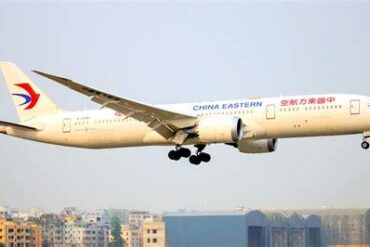
The aviation industry thrives on pushing boundaries, but few milestones feel as audacious as a 29-hour one-stop commercial flight. This is not merely a long journey—it is a logistical, technological, and human endurance benchmark that redefines what modern air travel can achieve. Operated by China Eastern Airlines, this record-setting route links Asia to South America in a way that was once considered commercially impractical.
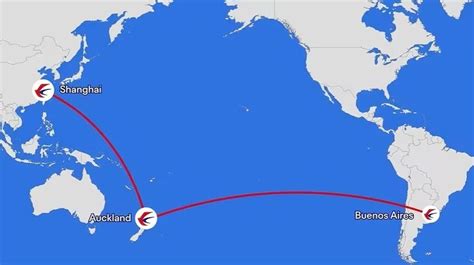
Stretching across 10,627 nautical miles (19,861 km), the journey begins in Shanghai, pauses in Auckland, and finishes in Buenos Aires. The sheer scale of this operation places it firmly at the top of the global aviation hierarchy, surpassing previous long-haul benchmarks and opening new corridors between continents that historically lacked direct connectivity.
For travelers, this is more than just a flight. It is a continuous intercontinental experience, blending time zones, cultures, and climates into a single itinerary. For airlines, it represents a strategic gamble—one that hinges on demand, efficiency, and the evolving economics of ultra-long-haul travel.
A Route That Rewrites the Map of Global Aviation
The journey originates at Shanghai Pudong International Airport, one of Asia’s busiest aviation hubs. From there, passengers embark on an 11.5-hour flight to Auckland Airport, New Zealand’s primary international gateway. After a brief stop, the aircraft continues across the vast Pacific to Buenos Aires Ministro Pistarini International Airport.
Unlike traditional long-haul routes that rely on multiple transfers, this itinerary compresses the journey into a single flight number, creating a seamless experience despite the stopover. The result is a travel time of approximately 29 hours door-to-door, including ground time in Auckland.
This route is made possible by fifth freedom rights, a critical regulatory mechanism that allows airlines to carry passengers between two foreign countries as part of a longer journey. In practical terms, it means travelers can board in Auckland and fly directly to Buenos Aires—an option that dramatically reshapes travel patterns between Oceania and South America.
Breaking Records: Surpassing the Previous Longest One-Stop Flight
Before this route emerged, the title of the world’s longest one-stop flight belonged to Aircalin, which operates a service connecting Nouméa to Paris via Bangkok. While impressive, that journey now falls short—by roughly 12% in total distance.
The significance of this new record lies not just in distance, but in strategic geography. By linking East Asia directly with South America, the route bypasses traditional transit hubs in Europe, the Middle East, and North America. This shift reflects a broader trend in aviation: the decentralization of global connectivity.
Passengers who once had to endure multiple layovers can now traverse half the globe with just one stop. The efficiency gains are subtle but meaningful—less time navigating airports, fewer missed connections, and a more streamlined travel experience.
Inside the Aircraft: Comfort Across 29 Hours
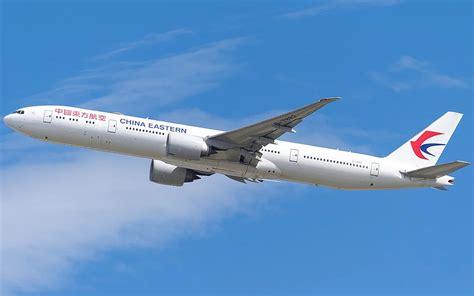
Operating such a demanding route requires an aircraft capable of balancing range, efficiency, and passenger comfort. The backbone of this operation is the Boeing 777-300ER, a proven long-haul workhorse known for its reliability and cabin versatility.
Inside, the aircraft is configured into three classes, each designed to accommodate different travel expectations over an extended duration:
- First Class features just six seats, each transforming into a fully flat 180-degree bed. With a seat width of up to 26.5 inches, this cabin offers a private, almost hotel-like environment in the sky.
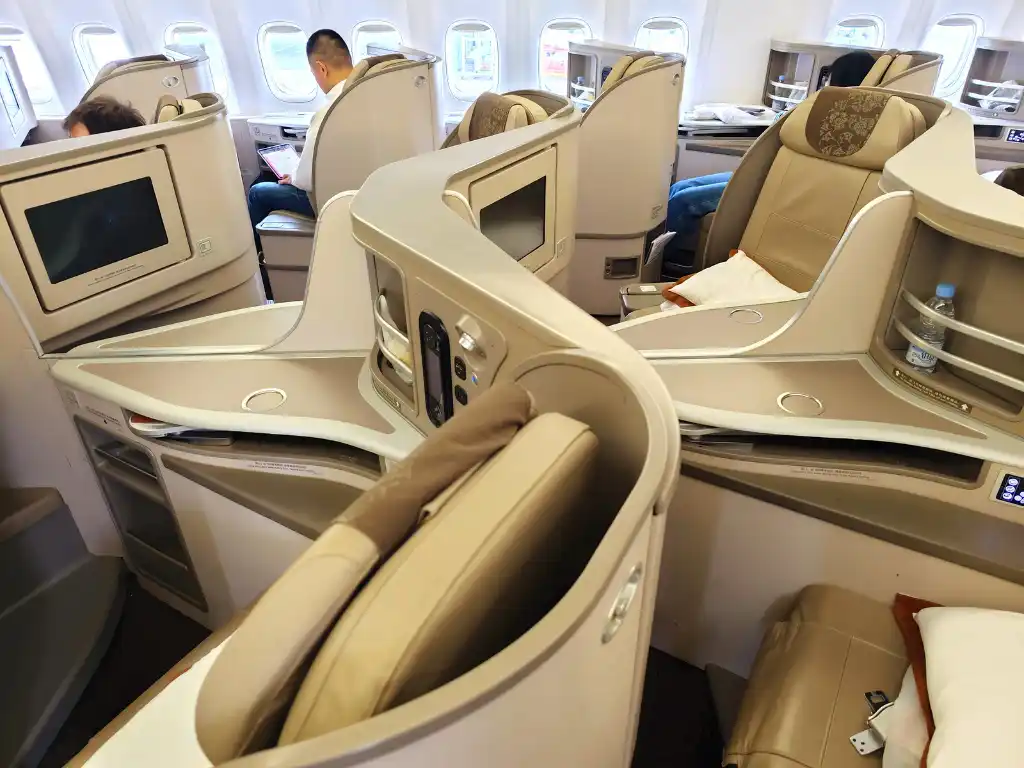
- Business Class includes 52 seats arranged in a 1-2-1 layout, ensuring direct aisle access for every passenger. The seats convert into fully flat beds, making sleep not just possible, but essential.
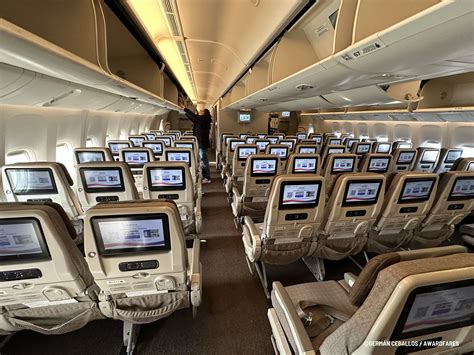
- Economy Class, with 258 seats in a 3-4-3 configuration, focuses on maximizing space efficiency while still providing personal entertainment screens and ergonomic seating.
Across all cabins, passengers receive complimentary meals, in-flight entertainment, and baggage allowances, creating a consistent baseline of service. Over a 29-hour journey, these details are not luxuries—they are necessities that shape the entire travel experience.
The Auckland Stopover: A Strategic Pause
The stop in Auckland is far more than a technical necessity. It serves as a critical operational and passenger comfort breakpoint.
After nearly 12 hours in the air, passengers disembark at Auckland Airport for approximately two hours. During this time, the aircraft undergoes refueling, cleaning, and routine maintenance checks. Meanwhile, travelers can stretch, walk, and mentally reset before the second leg.
This pause transforms the journey psychologically. Instead of enduring a single ultra-long-haul segment, passengers experience two manageable long-haul flights, separated by a brief but meaningful break.
For those boarding in Auckland, the flight also functions as a direct bridge to South America, a market historically underserved by nonstop options.
Flight Schedule and Operational Precision
The route operates twice weekly, with meticulous scheduling designed to maximize aircraft utilization and passenger convenience. Departures from Shanghai occur in the early morning hours, ensuring arrival in Auckland by evening. After the stopover, the flight continues overnight to Buenos Aires, arriving in the afternoon.
The return journey follows a similarly optimized pattern, with departures from Argentina timed to align with daylight arrivals in New Zealand and onward connections to China.
This level of precision highlights the complexity behind ultra-long-haul operations. Every minute on the ground and in the air must be carefully calibrated to ensure fuel efficiency, crew scheduling, and passenger satisfaction.
Why Argentina? The Market Logic Behind the Route
At first glance, linking Shanghai and Buenos Aires may seem unconventional. However, the underlying demand tells a compelling story.
Approximately 74,000 round-trip passengers travel annually between China and Argentina, supported by a Chinese diaspora of around 350,000 residents in Argentina. This community has deep historical roots, dating back to migration waves in the 19th century.
By launching this route, China Eastern positions itself as the only Chinese carrier serving Argentina, capturing a niche but strategically valuable market. The airline also benefits from:
- Tourism growth, driven by visa-free travel policies encouraging Argentine visitors to China
- Business travel, particularly in agriculture, energy, and infrastructure sectors
- Transit traffic, especially from Oceania passengers seeking efficient routes to South America
Rather than competing directly with established hubs, the airline is creating its own corridor, leveraging geography and policy to unlock new demand.
China Eastern Airlines: The Power Behind the Operation
As one of China’s “big three” carriers, China Eastern Airlines operates a fleet of over 660 aircraft and maintains major hubs in Shanghai, Kunming, and Xi’an. Its membership in SkyTeam provides access to an extensive global network through codeshare partnerships.
This alliance connectivity is crucial for feeding passengers into long-haul routes like Shanghai–Auckland–Buenos Aires. Travelers from across Asia, Europe, and beyond can connect seamlessly into this marathon flight.
The airline’s strategic investments—including stakes in international carriers and a diverse fleet featuring both Airbus and Boeing aircraft—underscore its ambition to become a global aviation powerhouse.
A Historical Perspective: Oceania to South America Connections
The idea of linking Oceania with South America is not new, but it has proven difficult to sustain. Airlines such as Air New Zealand and Qantas have previously operated routes to Buenos Aires, only to withdraw due to economic pressures.
Even Aerolíneas Argentinas experimented with transpolar and multi-stop routes in the past, highlighting both the ambition and the challenges of this market.
What sets the current route apart is its hybrid model—combining long-haul efficiency with a strategic stopover. This approach reduces risk while maintaining connectivity, offering a blueprint for future ultra-long-haul operations.
The Passenger Experience: Endurance Meets Opportunity
A 29-hour journey is not for the faint-hearted. It demands preparation, patience, and a willingness to embrace the unique rhythm of ultra-long-haul travel.
Passengers quickly learn to manage time differently onboard—sleeping in cycles, pacing meals, and using entertainment strategically. The experience becomes less about reaching a destination quickly and more about navigating a prolonged state of transit.
Yet, for many, the benefits outweigh the challenges. Fewer connections mean reduced travel stress, while the novelty of such a journey adds a sense of adventure rarely found in modern aviation.
The Future of Ultra-Long-Haul Aviation
This route signals a broader shift in how airlines approach long-distance travel. As aircraft technology improves and passenger expectations evolve, the industry is moving toward longer, more direct routes that bypass traditional hubs.
The success of this 29-hour journey will likely influence future route planning, encouraging airlines to explore similar opportunities in underserved markets. It also raises important questions about sustainability, economics, and passenger comfort—factors that will shape the next generation of ultra-long-haul flights.
What is certain is that the boundaries of air travel are expanding. Routes once considered impossible are becoming reality, and journeys like this are redefining what it means to traverse the globe.
In the end, this is not just the world’s longest one-stop flight. It is a statement of intent—a bold declaration that distance is no longer a limitation, but an invitation to innovate.